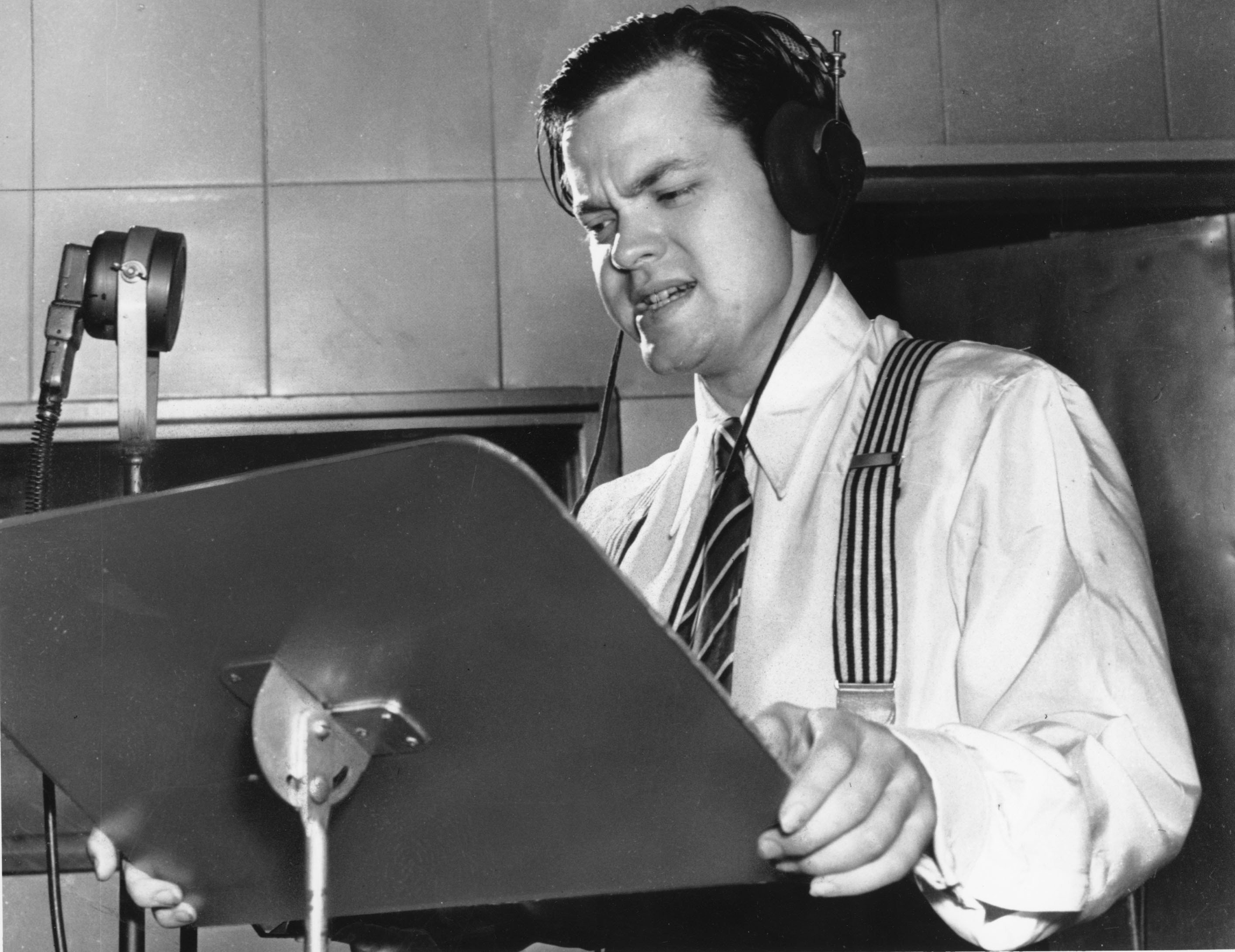
Eighty-eight years ago this week, a young radio producer named Orson Welles turned a Halloween drama into a nationwide panic—and in doing so, planted the seeds of what we now call fake news. On October 30, 1938, Welles’ adaptation of H.G. Wells’ The War of the Worlds aired on CBS as a series of realistic news bulletins, convincing thousands of Americans that Martians had landed in New Jersey and were incinerating the country.
The broadcast came at a moment of genuine international dread. Hitler was threatening Czechoslovakia, and war seemed imminent. Into that anxiety, Welles injected a fictional crisis that felt all too real. He used the conventions of breaking news—interruptions, on-the-ground reports, and even a reporter dying on air—to blur the line between fiction and reality. The six seconds of dead air that followed the reporter’s “death” was a masterstroke of tension, turning the radio itself into a character and shattering the fourth wall long before it became a trope in modern media.
The result was chaos. Listeners fled their homes, hid in basements, and clogged highways. Some ran out of restaurants without paying. The panic was so intense that Welles faced death threats and lawsuits, and CBS was forced to hold a press conference to distance itself from the stunt. It might have ended his career—except for Dorothy Thompson, the era’s most influential columnist, who reframed the event as a necessary wake-up call. She argued that the panic exposed the public’s gullibility, a vulnerability that Hitler and Mussolini could exploit. Thompson’s defense transformed Welles from a prankster into a genius, paving his way to Hollywood and Citizen Kane.
Welles himself later admitted the prank was intentional. He told the BBC that he wanted to demonstrate how blindly people trusted the radio, and to encourage them to question what they heard. That lesson remains painfully relevant. In an age of viral misinformation and deepfakes, the mechanisms Welles exploited—fear, uncertainty, and the authority of the broadcast—are amplified across social media. The panic of 1938 was a warning about the power of media to shape reality, a warning we have yet to fully heed.
As we mark this anniversary, it’s worth asking: Could a single broadcast cause such havoc today? Probably not in the same way, but the underlying vulnerability remains. The same psychological triggers that sent Americans fleeing in 1938 are still at play, whether it’s a false alarm about a missile threat or a manipulated video of a political leader. The tools have changed, but the effect is the same.
Welles’ broadcast was a theatrical stunt, but its legacy is a serious one. It showed that fake news isn’t a new phenomenon—it’s a recurring feature of media-driven societies. The question is whether we’ve learned to question what we hear, or whether we’re still running from the Martians.