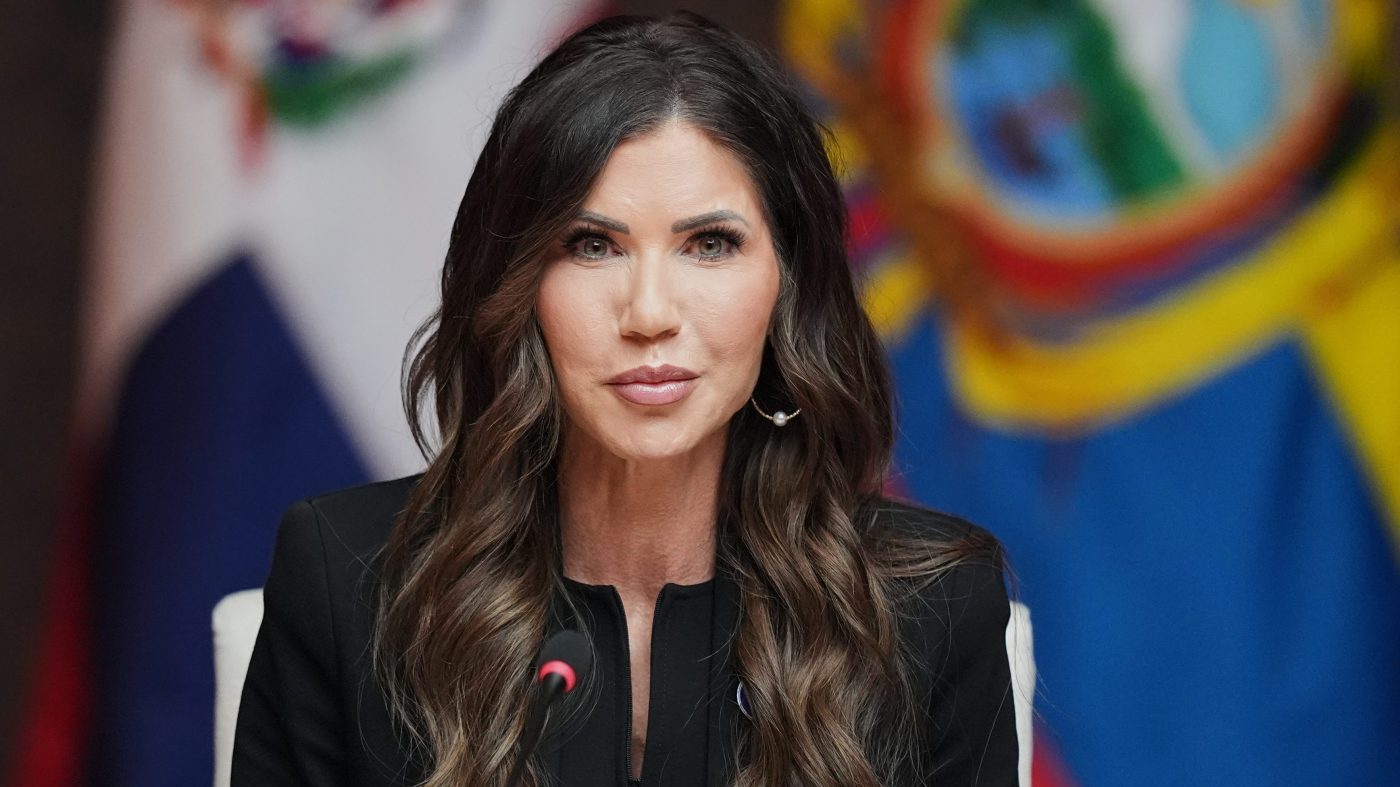
The Department of Homeland Security purchased five aircraft at prices that some experts say were well above market value from a company whose owner contributed to a political action committee supporting then-Secretary Kristi Noem. The transactions were finalized on the morning before Noem's departure, according to a report by The New York Times.
Noem, who was removed from her post on March 5 amid several controversies but remained in the role until Markwayne Mullin was confirmed as her successor on March 24, has strongly denied any wrongdoing. In a post on social platform X, she called the newspaper "dishonest" and claimed that "numerous corrections" had been made. She also took issue with the characterization of the aircraft seller as a "donor," arguing that the term was "misleading."

The planes were acquired from Daedalus Aviation Corporation, a firm headed by William Walters. Walters contributed $10,000 to American Resolve, a political action committee that backed Noem. The Times reported that DHS paid $108 million for a Boeing 737 converted into a private jet, $106 million for two Gulfstream jets, and $45 million each for two Boeing 737 passenger jets. These figures were said to be significantly higher than what Daedalus originally paid to acquire the aircraft.
For instance, the $108 million private jet was reportedly purchased by Daedalus for less than $90 million just a few months earlier. Similarly, the Gulfstreams, sold for $106 million, were acquired by Daedalus for $83 million, a markup that aviation experts called excessive.
The five planes are part of a larger 10-aircraft purchase that DHS previously said was needed for deportation flights. However, the planes have reportedly gone largely unused because the department lacks the crews to operate them, raising questions about the necessity and urgency of the acquisition.
Beyond the no-bid contract for the planes themselves, DHS also hired Salus Worldwide, another Walters-owned company, to maintain the aircraft. That same firm was contracted to fly Noem and her aides on chartered flights and to run a program encouraging undocumented immigrants to self-deport.
Noem defended her actions, stating: "If the individual did not personally make political contributions to Secretary Noem, or if the term 'donor' instead refers indirectly to unrelated entities or legally distinct contributions, the article simply fails to meet the standards of precision expected of The New York Times."
The controversy adds to the scrutiny surrounding Noem's tenure, which was already marked by allegations of ethics violations and mismanagement. The DHS has not yet responded to requests for comment.
This episode also highlights broader concerns about government procurement practices and the influence of political donations, topics that have resonated with voters as donor influence shapes political races. While the purchase was made under the previous administration, it may become a talking point in upcoming debates over border security and spending, especially as energy prices and government contracts remain hot-button issues.