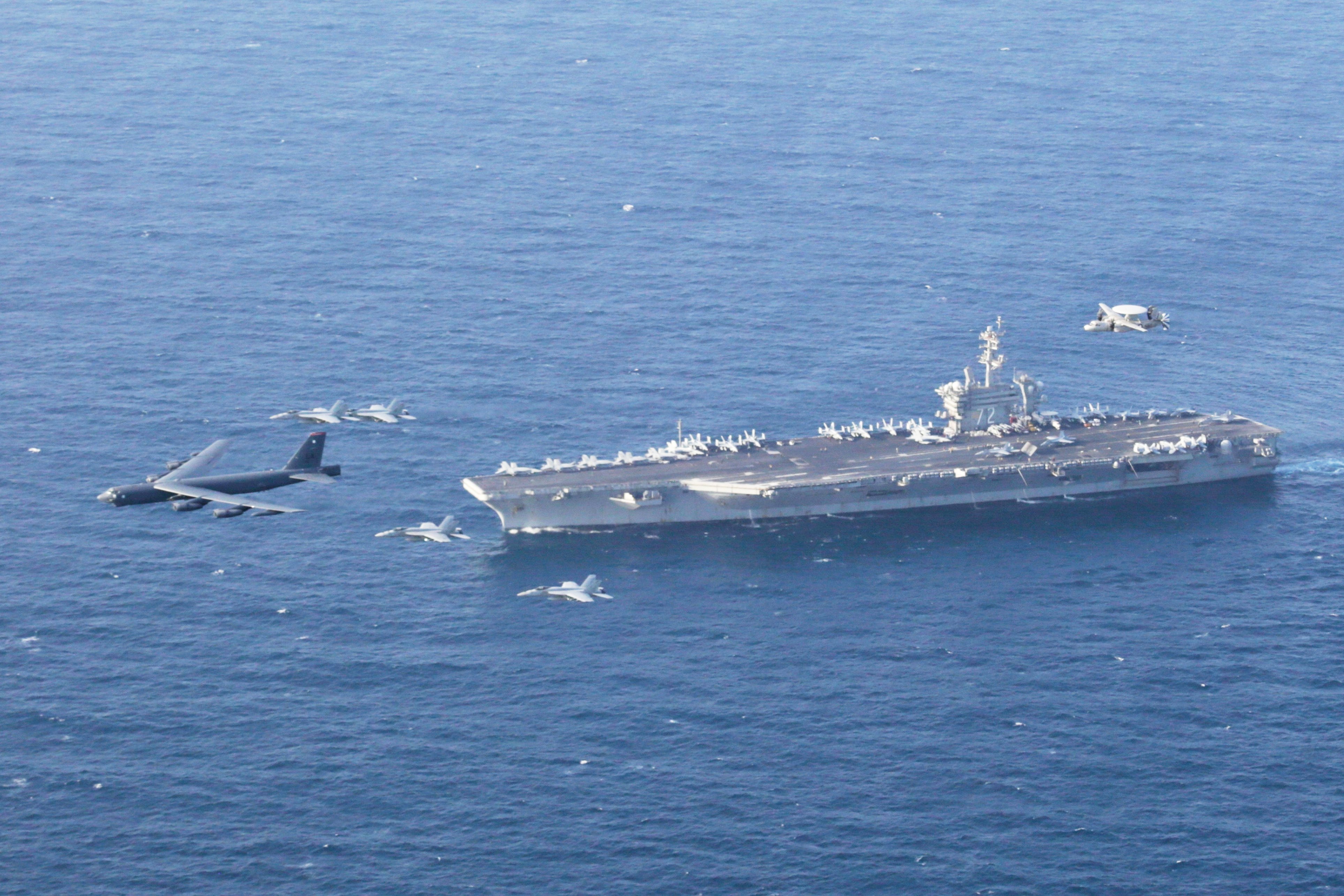
Navy leadership has acknowledged growing concerns about the mental well-being of sailors aboard the USS Abraham Lincoln, meeting with family members in San Diego on Thursday as reports of suicidal ideation and a grueling deployment schedule continue to mount.
Acting Navy Secretary Hung Cao, along with Vice Adm. Douglas Verissimo, head of Naval Air Forces, and Vice Adm. Joseph Cahill, commander of Naval Surface Forces, attended the in-person session with roughly 200 relatives. All but Cao also participated in a subsequent video call, according to Stars and Stripes.
Family members shared harrowing accounts, with one spouse accusing the Navy of a “broken trust between us and the leadership.” Another spouse tearfully described a message from her husband that day saying “he hopes he doesn’t wake up tomorrow.” Officials did not directly respond to those specific statements but assured attendees that sailors have access to mental health professionals, chaplains, and doctors, and that additional counselors are being sent to the ship.
The Navy said in a statement that “leadership is continuously conducting assessments to monitor and sustain the psychological readiness of every sailor.” The service also reiterated its commitment to “listening to our families, supporting our servicemembers, and ensuring the Abraham Lincoln Carrier Strike Group has the resources needed to safely and successfully accomplish its mission.”
The carrier, homeported in San Diego, departed in November for what was supposed to be a Pacific deployment. In January, it was redirected to the Middle East to support operations against Iran, extending the mission well beyond the original May return date. The ship has now been at sea for more than 250 consecutive days, including 40 days of continuous combat operations. At least one crew member was reportedly prevented from jumping overboard, and multiple sailors have spoken of suicidal thoughts.
The extended timeline has taken a heavy toll. Sailors report food and water shortages, minimal time off, and the cancellation of routine port calls that once provided relief every 30 to 45 days. “Nothing to really look forward to at this point,” one sailor told Stars and Stripes, adding that morale is so low that many would skip future port visits if it meant heading home sooner.
A parent of a crew member told the outlet in July, “My son is currently on that ship and listening to him say that he and his shipmates constantly think about jumping off the ship just for relief is so hard to listen to.”
The situation has drawn comparisons to other high-profile readiness challenges in the Navy, including the political fallout from extended deployments that have become a flashpoint in Washington. The service has not announced a return date for the Lincoln, leaving families and crew in limbo.
The meeting comes as the Pentagon faces broader scrutiny over troop welfare and escalating tensions in the Middle East. Lawmakers have begun pressing the Navy for answers, and the service has pledged to send additional mental health teams to the carrier. But for many families, the promises ring hollow without a concrete timeline for bringing the ship home.