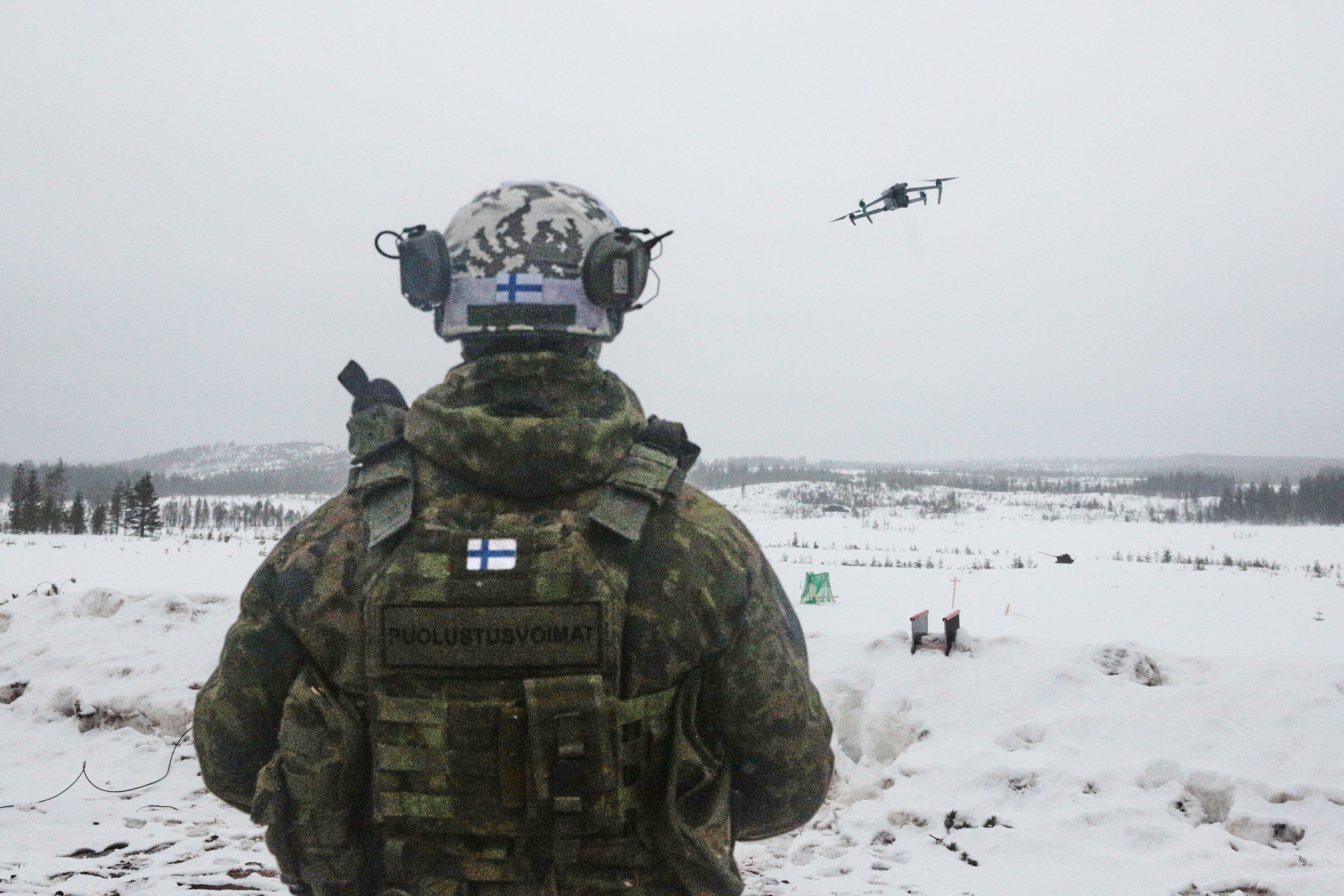
Finland's top diplomat is pressing NATO allies to treat the Arctic as a core strategic priority, warning that melting ice is opening new routes for military competition and great-power rivalry. In a speech last month to NATO foreign ministers in Sweden, Finnish Foreign Minister Elina Valtonen argued that the alliance must move beyond viewing the Arctic as a regional concern and instead recognize it as a theater that affects every member state.
Valtonen, whose country shares a long border with Russia and joined NATO in 2023, said the alliance has the tools to meet the challenge—but only if allies work together with purpose. She pointed to Italy's growing Arctic engagement as a model, noting that Rome's new Arctic strategy, unveiled at the Arctic Circle Forum, reflects a broader understanding that Mediterranean nations also have a stake in northern security. “There may have been a time when Finns might have shunned the idea of a Mediterranean nation claiming Arctic expertise,” Valtonen said. “But that is certainly no longer the case.”
The urgency stems from Russia's war in Ukraine, which has upended Arctic cooperation frameworks and exposed the region's strategic vulnerability. Moscow is pouring resources into its northern flank, expanding infrastructure along the Northern Sea Route and reinforcing the Northern Fleet on the Kola Peninsula, home to many of Russia's most sensitive nuclear assets. Norwegian Prime Minister Jonas Støre has noted that those weapons are not aimed at Finland or Norway—they are aimed across the Atlantic.
China is also moving aggressively. Beijing aims to become a “polar power” by decade's end, using its Polar Silk Road initiative to gain influence over shipping lanes, energy infrastructure, telecommunications, and critical minerals. Although China is not an Arctic state, Valtonen said, it clearly aspires to become an Arctic power. The recent disruptions in the Strait of Hormuz and the Red Sea have underscored the vulnerability of global trade chokepoints, making northern passages increasingly attractive for commerce and military transit.
NATO has begun adapting. The accession of Finland and Sweden has transformed the alliance's northern geography, bringing seven of eight Arctic states into the fold. The alliance has launched Arctic Sentry, a framework to coordinate operations in the region. But Valtonen argued that more is needed: expanded cold-weather capabilities, more ice-capable vessels, stronger intelligence and surveillance, protection of undersea infrastructure, and robust logistics networks that function in extreme conditions.
The maritime corridor between Greenland, Iceland, and the United Kingdom—known as the GIUK gap—and the Bear Gap between mainland Norway and Bear Island are once again critical to European defense. Arctic air and space domains, where communications, navigation, and missile-warning systems are concentrated, underpin alliance security. Valtonen stressed that the challenge is not only military. “The Arctic's future must also be governed responsibly,” she said, citing the UN Convention on the Law of the Sea and the need to protect Indigenous communities and fragile ecosystems from collateral damage in a geopolitical scramble.
Finland brings expertise in icebreaker technology, cold-weather operations, and resilient infrastructure—capabilities the wider alliance urgently needs. But Valtonen was clear: “Securing the Arctic cannot be left to Arctic nations alone.” She called for coordinated action from Anchorage to Ankara, from Lisbon to Lapland, arguing that the Arctic is no longer a remote issue. As a strategic intersection of security, trade, energy, climate, and great-power competition, it matters to the whole alliance.
Valtonen's warning comes amid broader security concerns, including debates over security preparations for major national events and questions about U.S.-China relations at security forums. The Arctic, she concluded, requires both credible deterrence and credible governance—and NATO must act with determination and urgency to achieve a peaceful, stable region.