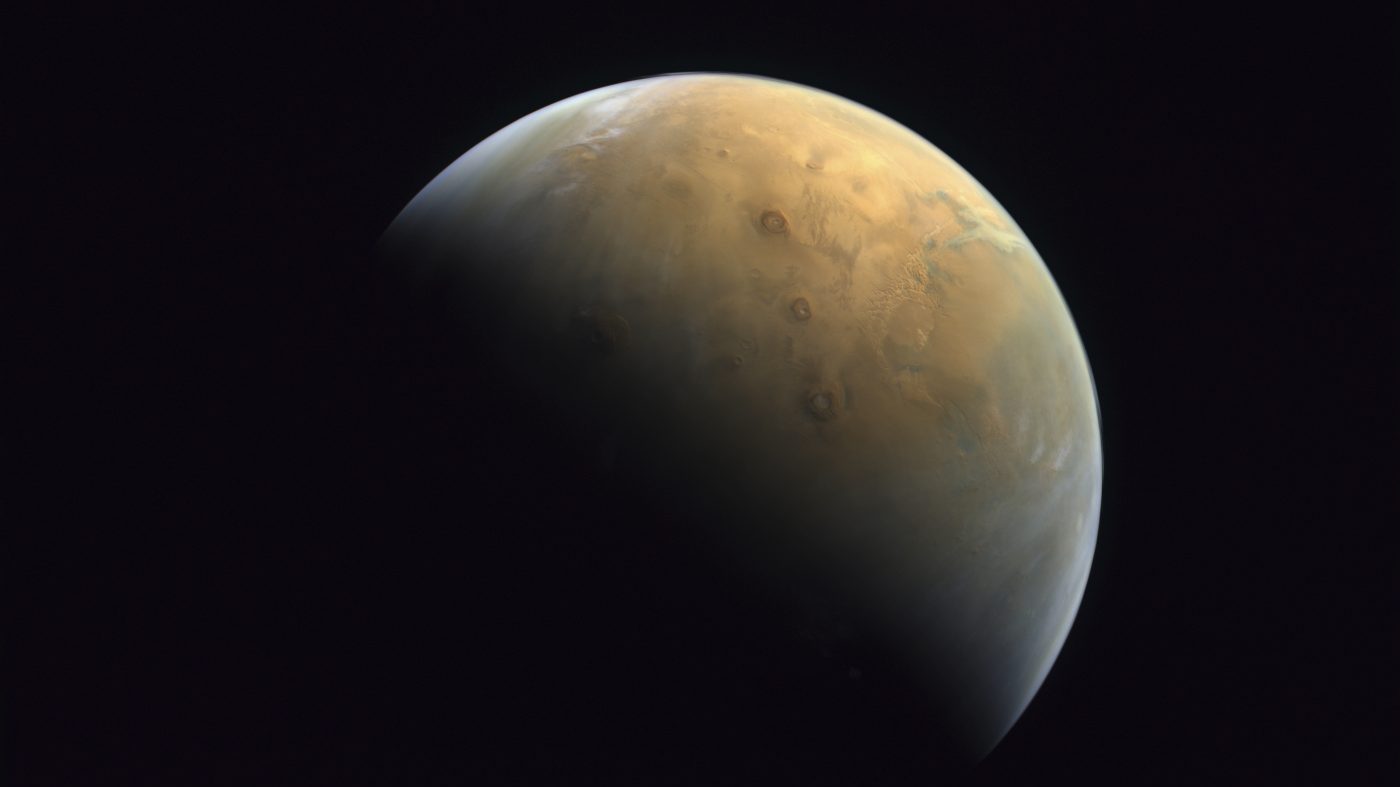
NASA officially ended the Mars Atmosphere and Volatile Evolution (MAVEN) mission on Wednesday, nearly six months after losing communication with the spacecraft. The orbiter went silent in December while passing behind Mars, and the agency's Deep Space Network failed to re-establish contact after it emerged.
According to NASA, MAVEN had entered safe mode and likely spun rapidly, draining its batteries and rendering the spacecraft unrecoverable. A review board is investigating the anomaly, with a final report expected later this year. Preliminary findings have not identified a root cause.

MAVEN launched in November 2013 with a mission to study Mars' upper atmosphere and understand how the planet lost much of its atmosphere over time. The orbiter directly observed a process called sputtering, where high-speed ions collide with the Martian atmosphere, causing gas molecules to escape into space. This research helped scientists grasp how atmospheric loss affects a planet's climate, water, and habitability.
Beyond atmospheric science, MAVEN provided insights into solar impacts on Mars, revealing that auroras can appear across the planet's surface rather than only at the poles as on Earth. It also documented a massive dust storm in 2018 that engulfed the entire planet.
The mission's end comes amid broader political pressures on NASA. Last year, President Trump proposed budget cuts that could have darkened several NASA missions, including MAVEN. Bruce Jakosky, the mission's principal investigator emeritus at the University of Colorado, told The Washington Post that without continued funding, MAVEN would have orbited Mars without producing science until its orbit decayed and it crashed onto the surface.
NASA has begun formally decommissioning the spacecraft and archiving its full dataset for the scientific community. The loss of MAVEN reduces the number of active Mars orbiters, but the agency continues other Mars exploration efforts, including the Perseverance rover and the Ingenuity helicopter.
The MAVEN mission's contributions to planetary science are considered significant, particularly in understanding how Mars transitioned from a warmer, wetter world to the cold desert it is today. The findings also have implications for assessing the habitability of other planets in the solar system and beyond.
As NASA faces ongoing budget debates and shifting priorities under the Trump administration, the end of MAVEN highlights the delicate balance between scientific exploration and fiscal constraints. The agency's next steps in Mars exploration will depend on congressional funding and the outcome of the review board's investigation.