La Crosse County District Attorney Tim Gruenke (D) has decided not to press charges against tech billionaire Elon Musk over the $1 million checks he handed out during Wisconsin's Supreme Court race last year. In a letter released Tuesday, Gruenke concluded that no one received anything of value in exchange for casting a ballot, making a bribery prosecution untenable.
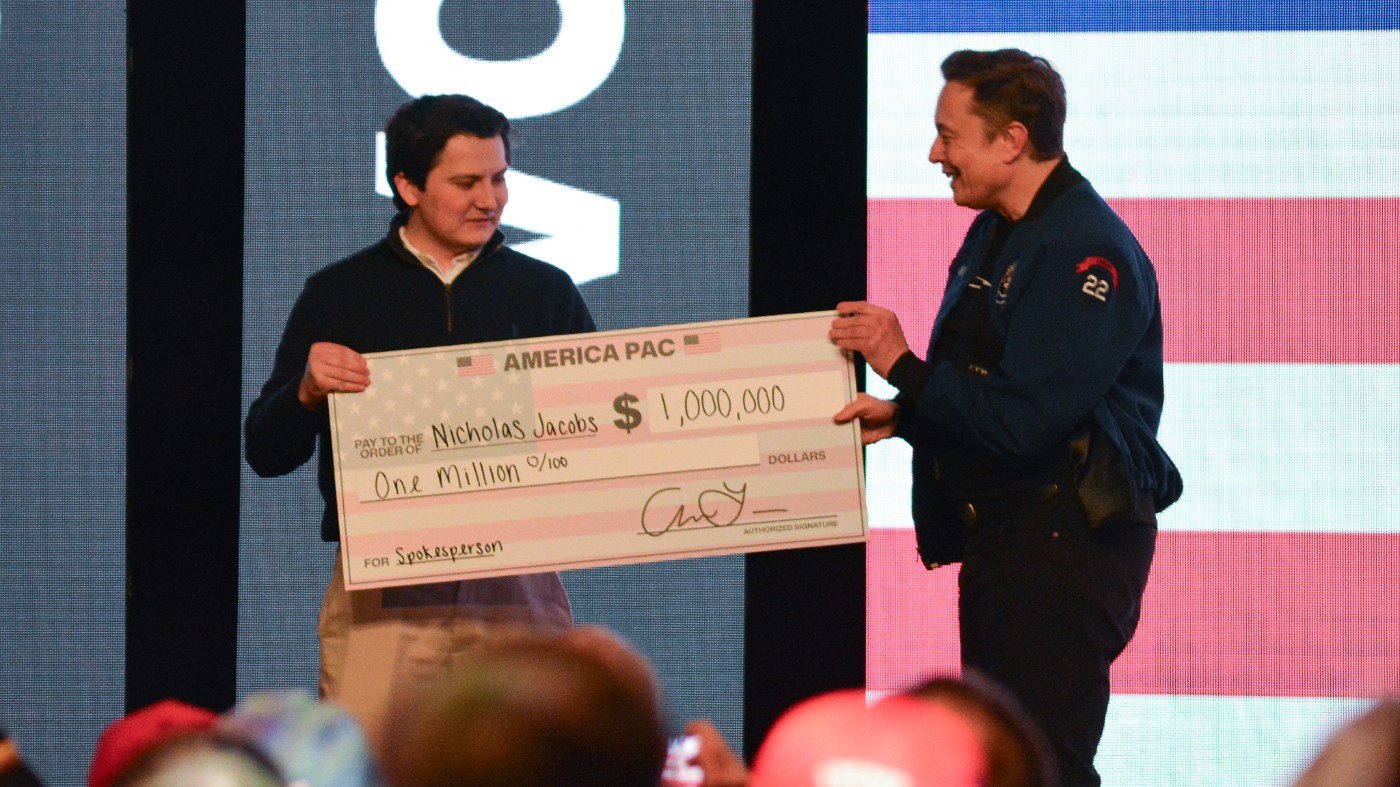
Musk, who leads Tesla and SpaceX, initially announced in March 2025 that he would appear at a Wisconsin event, with entry limited to those who had voted in the state's high court election. In a since-deleted post on his social media platform X, he promised to "personally hand over two checks for a million dollars each in appreciation for you taking the time to vote." Roughly twelve hours later, the post was replaced with a revised version stating that entry was reserved for signers of a petition opposing "activist judges," and that the money would go to "spokesmen" for that petition. Musk subsequently distributed two $1 million checks during a rally in the state.
Gruenke acknowledged the ambiguity of the original post, noting it could be interpreted as an offer to pay voters for the chance to win money at a town hall. However, he also said it could be read as simply granting access to a free event, with the cash going to preselected "spokesmen" rather than as a reward for voting. "Under either view, the second post apparently recognized that potential violation and corrected it," he wrote.
The district attorney, who was appointed as a special prosecutor due to a conflict of interest, further argued that even if a jury could see the original post as a bribe, a conviction would be unlikely given the quick correction and the fact that no one was actually paid for their vote. "Even if I could convince a jury that the original post was still a bribe, I do not believe that a jury would convict Elon Musk of a crime after considering the intent, the second post, and the fact nothing of value was ever given to anyone for voting for an incident occurring in March of 2025," he said.
The decision comes just over a month after Wisconsin's bipartisan elections panel voted 5-1 to refer two complaints against Musk to the Brown County district attorney's office. The panel, composed of three Democrats and three Republicans, had found probable cause that the giveaways violated the state's election bribery law. Attorney General Josh Kaul (D) also filed a lawsuit against Musk over the payments, and though a lower court declined to block them as illegal bribes, Kaul had sought intervention from the state's top court.
Gruenke downplayed the significance of the case, saying that without "the famous name" and the large sums involved, it was "a simple case of a poorly worded statement that was corrected and brought into compliance with the law." Musk's legal team did not immediately respond to requests for comment.
The controversy unfolded against a backdrop of intense political battles over the judiciary, with legal fights over judicial appointments drawing national attention. Despite Musk's backing, the conservative candidate he supported, Brad Schimel, lost to Democratic-backed Susan Crawford, preserving the court's liberal majority. The outcome was a setback for conservative donors and a boost for Democrats, who had made the race a referendum on abortion and other contentious issues.
Musk's involvement in the election highlighted the growing role of wealthy individuals in state-level races, a trend that has sparked debates over campaign finance and election integrity. While this case is closed, the broader questions about the influence of money in politics are likely to persist, particularly as swing state races heat up ahead of the midterms.