Michigan Democrats head to the polls Tuesday in what has become the year's most bruising intraparty contest, with progressive Abdul El-Sayed and centrist Rep. Haley Stevens vying for the party's Senate nomination. The stakes are national: Republicans hold a 53-47 Senate edge, and a loss in this reliably Democratic seat would likely doom any chance of a Democratic majority.
The race has morphed into a proxy war over the party's soul. El-Sayed, a former Detroit public health official, has rallied the left with calls for Medicare for All and an end to U.S. aid to Israel. Stevens, a two-term congresswoman, has positioned herself as a pragmatic dealmaker backed by the establishment. The contest has drawn endorsements from both wings, with Sen. Bernie Sanders and Rep. Alexandria Ocasio-Cortez backing El-Sayed, while Senate Minority Leader Chuck Schumer and Gov. Gretchen Whitmer have lined up behind Stevens.

Whitmer's endorsement, delivered in a video message, framed Stevens as a results-oriented leader. “That strategy informs everything that I do and that’s why I’m endorsing Haley Stevens for the U.S. Senate,” Whitmer said. Stevens has cast herself as the unglamorous workhorse, contrasting her own focus on lowering grocery costs and banning stock trading for lawmakers with what she calls El-Sayed's celebrity-driven politics. In a recent social media post, she accused him of “whining and writing books to get even richer.”
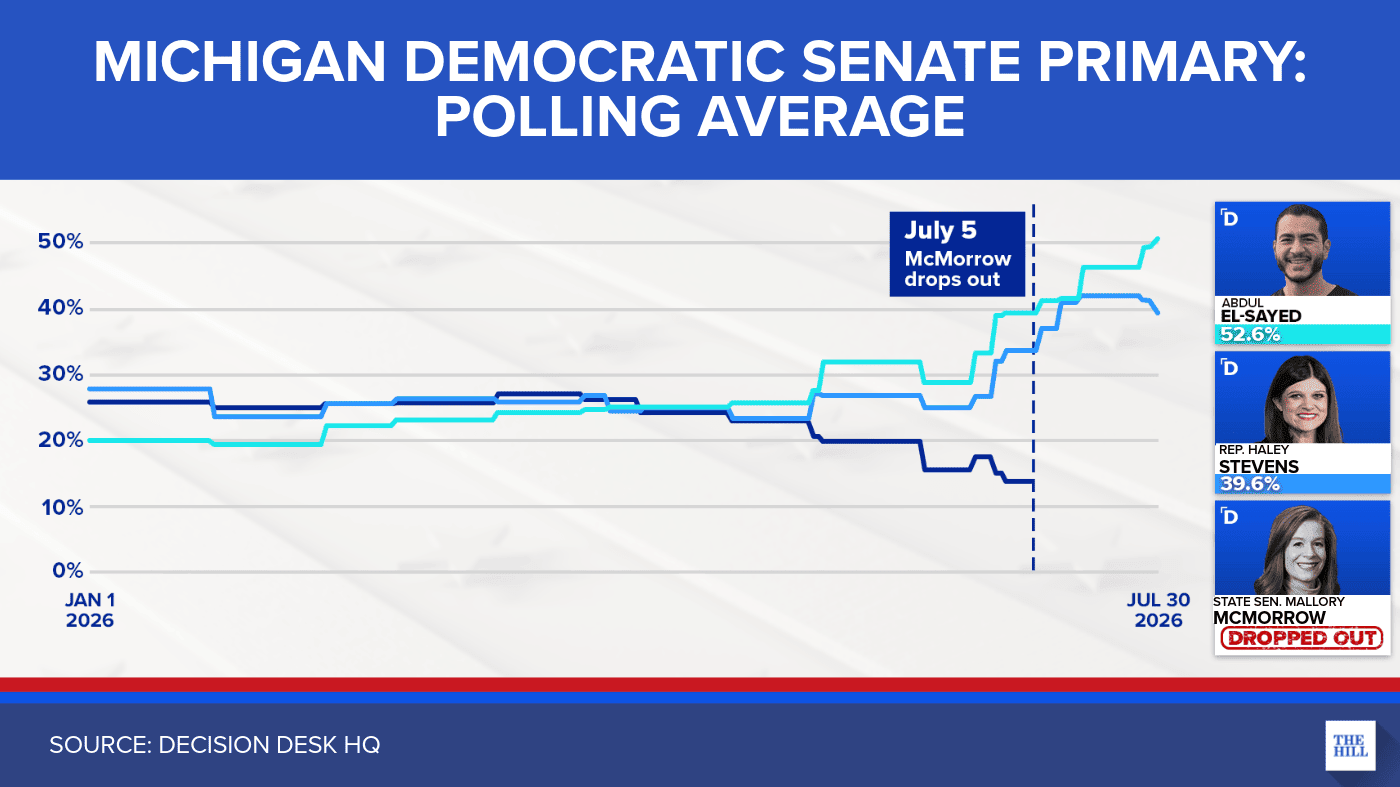
But the polls tell a different story. El-Sayed holds a commanding lead, roughly 13 points in The Hill's Decision Desk HQ average, with one Emerson College survey putting him up by 15. His support among grassroots Democrats reflects broader discontent with the party establishment, and his charisma has made him a formidable campaigner. “He's a highly effective communicator,” even some opponents concede.
The Israel-Gaza issue has been a flashpoint. El-Sayed, the son of Egyptian immigrants, has called Israel's military campaign a genocide and wants to halt U.S. aid. Stevens has defended traditional U.S. support for Israel and has received about $30 million from AIPAC-aligned groups. The split mirrors a national shift in Democratic opinion, as voters increasingly question U.S. policy toward Israel.
The outcome could have implications beyond Michigan. Progressives have already scored upsets this year, including in New York City's mayoral race, and a win here would embolden the left ahead of the midterms. But some centrists warn that nominating a candidate like El-Sayed could hurt the party's chances in the general election, especially given the narrow Democratic edge on economic issues.
For now, El-Sayed appears poised to claim the nomination, a result that would signal a significant shift in the party's center of gravity. As the progressive wing celebrates a potential win, Stevens and her allies are bracing for a fight that may not end with the primary.