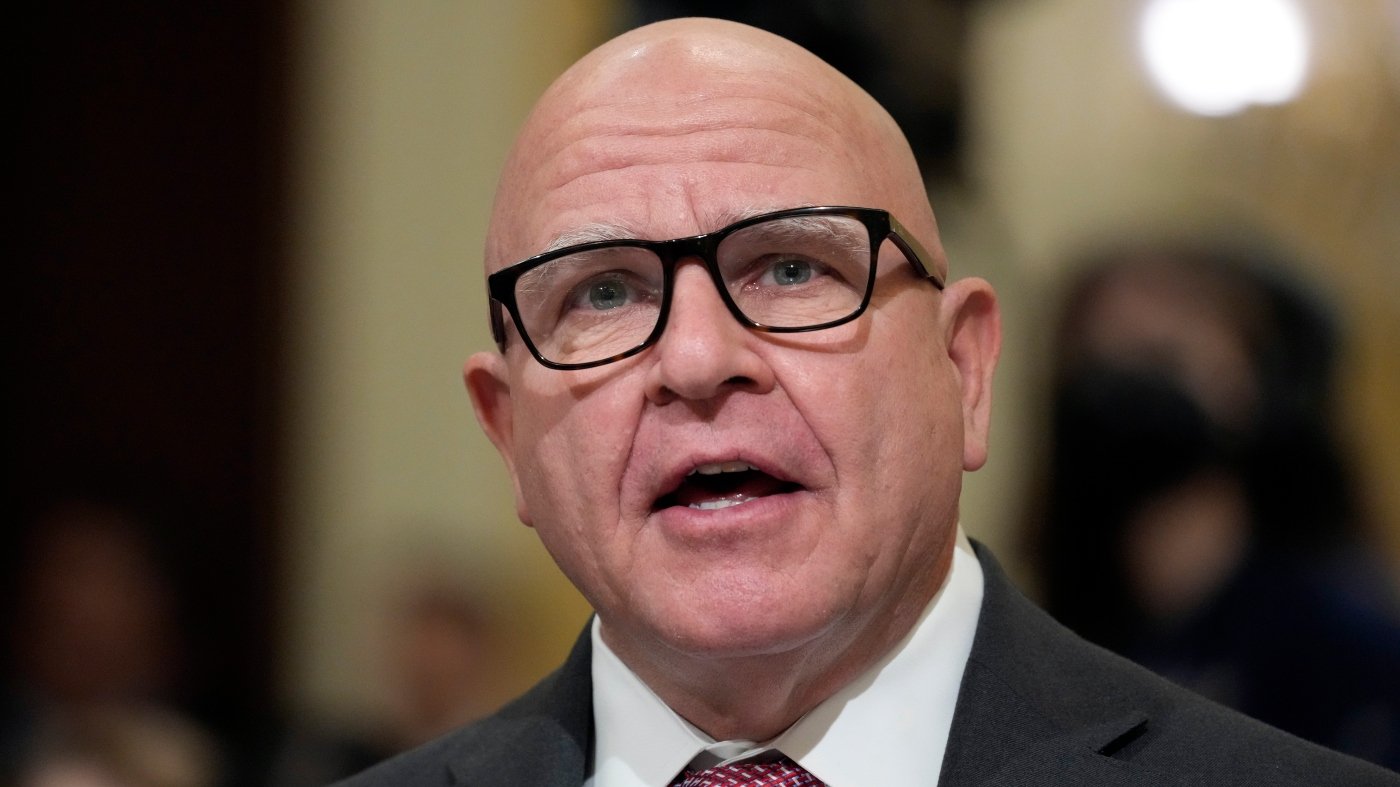
The House Select Committee on Intelligence convenes Tuesday morning to examine the evolving terrorism threat landscape nearly 25 years after the September 11 attacks, with former national security adviser H.R. McMaster set to testify alongside intelligence specialists.
The hearing, scheduled for 10 a.m. EDT, will focus on how U.S. counterterrorism strategy has adapted since 2001 and whether the intelligence community is equipped to identify emerging threats, particularly in an era of artificial intelligence and rising political violence.

McMaster, who served as national security adviser under President Trump from 2017 to 2018, brings a hawkish perspective on counterterrorism. His testimony comes as the Trump administration’s national security apparatus undergoes significant turnover. Tulsi Gabbard recently stepped down as director of national intelligence, with Secretary of State Marco Rubio temporarily filling the role of acting national security adviser. Jay Clayton, Trump’s nominee to replace Gabbard, awaits Senate confirmation.
Clayton’s nomination has drawn scrutiny, particularly after Senator Jon Ossoff exposed his refusal to acknowledge Biden’s 2020 win during a confirmation hearing, raising questions about his ability to lead nonpartisan intelligence assessments.
The federal counterterrorism apparatus spans multiple agencies, including the Department of Homeland Security—created in response to 9/11—as well as the FBI and the Office of the Director of National Intelligence. Lawmakers are expected to probe whether these agencies are effectively coordinating to confront threats from both foreign terrorist organizations and domestic extremists.
Committee members are also likely to explore the implications of artificial intelligence for counterterrorism, from AI-driven surveillance to the weaponization of deepfakes by adversaries. The hearing occurs against a backdrop of heightened global instability, including rising tensions with Iran over the Suez Canal and ongoing U.S. strikes in the Middle East.
The intelligence community has warned that the threat of political violence within the United States is escalating, a trend that experts say requires a shift in counterterrorism priorities. McMaster’s testimony may offer insights into how the Trump administration’s national security team plans to address these challenges amid internal turmoil.
Watch the live video above for full coverage of the hearing.