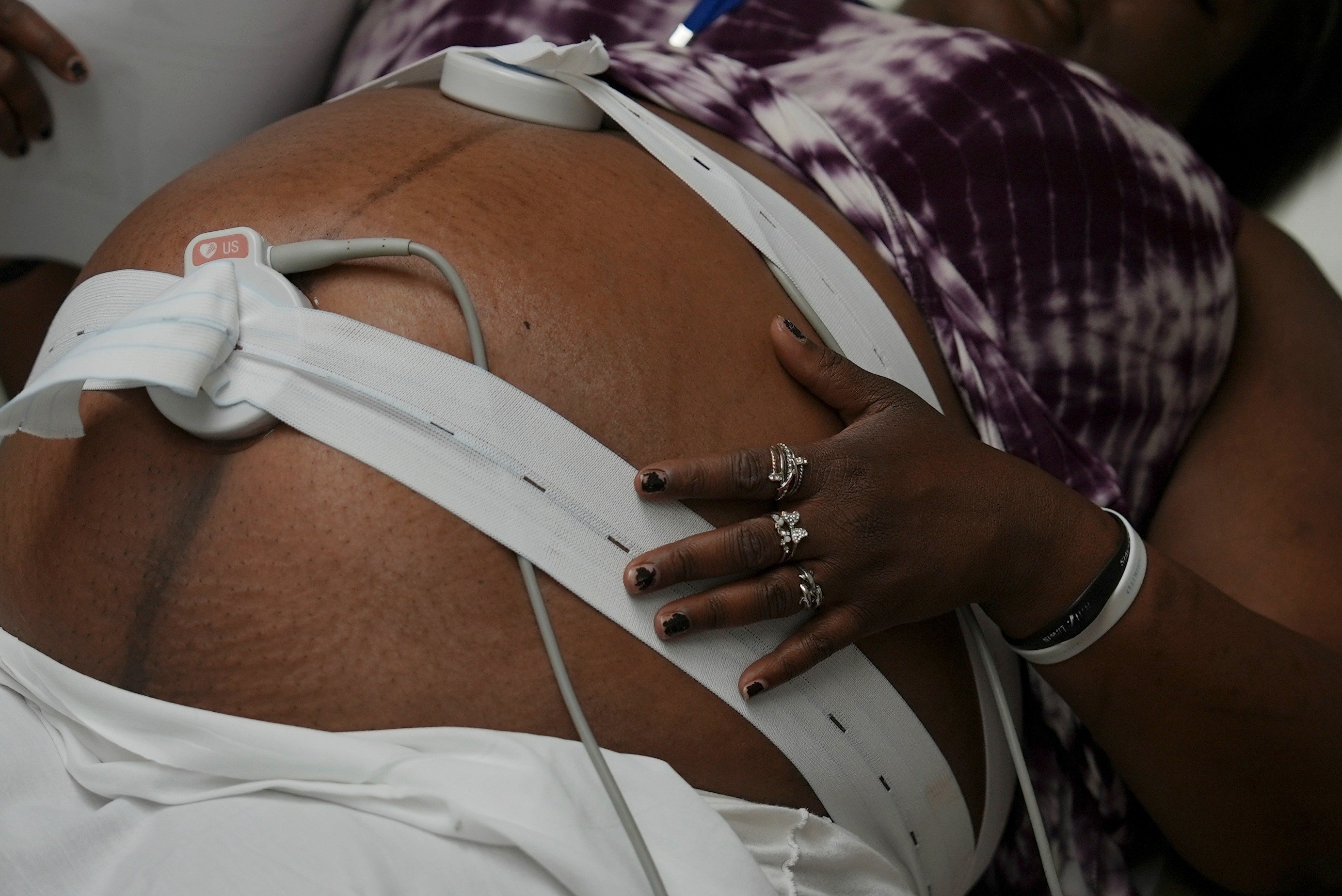
In Searcy County, Arkansas, a woman in labor faces an 84-minute drive to the nearest delivery room. The closure of the local labor-and-delivery unit wasn't due to financial trouble—it happened because the only OB-GYN died, and no replacement could be found.
This scenario is all too common in rural America, and it's one of the few issues that unites voters across the political spectrum. A new national survey of 1,000 voters found that 86% of Americans believe mothers should not die from preventable causes related to childbirth—a problem that has gotten worse in recent years. The poll, conducted by KAConsulting LLC, tested 15 policy solutions, and every single one received majority support, with 13 clearing 80% approval.

The most popular fix was expanding telehealth and specialty care for rural and high-risk pregnancies, so that specialists come to the mother rather than requiring a long drive. Large majorities also supported extending insurance coverage through the baby's entire first year, rather than stopping at six weeks postpartum.
Perhaps most striking is how quickly public opinion shifts when people learn the facts. Before hearing any statistics, 77% of respondents already wanted improvement. After hearing a few key figures, that number jumped to 86%. The most persuasive fact was that two-thirds of maternal deaths occur in the year after delivery—a time when most assume the danger has passed.
America is now the only wealthy nation where maternal mortality has increased over the past 40 years. The U.S. ranks behind Russia and Ukraine on this metric, meaning a mother is statistically safer giving birth in a war-torn country than in America. Despite spending more on childbirth than any other nation, outcomes are worse.
The solution isn't complicated. A nurse checking on a new mother within two weeks can catch a hemorrhage, infection, or dangerous blood pressure spike before it becomes an emergency. We require car seats before newborns leave the hospital; we can do better than sending mothers home with a pat on the back and a six-week follow-up.
Two bipartisan bills are currently stalled in Congress. The Rural Obstetrics Readiness Act, sponsored by Sens. Maggie Hassan (D-N.H.), Susan Collins (R-Maine), Katie Britt (R-Ala.), and Tina Smith (D-Minn.), would train rural emergency rooms to handle obstetric emergencies and provide access to maternal health specialists. It passed the Senate Health Committee unanimously in July. The NIH Improve Act, led by Britt and Sen. Cory Booker (D-N.J.) with Reps. Lauren Underwood (D-Ill.) and Brian Fitzpatrick (R-Pa.), would ensure steady funding for NIH research into why American mothers are dying. The House passed it unanimously in July.
Neither bill is controversial, yet both are sitting idle. The public has already made up its mind—now it's time for Washington to act. As related family support efforts show, there is bipartisan appetite for policies that help families, and maternal health is no exception.
Olivia Walton, founder of Healthy Moms, Healthy Babies America, and Kellyanne Conway, former senior counselor to President Trump, co-authored the survey analysis. They urge voters to call their senators and ask when they'll vote on these measures. Healthy moms build healthy families, and healthy families build a stronger country. Americans already know that—Washington just needs to catch up.