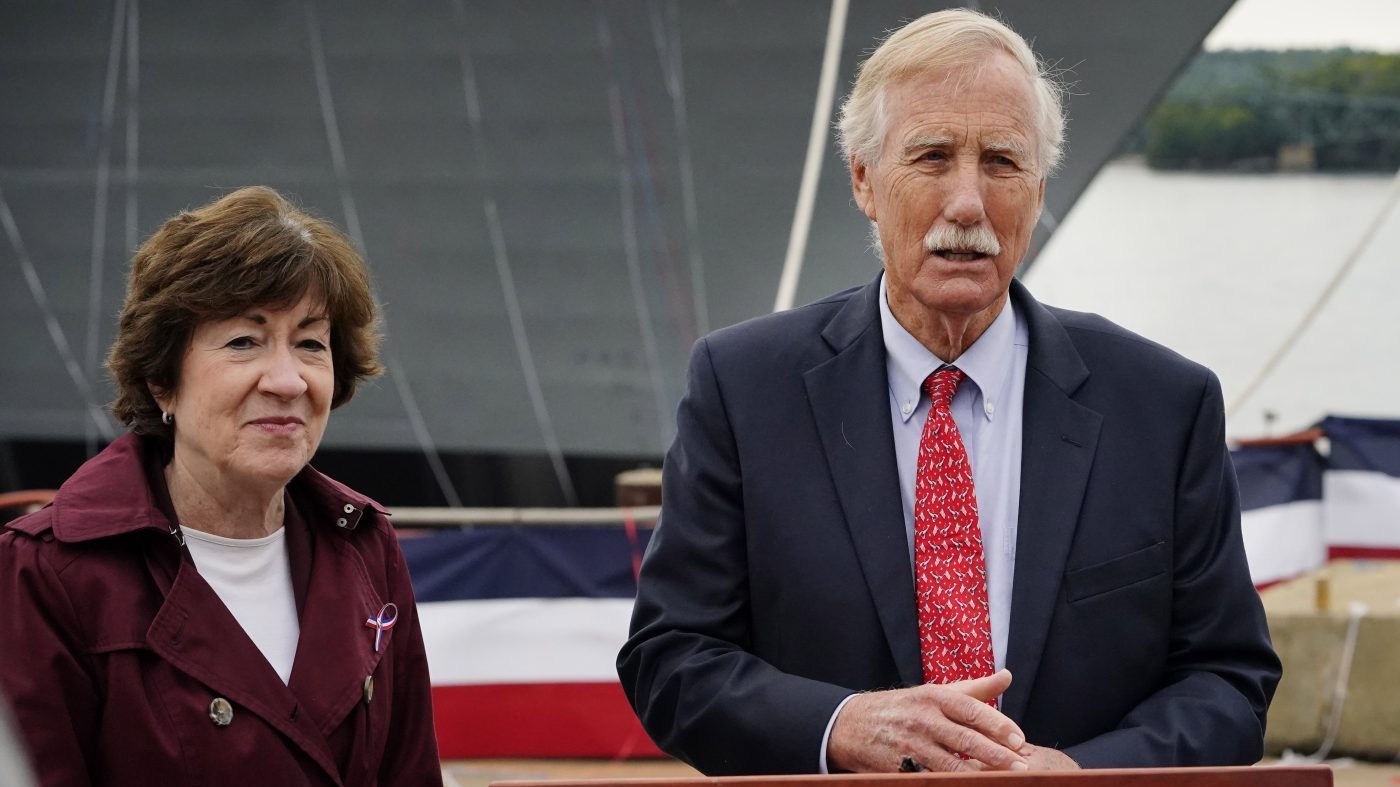
Maine's two senators are pressing the Senate Commerce Committee to take up and pass legislation that would delay new federal rules aimed at protecting the endangered North Atlantic right whale, a move they argue is essential to keep the state's lobster industry viable.
The House approved the Northeast Lobstermen Protection Act earlier this month, with two Democrats joining Republicans to advance the measure. The bill, sponsored by Rep. Jared Golden (D-Maine), would push the next round of whale-related rulemaking from 2028 to 2035.
Sens. Susan Collins (R) and Angus King (I) wrote to committee leaders, voicing strong support for the extension. They warned that the regulations as originally envisioned would have "effectively shut down the fishery." The senators cited Maine Lobstermen's Association data showing the industry generates roughly $2 billion in annual economic activity and sustains more than 17,500 jobs.
In 2022, Congress already delayed the whale rules to 2028 and provided funding for additional research on whale migration and its overlap with lobster fishing areas. King at the time called that delay "a Christmas miracle for the lobster industry," noting that no right whale had ever been documented entangled in Maine lobster gear.
The new bill, co-sponsored by Rep. Mike Lawler (R-N.Y.), would extend that pause again, giving scientists more time to study the whales' shifting patterns. The lobster industry hopes the added data will show that the whales' habitat largely lies outside Maine's fishing grounds, and that the population—currently fewer than 400—is stabilizing.
While right whales have suffered deaths from ship strikes and gear entanglements, recent years have seen a drop in fatalities, and industry officials point out that many entanglements occur far from Maine, in other parts of the Atlantic.
Collins and King wrote that the extension would allow ongoing research to continue, providing regulators with better information. "It is critical that any future regulatory actions appropriately balance protecting North Atlantic right whales with the economic and practical realities facing Maine's lobster industry," they said.
Not everyone in the fishing community is fully on board. Alexa Dayton, executive director of the Maine Center for Coastal Fisheries, called the extension a "double edged sword." While better tracking data could help, she warned that if the industry simply delays the process, it might face harsher rules later under a different administration. "It could be a worse outcome for the lobster industry four or five years from now than if we just take it on today," she said.
The push comes during a difficult year for lobstermen, who have seen prices fall to 50-year lows and faced tariff threats from Canada. The issue has bipartisan support in the House, where 10 Democrats backed Golden's bill, but two Republicans opposed it. Rep. Aaron Bean (R-Fla.), whose coastal district includes Jacksonville, said he voted no because the bill didn't strike the right balance between protecting livelihoods and the whales. "There's only a handful of whales. We need to do everything we can to protect them," he said.
The Senate, with a comfortable Republican majority, may pass the measure without Democratic help. But the funding for the whale research is set to expire in 2033, two years before the new deadline, which would require an additional appropriations rider to keep the studies going. Collins, who chairs the Senate Appropriations Committee, is up for reelection this year, and her support for the bill could be a key issue in that race.