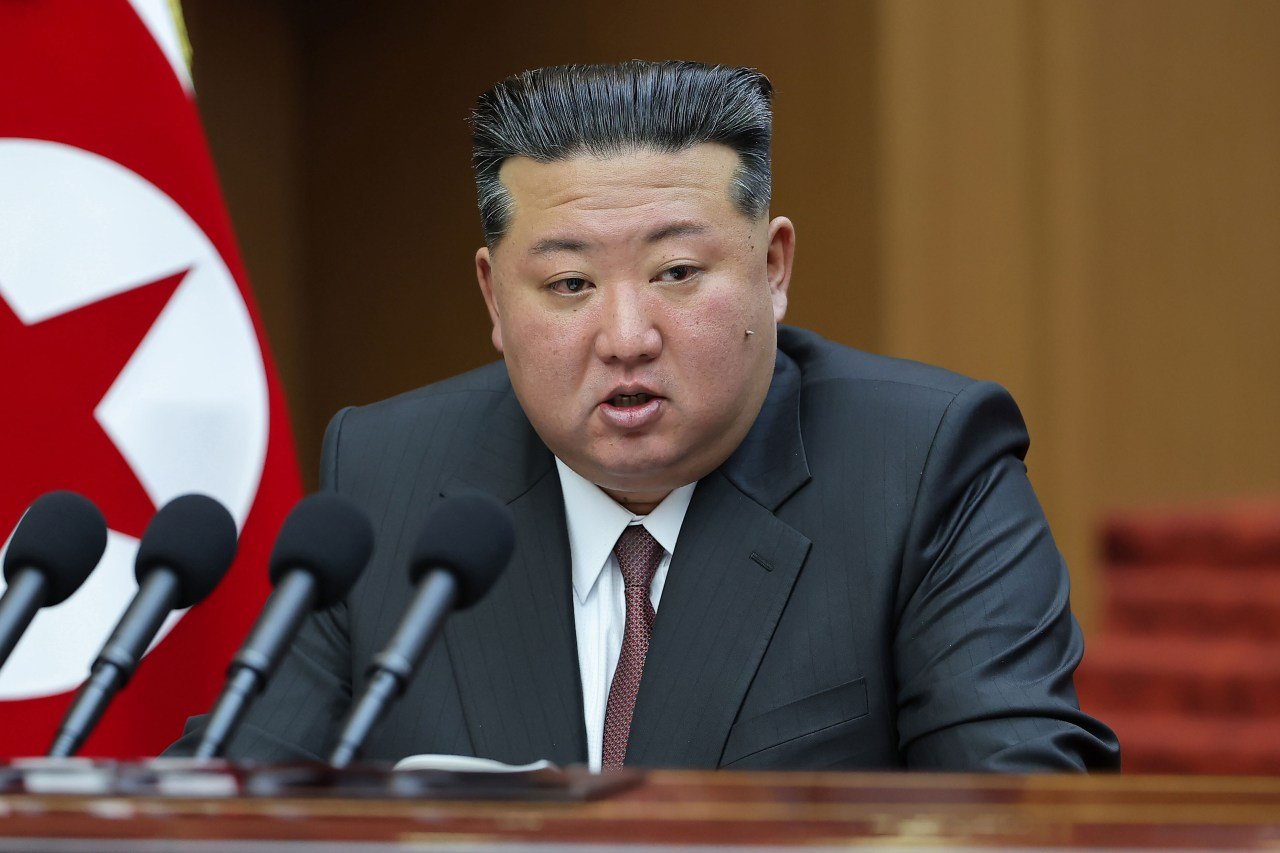
North Korea on Thursday publicly revealed a new facility designed to produce fuel for nuclear weapons, with leader Kim Jong Un declaring plans to ramp up the country's nuclear capabilities at an exponential pace. The disclosure, reported by state-run Korean Central News Agency (KCNA), underscores Pyongyang's determination to solidify its status as a nuclear power and its refusal to place its weapons program on the negotiating table.
New Enrichment Plant Likely at Yongbyon
The facility, which South Korea's Joint Chiefs of Staff assessed as a uranium enrichment plant, was shown in KCNA photos depicting Kim walking through narrow aisles lined with dense rows of silver tubes and pipes, typical of a centrifuge hall. Another image showed Kim in a meeting room with a blurred graphic of a cone-shaped object on a table, though it was unclear if it depicted a warhead design. Experts believe this is likely a new enrichment facility at the Yongbyon nuclear complex, adding to North Korea's growing production capacity.
Ankit Panda, an expert at the Carnegie Endowment for International Peace, said, "Based on a preliminary analysis, it appears that this facility is likely the newly added Yongbyon enrichment facility. It appears to have two levels and represents a substantial expansion of enrichment capability." He added, "North Korea's ongoing nuclear expansion does not have a near-term end in sight."
Kim's Plan for Exponential Growth
During his visit to the plant on Wednesday, Kim said he and other top officials "confirmed the order of priority for implementing the ambitious future plan designed to beef up our state's nuclear forces at an exponential rate," according to KCNA. He emphasized the need to bolster the nuclear war deterrent both in quality and quantity, citing confrontations with "the most ferocious enemies," referring to the United States and South Korea. Kim asserted that exercising "the position of a nuclear weapons state" is his country's "invariable" stand and claimed that North Korea's nuclear materials production capacity has more than doubled compared with five years ago, though this claim cannot be independently verified.
This is the third time North Korea has disclosed a uranium enrichment site. In 2010, it showed one at Yongbyon to visiting American scholars, and in 2024, it released photos of another covert plant at the Kangson complex. Last September, South Korean Unification Minister Chung Dong-young said North Korea was operating four uranium enrichment facilities, including Yongbyon, running daily.
Nuclear Diplomacy Stalled
Kim's latest move comes amid stalled nuclear diplomacy. President Donald Trump has repeatedly expressed interest in resuming talks, but Kim has insisted that the U.S. must first drop its demand for denuclearization as a precondition. Since his first round of nuclear diplomacy collapsed in 2019, Kim has pursued a provocative series of weapons tests and vowed to "exponentially" expand the nuclear arsenal. Experts believe Kim seeks international recognition as a nuclear state to demand the lifting of U.N. economic sanctions, ultimately pushing for arms reduction talks with the U.S. to win concessions in exchange for a partial surrender of his nuclear capability.
However, some experts still question whether North Korea has mastered the technological hurdles to field functioning nuclear missiles capable of striking the U.S. mainland, including ensuring warheads survive atmospheric reentry and perfecting multiple warhead technology to defeat missile shields. A senior South Korean official told lawmakers in 2018 that North Korea was estimated to have 20 to 60 nuclear weapons, but some experts now put the arsenal at over 100 warheads. In 2023, North Korea unveiled a type of battlefield nuclear warhead, leading some analysts to speculate it might be preparing for a seventh nuclear test, though none has occurred since September 2017.
For context on regional tensions, recent reports have highlighted North Korea's push for automated nuclear launch systems after a constitutional amendment, and the U.S. has faced challenges in nuclear diplomacy with Iran, as seen in ongoing talks.