The United States and Iran have reached a ceasefire agreement, reopening the critical Strait of Hormuz and de-escalating a confrontation where President Donald Trump had threatened the "end" of Iranian civilization. The resolution follows a period where the administration's aggressive posture risked alienating a core part of Trump's base, which had valued his pledge to avoid new foreign entanglements.
Unwavering Support Amid Extreme Rhetoric
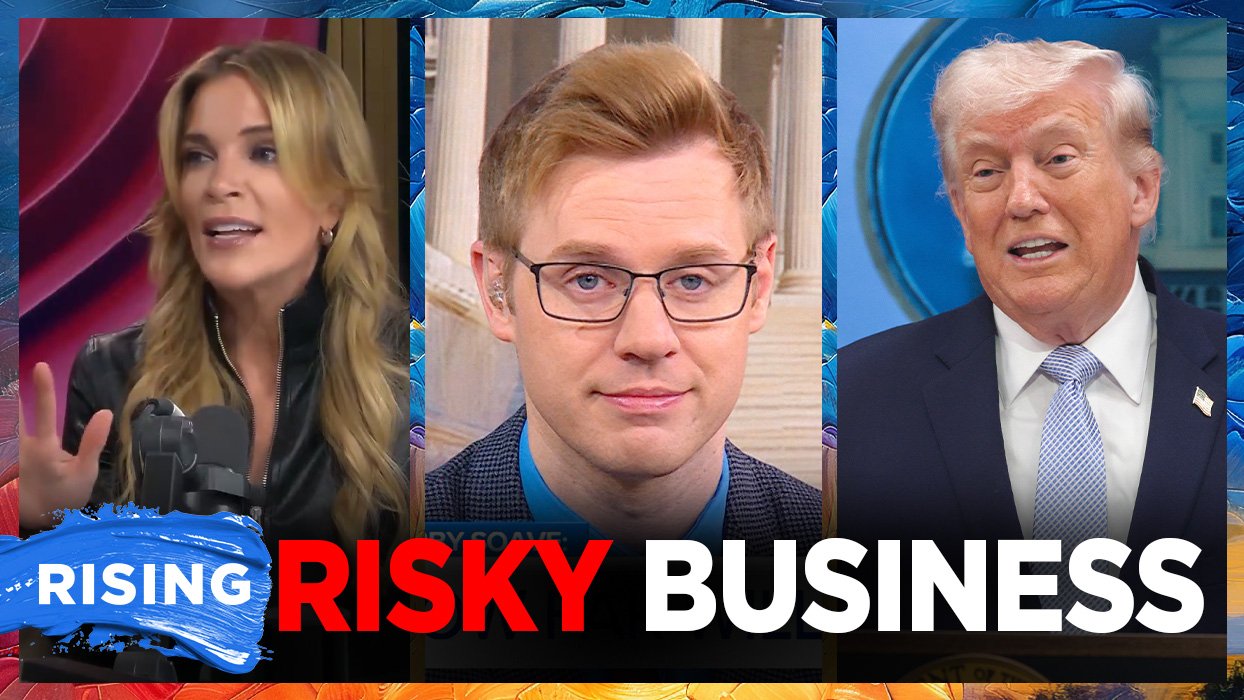
Despite the high-stakes brinkmanship, some supporters remain steadfast. Conservative commentator Megyn Kelly recently affirmed her unconditional allegiance, stating she would vote for Trump even if he ordered a nuclear strike. This declaration echoes Trump's own past claim that he could "shoot someone on Fifth Avenue" without losing supporters, a comparison made by panelist Emily Jashinsky during the discussion.

The commentator's stance underscores a defining feature of contemporary politics: for a significant bloc of voters, opposition to the Democratic Party supersedes all other considerations. Kelly and others view Democrats as a fundamental threat to national prosperity and freedom, making their support for the Republican standard-bearer non-negotiable regardless of specific actions.
The 'Madman Theory' and Its Perils
Analysts are debating whether Trump's extreme threats against Iran constitute an application of the "madman theory," a Cold War-era strategy attributed to Richard Nixon. The approach involves convincing adversaries that one is unpredictable and willing to use extreme force, thereby coercing concessions. Conservative writer Erick Erickson suggested this is Trump's tactic, but warned it fails to account for Iran's own revolutionary ideology, where leaders may value ideological goals over pragmatic survival.
Critics argue the strategy is dangerously flawed. If the U.S. makes apocalyptic threats and does not follow through, global adversaries like China and Russia may perceive American deterrence as weakened. Furthermore, the original scenario for which nuclear weapons were used—the demand for Japan's unconditional surrender in World War II—involved a peer military power, not a regional actor like Iran, which currently poses no direct existential threat to the American homeland.
The administration's gamble also carries domestic political risk. While base support may be solid, prolonged conflict or significant American hardship could erode broader voter tolerance. As one warning puts it, if a war becomes more protracted and costly, "the voters are just not going to stand for it," potentially leading to electoral backlash against Republicans in future cycles. Some lawmakers are already seeking to check executive war powers, as seen when Senate Democrats moved to curtail Trump's authority regarding Iran during the crisis.
Strategic and Diplomatic Repercussions
The ceasefire, while halting immediate escalation, leaves unresolved the core disputes over Iran's nuclear program and regional activities. The episode has drawn international concern, with figures like Pope Leo XIV praising the de-escalation while urging sustained dialogue. However, the strategic landscape may be altered. Some analysts, such as Senator Chris Van Hollen, argue that certain U.S. proposals could inadvertently benefit Iran, suggesting that a proposed toll mechanism for the Strait might hand Tehran a strategic victory.
Ultimately, Trump's approach represents a double gamble: first, that Iran will believe the threat of annihilation is real and capitulate; second, that his political support will remain intact even if he follows through on his most extreme warnings. This fusion of high-risk foreign policy and domestic political calculation defines what critics call the "real madman theory"—testing the limits of both international deterrence and partisan loyalty.