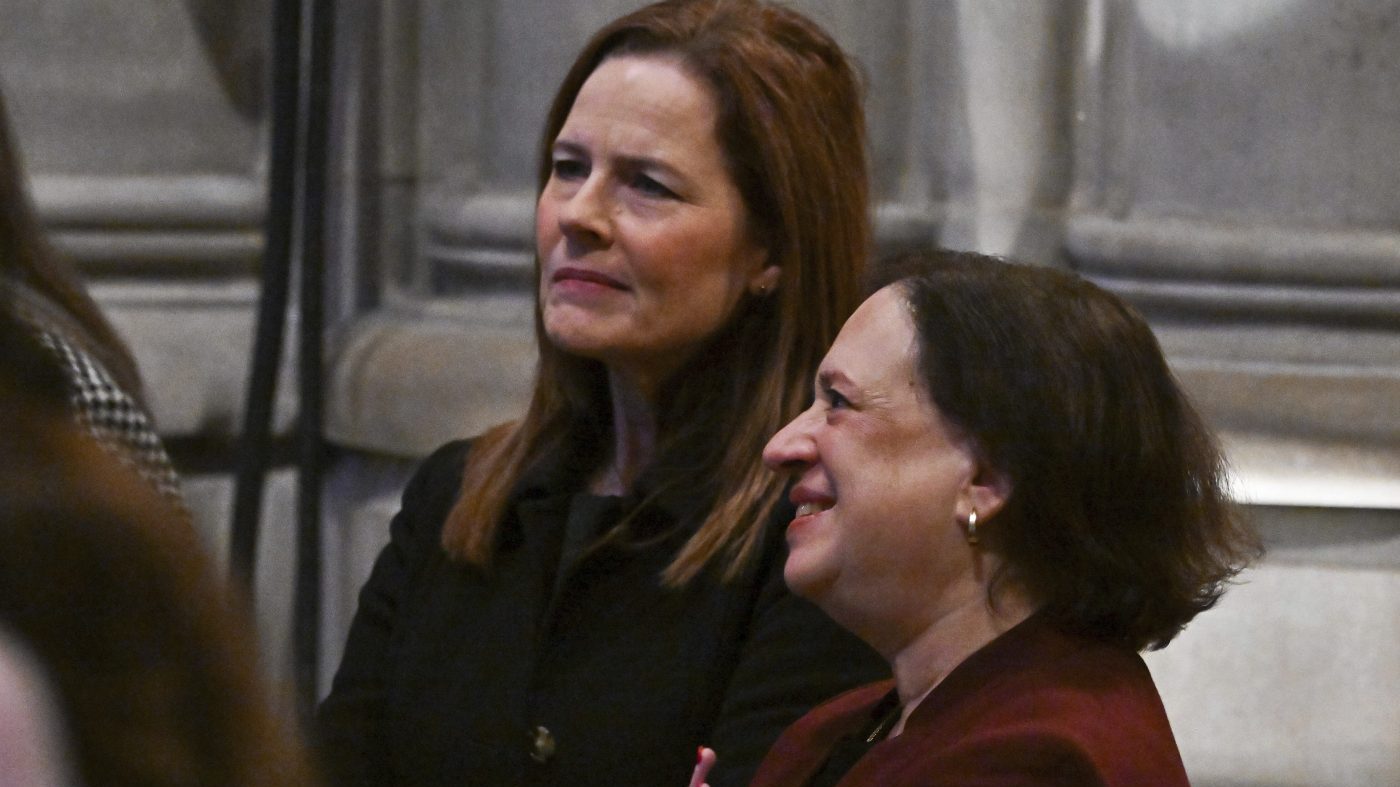
Supreme Court Justices Elena Kagan and Amy Coney Barrett faced a House Appropriations subcommittee on Tuesday morning to defend the judiciary's $9.7 billion budget request for fiscal 2027, a figure that reflects growing security concerns and operational costs for the federal courts.
The Administrative Office of the U.S. Courts is seeking $9.7 billion in discretionary funding, which includes roughly $826.5 million in mandatory appropriations earmarked for judicial salaries and retirement funds. The request also includes a $14.6 million increase for the Supreme Court Police to cover what the agency describes as “protective activities” tied to the justices' homes and families.

Security Spending in Focus
The boost in security funding comes amid heightened threats against federal judges and justices. The Supreme Court has ramped up physical protections following a series of incidents, including protests outside justices' residences after the leak of the Dobbs decision in 2022. The proposed increase would fund additional personnel, equipment, and monitoring for the nine justices and their households.
The justices are scheduled to testify before a Senate panel later Tuesday afternoon, continuing a tradition of annual budget appearances that often serve as a window into the court's operational priorities.
Broader Judicial Budget Context
The overall $9.7 billion request covers the entire federal judiciary, including district and appellate courts, bankruptcy courts, and the Supreme Court itself. The figure represents a modest increase over previous years, driven largely by inflation, personnel costs, and security upgrades.
The hearing comes amid a broader congressional debate over federal spending. House Republicans have pushed for deep cuts to non-defense discretionary programs, though the judiciary has historically enjoyed bipartisan support. The Supreme Court's recent rulings on issues like birthright citizenship and pesticide labeling have also kept the court in the political spotlight.
What to Watch
Lawmakers are expected to press Kagan and Barrett on the court's transparency, including its ethics guidelines and recusal policies. The hearing also follows a landmark cellphone privacy ruling that has drawn attention to the justices' own digital security practices.
The budget request must ultimately be approved by both chambers of Congress and signed into law. With a divided government and a tight fiscal environment, the judiciary's funding could become a bargaining chip in larger budget negotiations.
The hearing is scheduled to begin at 10 a.m. EDT and will be streamed live.