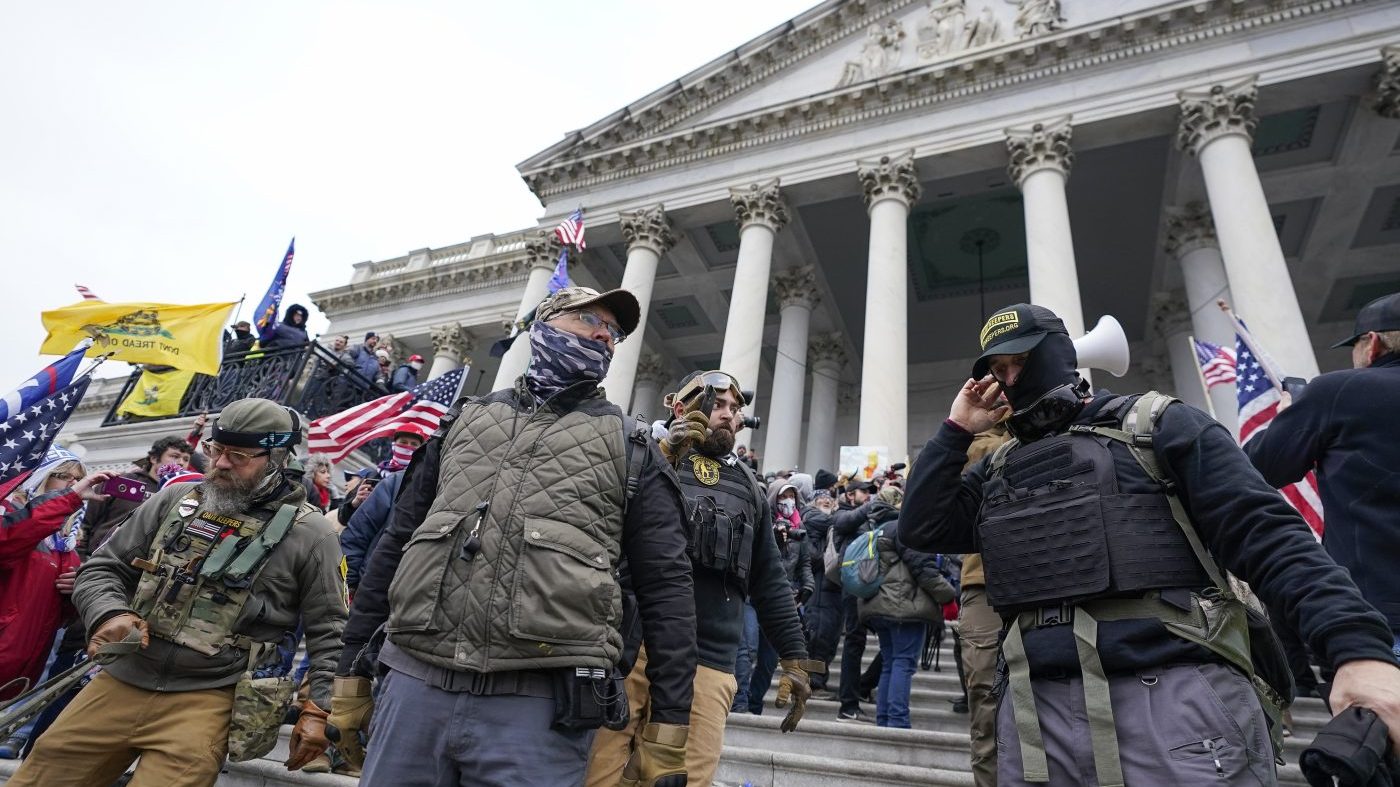
A federal judge on Tuesday reluctantly agreed to drop criminal charges against eight members of the Oath Keepers, the right-wing militia group, for their roles in the January 6, 2021, attack on the U.S. Capitol. The decision, handed down by U.S. District Judge Amit Mehta in Washington, D.C., grants the Justice Department's motion to dismiss indictments against the group's founder, Stewart Rhodes, and others, some of whom had been convicted on seditious conspiracy charges.
Judge Mehta, an appointee of former President Barack Obama, made clear that he disagreed with the government's decision, writing that it was “not in the public interest” to abandon the prosecutions. However, he acknowledged that he had no legal basis to deny the motion, stating, “This court does strongly disagree. But that alone is not a valid basis to deny the motion. The court must give way to the primacy of the Executive Branch in making charging decisions.”

The dismissals come after President Trump, on his first day back in office last year, issued sweeping pardons and commutations for nearly all of the rioters who stormed the Capitol to protest the certification of former President Biden's 2020 election victory, fulfilling a long-standing campaign promise. Judge Mehta noted that these were the last remaining cases seeking accountability for the siege, which resulted in dozens of injured police officers, the eventual deaths of five people, and millions of dollars in property damage.
In his ruling, Mehta wrote, “Today's epilogue diminishes the gravity of that day, denigrates the work of the prosecutors and law enforcement officers who secured these convictions, and excuses criminal acts that caused a centuries-long pillar of our democracy — the peaceful transfer of presidential power — to buckle.” He added, “The court cannot write a different ending.”
Stewart Rhodes, who had been sentenced to 18 years in prison for orchestrating a weekslong plot to forcibly impede the peaceful transfer of power, was among 14 individuals who had their sentences reduced to time served. Shortly after his release, Rhodes traveled back to Washington, D.C., where he met with Republican lawmakers in the Capitol complex to push for the release of another Oath Keepers member who was jailed on federal weapons charges and was not included in Trump's clemency.
Judge Mehta, who had previously described Rhodes during sentencing as an “ongoing threat and a peril” to the country, rejected the government's main argument that the dismissals were intended to protect the defendants from “harassment.” He wrote, “After all, the government has given no indication that it will recharge these Defendants, in the District or elsewhere. To the contrary, it bestows upon them unearned grace by wiping their records clean.”
This ruling follows a similar decision by fellow D.C.-based Judge Timothy Kelly, who last month begrudgingly agreed to toss the remaining convictions against four leaders of the Proud Boys, another far-right group involved in the Capitol attack. The Justice Department's move to drop charges has drawn criticism from legal experts and lawmakers, who argue it undermines the rule of law and the efforts to hold those responsible for the attack accountable.
The decision also comes amid a broader pattern of the Trump administration's efforts to roll back prosecutions related to January 6. Earlier this year, the DOJ dropped charges in other high-profile cases, including the reflecting pool incident, and the president has signaled he may consider further clemency for those still facing legal consequences. Meanwhile, political analysts are watching whether these moves will impact upcoming elections, as seen in Michigan's Senate primary, where the January 6 legacy remains a contentious issue.