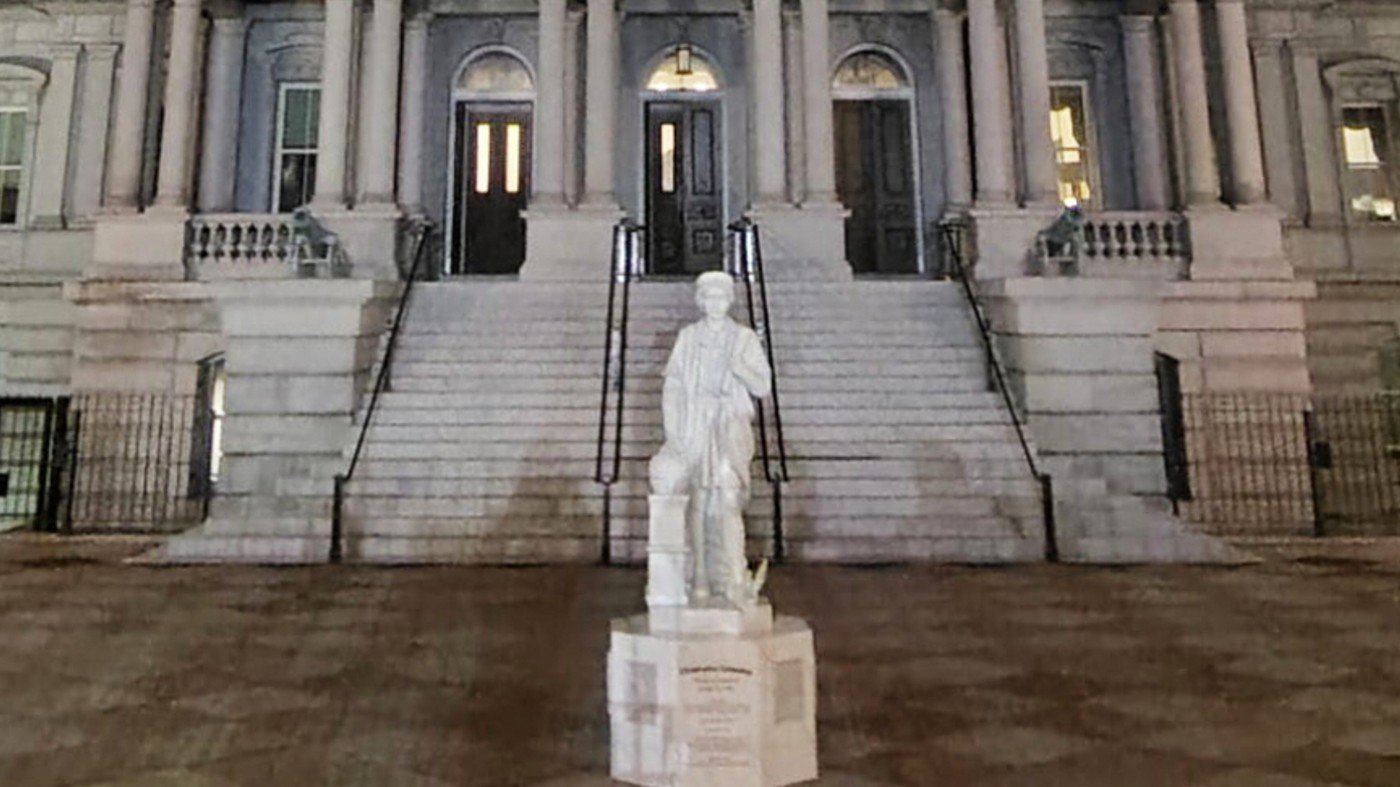
A federal judge on Tuesday cleared the way for the Trump administration to begin testing white paint on the exterior of the Eisenhower Executive Office Building, a move that could eventually lead to a multimillion-dollar repaint of the historic structure next to the White House.
U.S. District Judge Dabney Friedrich ruled that the administration can proceed with paint samples on roughly 8 square feet of the building's facade and on several non-visible panels. The judge found that preservation groups challenging the plan had not demonstrated that the testing would cause "irreparable harm," but she stressed that the ruling applies only to the tests, not to the full painting project.

The administration has proposed covering the building's gray granite in white, a project that a White House official estimated in May would cost taxpayers at least $7.5 million. President Trump has repeatedly criticized the building's appearance, calling its current color "really bad" last year.
Preservationists and historians have objected, warning that paint could trap moisture in the granite and cause long-term damage to the National Historic Landmark, which was constructed between 1871 and 1888 and is listed on the National Register of Historic Places.
Gregory Werkheiser, an attorney with Cultural Heritage Partners representing one of the plaintiffs, expressed disappointment in the ruling, telling the Associated Press that it does not resolve the core dispute. "The reasons we brought this case are untouched by today's decision," he said. "The president has taken power illegally from the GSA and put it in his office in terms of this project and the implications of that. If that holds true for historic properties around the country, that could be devastating."
Friedrich ordered both sides to provide a status report by next week and to keep the court updated on the testing. She indicated she would consider intervening if the administration attempts to go beyond the approved tests.
The decision is the latest in a series of clashes between the Trump administration and critics over the management of federal properties, a theme that has also surfaced in debates about executive authority over the White House. The administration has framed the paint job as part of a broader effort to "beautify" landmarks in the nation's capital, but opponents see it as an overreach of presidential power.
Werkheiser's reference to the GSA underscores a legal argument that the administration bypassed the General Services Administration's normal process for altering historic buildings, a claim that could have wider implications for historic properties nationwide. The case is being closely watched by preservation groups, who fear the precedent could weaken protections for other landmarks.
For now, the paint tests will move forward, but the larger question of whether the Eisenhower Executive Office Building will be permanently repainted remains unresolved, with the court scheduled to review the dispute again in the coming weeks.