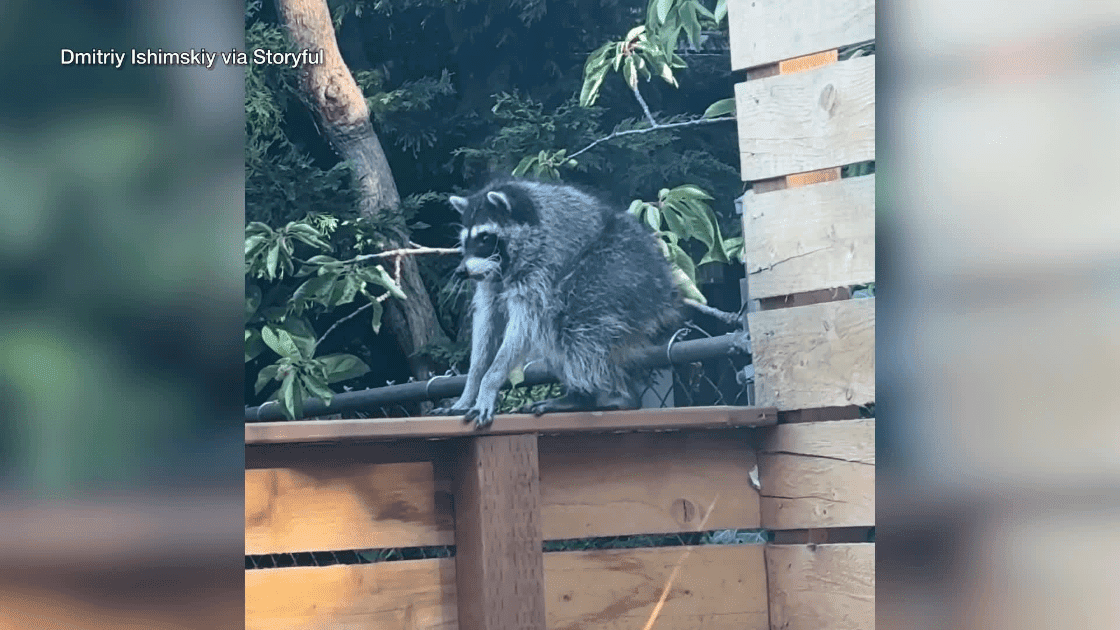
Seattle has a new celebrity, and it's not a tech mogul or a politician—it's a raccoon. Jimothy, a short-spined raccoon with an unmistakable waddle, has taken over social media feeds, TV screensavers, and even Google searches. The odd-shaped critter, native to the Ballard neighborhood, has become a viral phenomenon, with airports, fire departments, and board games using his image in posts and promotions.
Videos of Jimothy began circulating online last week, though locals say he has been a fixture in Ballard for years. His distinctive appearance—a compact body and short spine—makes him stand out among his raccoon peers. As one resident noted, "If it looks like a Jimothy and it walks like a Jimothy, it's probably a Jimothy."

The raccoon's rise to fame comes amid broader discussions about social media's role in amplifying quirky stories. The media trust crisis, which has seen public confidence in news plummet to record lows, has not dampened enthusiasm for Jimothy. In fact, his wholesome appeal offers a respite from the political tensions dominating headlines, including the fading midterm hopes for Democrats tied to internal party divisions.
Jimothy now has his own Facebook page, Instagram account, and website, where fans can follow his daily adventures. His popularity has even sparked interest from television producers, hinting at a potential small-screen appearance. This organic virality contrasts with the calculated moves of some political figures, like Trump Media's plan to sell early access to Truth Social posts on Wall Street, which has drawn scrutiny from critics.
The raccoon's story also reflects a broader trend of social media elevating unexpected characters. While platforms like Instagram and TikTok often face criticism for spreading misinformation—as seen in the settlement of a teen's lawsuit over social media harm—Jimothy's case shows their power to unite people around lighthearted content. However, the EU's consideration of a child social media ban following crackdowns in the UK and Australia suggests that regulators are wary of even harmless virality.
Local businesses in Ballard have embraced Jimothy, using his image in advertising to draw customers. Fire departments have posted photos of him near stations, and airports have featured him on screensavers. This grassroots promotion mirrors the way 2028 Democratic hopefuls are staking out rival positions on Israel, each trying to capture public attention in a fractious party.
As Jimothy's fame grows, questions arise about his welfare. Wildlife experts caution against feeding or approaching wild animals, even as fans flock to Ballard hoping for a glimpse. The raccoon's ability to navigate human spaces without harm underscores the resilience of urban wildlife, a topic that resonates amid debates over energy policy and land use in the Pacific Northwest.
For now, Jimothy remains a symbol of internet whimsy, proving that even in an era of political polarization and media distrust, a short-spined raccoon can still capture hearts. Whether he ends up on TV or simply continues his toddling tours of Seattle, his legacy as a viral sensation is secure.