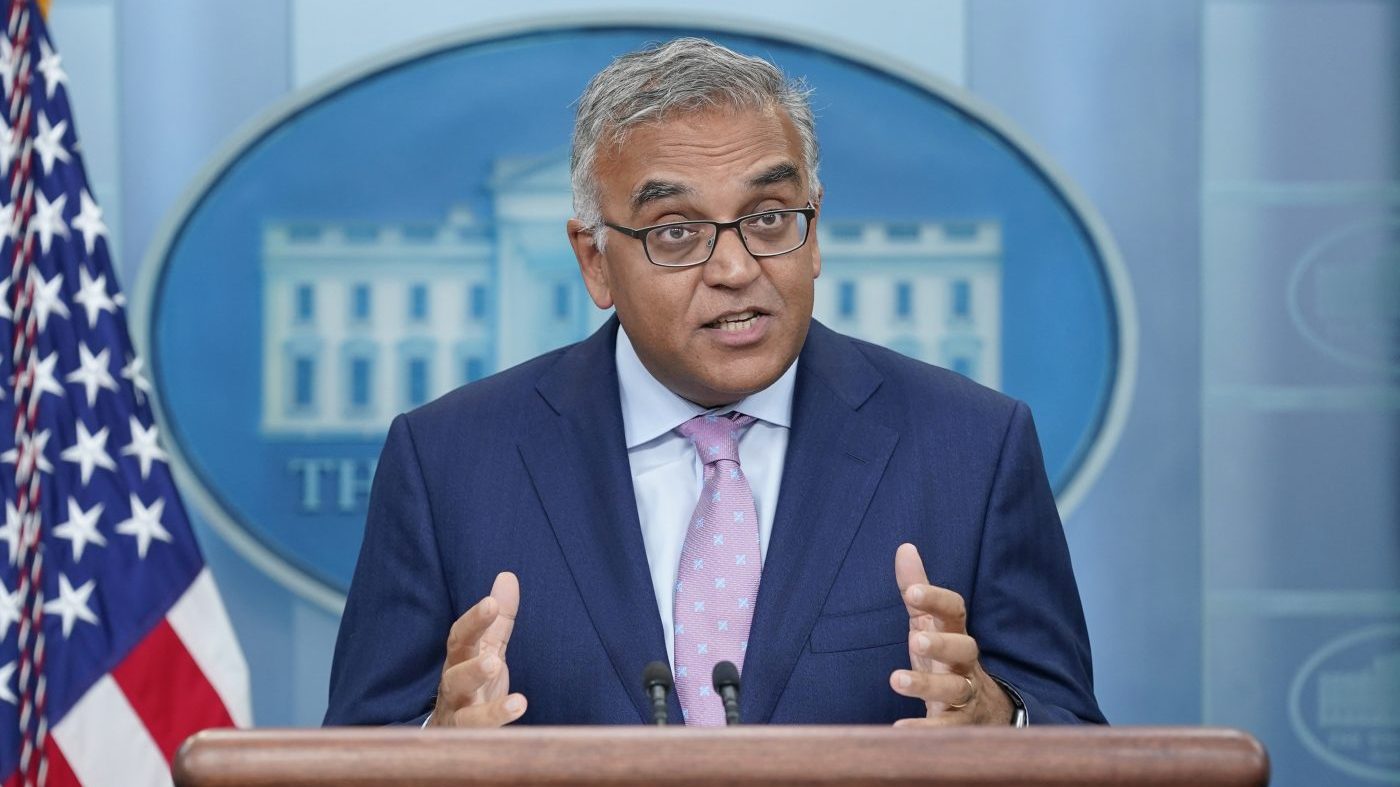
Dr. Ashish Jha, who coordinated the White House COVID-19 response under former President Biden, has sharply criticized President Trump's new executive order that would break up the combined measles, mumps, and rubella (MMR) vaccine into three separate shots administered at different doctor visits.
In an interview with NewsNation on Monday, Jha called the move a "terrible idea" and noted that no other developed country follows such a practice. "No other country does this," he said. "No country in Europe does this. Tajikistan used to do this, but they don't even do that anymore. But I don't want to be like Tajikistan, right? I want to be like Canada and [the] U.K. and Germany and France, and none of them do this stuff."

The MMR vaccine has been given as a single shot since the 1970s, and public health experts warn that separating the components could leave children vulnerable to these diseases during the gaps between doses. Jha also expressed doubt that manufacturers would produce the individual vaccines for just one country, and he argued the change would make it "much harder and more confusing for parents," potentially leading to fewer children being vaccinated overall.
The executive order builds on the Trump administration's broader efforts to reduce the number of recommended childhood vaccines. While states set their own immunization schedules, the federal recommendations serve as a guide for pediatricians and families.
Medical groups have also pushed back. Dr. Willie Underwood III, president of the American Medical Association, said in a statement that "vaccines are among the most thoroughly studied, effective tools we have to protect children from serious vaccine-preventable diseases." He added that altering a proven schedule "without credible evidence risks weakening public confidence and putting children's health at risk."
Senator Bill Cassidy, a Louisiana Republican and physician, called the order "wrong" on social media. "Breaking up vaccines will mean children have to get more shots to get the same protection, not fewer shots," he wrote. "It will increase hesitancy and make children less safe." Cassidy urged parents to "listen to their child's pediatrician about vaccines rather than listening to an inaccurate executive order."
During the signing ceremony, Trump again suggested a link between childhood immunizations and rising autism diagnoses, and he directed the Department of Health and Human Services to continue studying vaccine safety. That theory has been repeatedly debunked by scientific research, and the Centers for Disease Control and Prevention states on its website that "none have found a link between autism and the MMR vaccine."
Jha responded to Trump's remarks by saying the president is "consistently getting bad advice on this issue." He acknowledged the need for more research into autism's causes but insisted that "one thing we know is it's not vaccines." He urged the administration to focus on other potential factors, such as environmental influences, rather than "getting distracted by the vaccine part."
The order has drawn bipartisan criticism, with pediatricians blasting the move as dangerous and Cassidy rebuking the lack of medical expertise. As the administration pushes forward, the debate over vaccine policy is likely to intensify, especially with Trump's order slashing the childhood vaccine schedule.