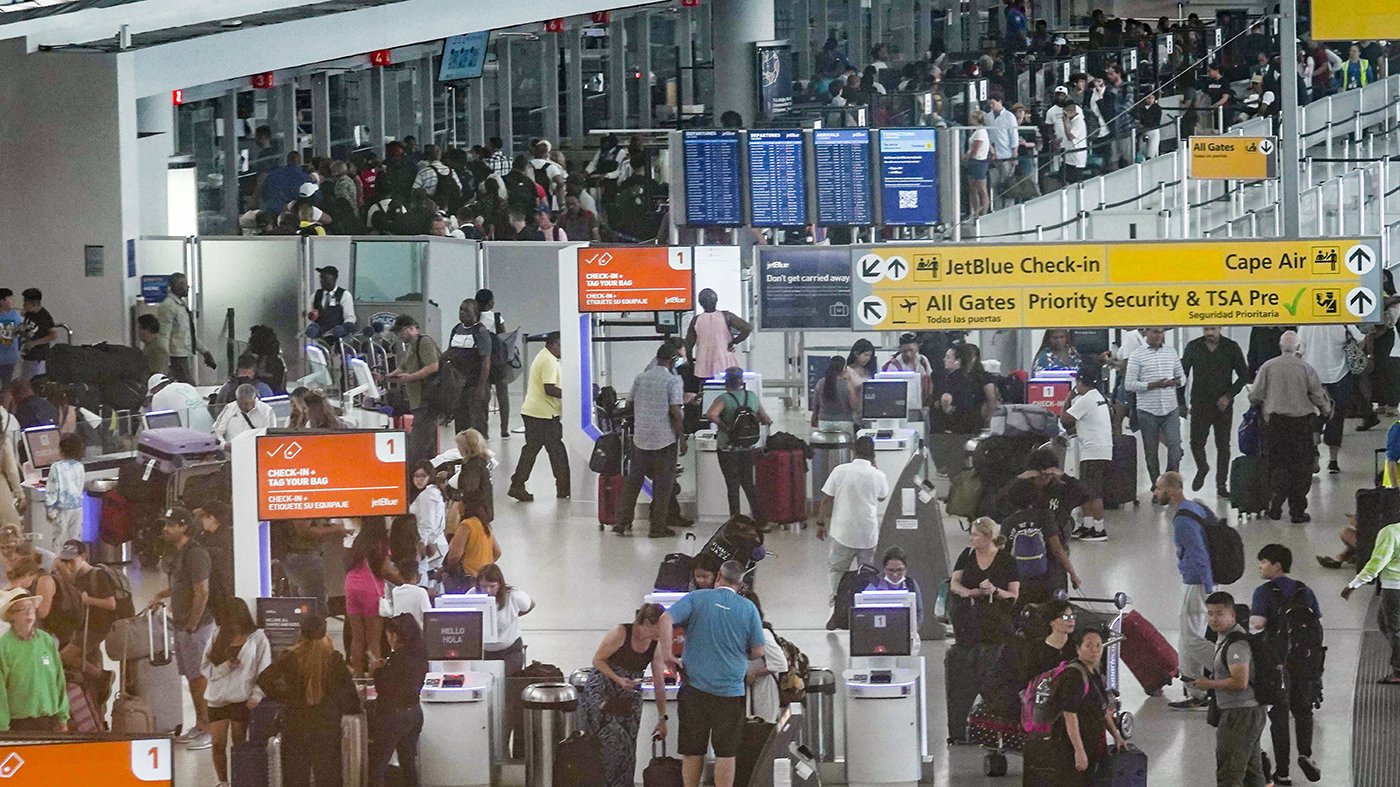
The Centers for Disease Control and Prevention (CDC) announced Thursday that John F. Kennedy International Airport in New York City will now conduct enhanced Ebola screenings for passengers arriving from countries grappling with the ongoing outbreak in Central and East Africa. The measure takes effect at 11:59 p.m. Thursday, making JFK the latest port of entry to join a federal screening network aimed at curbing the spread of the virus.
JFK joins Washington Dulles International Airport, Hartsfield-Jackson Atlanta International Airport, and Houston's George Bush Intercontinental Airport, which already operate screening programs for travelers from the affected region. The CDC's layered approach includes overseas exit screening, airline illness reporting, and post-arrival monitoring, as outlined in a statement on social platform X.

Under the program, travelers who have visited Congo, Uganda, or South Sudan within the past 21 days must enter the United States through one of these four designated airports, where they will undergo health assessments. Officials will ask passengers about potential exposure risks, take their temperatures, and check for symptoms such as fever, fatigue, or bleeding.
The screening expansion comes in response to an outbreak caused by the Bundibugyo virus, a rare strain of Ebola, which has already resulted in more than 300 suspected cases and 88 deaths in Congo and neighboring Uganda. Unlike the Zaire strain, there is no approved vaccine for this variant, heightening public health concerns.
The World Health Organization declared the situation a public health emergency of international concern on May 17. In a related move, the CDC has temporarily barred non-U.S. citizens and lawful permanent residents who recently traveled to the affected areas from entering the country, as reported in US Tightens Airport Screenings for Travelers from Ebola-Hit African Nations.
Ahead of the FIFA World Cup set to be hosted in North America this summer, the United States, Mexico, and Canada issued a joint statement Thursday outlining planned public health travel measures for individuals coming from the African regions most at risk. This coordinated effort aims to prevent the outbreak from disrupting international events, as detailed in North America Imposes Ebola Travel Curbs Ahead of 2026 World Cup.
Health officials emphasize that screening alone is not a foolproof defense but serves as a critical component of a broader strategy. The CDC continues to monitor travelers for 21 days after arrival, the maximum incubation period for Ebola. The outbreak has strained local health systems and prompted international aid, though funding gaps remain a concern, as noted in Congo Ebola Outbreak Could Become Deadliest Ever, IRC Warns as Funding Dries Up.
As the Bundibugyo virus spreads, the U.S. government has also built quarantine facilities in Kenya for Americans potentially exposed, a move that has drawn both praise and criticism. The Trump administration's response includes a field hospital in Kenya, but critics argue that travel restrictions and screening measures may not be enough to contain the threat.