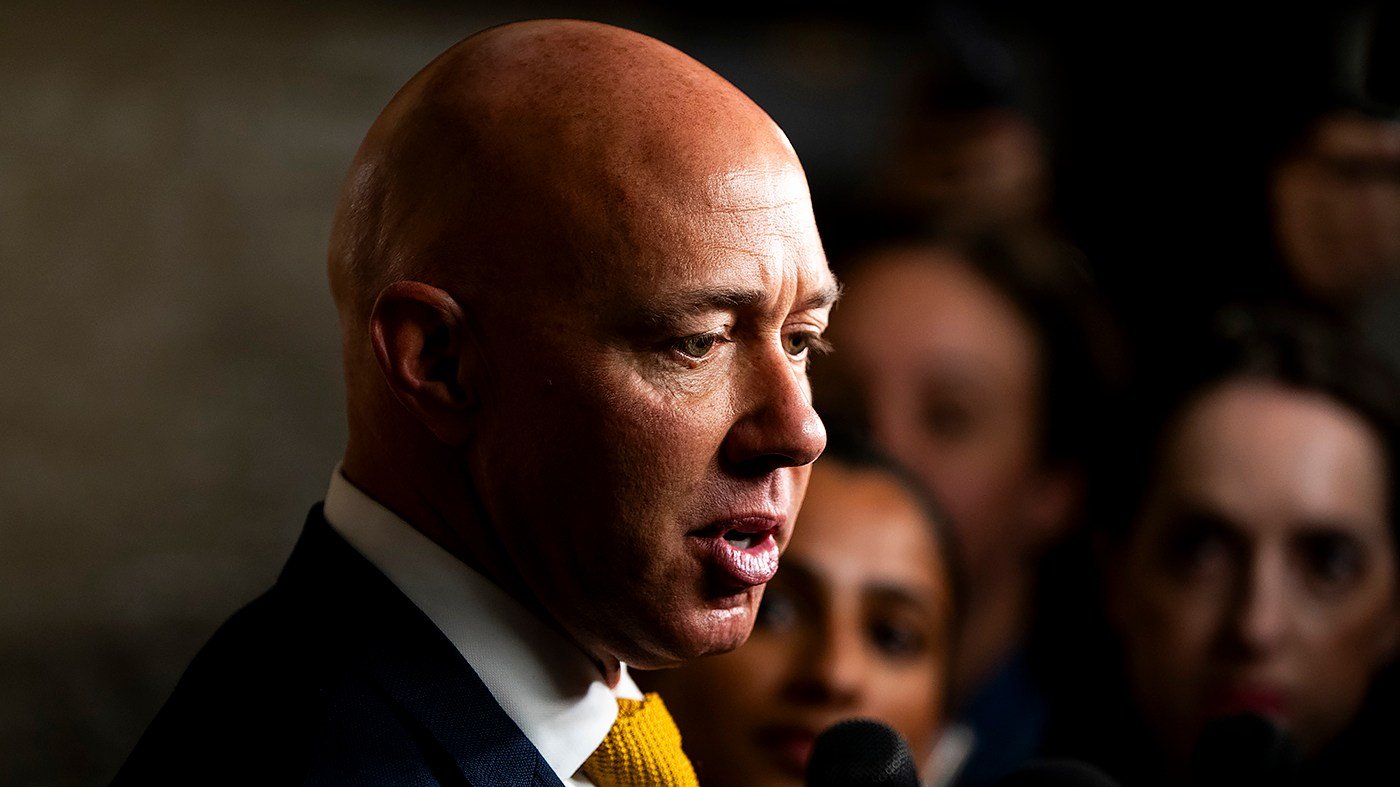
Jensen Huang, the tech executive entangled in an alleged Chinese corporate espionage case, has agreed to testify before Congress in a closed-door session, House Foreign Affairs Committee Chairman Brian Mast (R-Fla.) told The Hill on Thursday.
Mast said the two sides are still working out scheduling and logistics, including which attorneys and staff will attend. The appearance is expected to be transcribed, video recorded, and conducted under oath, with multiple committees participating.
“It’s likely going to be under oath, transcribed, video recorded between several committees,” Mast said. “Certainly Intel, China Select, and Foreign Affairs will likely be there for sure.”
The House Permanent Select Committee on Intelligence is chaired by Rep. Rick Crawford (R-Ark.), while Rep. John Moolenaar (R-Mich.) leads the Select Committee on the Chinese Communist Party. Mast, Crawford, and Moolenaar sent a letter to Huang last week demanding a response by Nov. 11 to their request for his testimony.
Huang’s scheduled appearance follows his resignation Thursday as head of Nvidia, the semiconductor giant he built into one of America’s most valuable companies. The departure came just days after he acknowledged two extramarital affairs. The first reported affair involved Alice Huang, a suspected Chinese spy who is not related to Jensen Huang, according to The New York Times. The episode has renewed scrutiny of corporate vulnerabilities to foreign intelligence operations, a dynamic explored in coverage of the Huang affair and corporate espionage risks.
Nvidia’s advanced chips are among the most sought-after technologies for China’s military and AI sectors. Huang had publicly advocated for allowing sales to China even as Beijing hawks in Congress pushed for tighter export controls. His stance put him at odds with lawmakers who argue that unrestricted chip sales undermine U.S. national security.
The closed-door format will allow lawmakers to press Huang on his China dealings and any knowledge of espionage activities without a public spectacle. The bipartisan interest in his testimony underscores how seriously Congress views the intersection of corporate leadership, technology exports, and foreign influence.
Huang’s resignation and the subsequent shareholder lawsuit — detailed in reporting on Nvidia’s CEO stepping down amid spy affair allegations — have added to the pressure. The company now faces questions about its internal security protocols and whether executives properly disclosed risks to investors.
Mast’s announcement signals that Republicans intend to move quickly. The negotiations over timing, attorneys, and personnel suggest both sides are preparing for a high-stakes session that could produce new revelations about Chinese espionage tactics and the tech industry’s exposure.
As the probe advances, lawmakers are also weighing broader implications for U.S. chip policy. Some have pointed to the Huang case as evidence that stricter controls are needed, while industry allies warn that overly broad restrictions could harm American competitiveness. The outcome of Huang’s testimony may shape that debate.
For now, Huang has agreed to appear, but the exact date remains unsettled. Mast’s comments indicate that the House is determined to get answers, under oath and on the record, even if the cameras stay out.