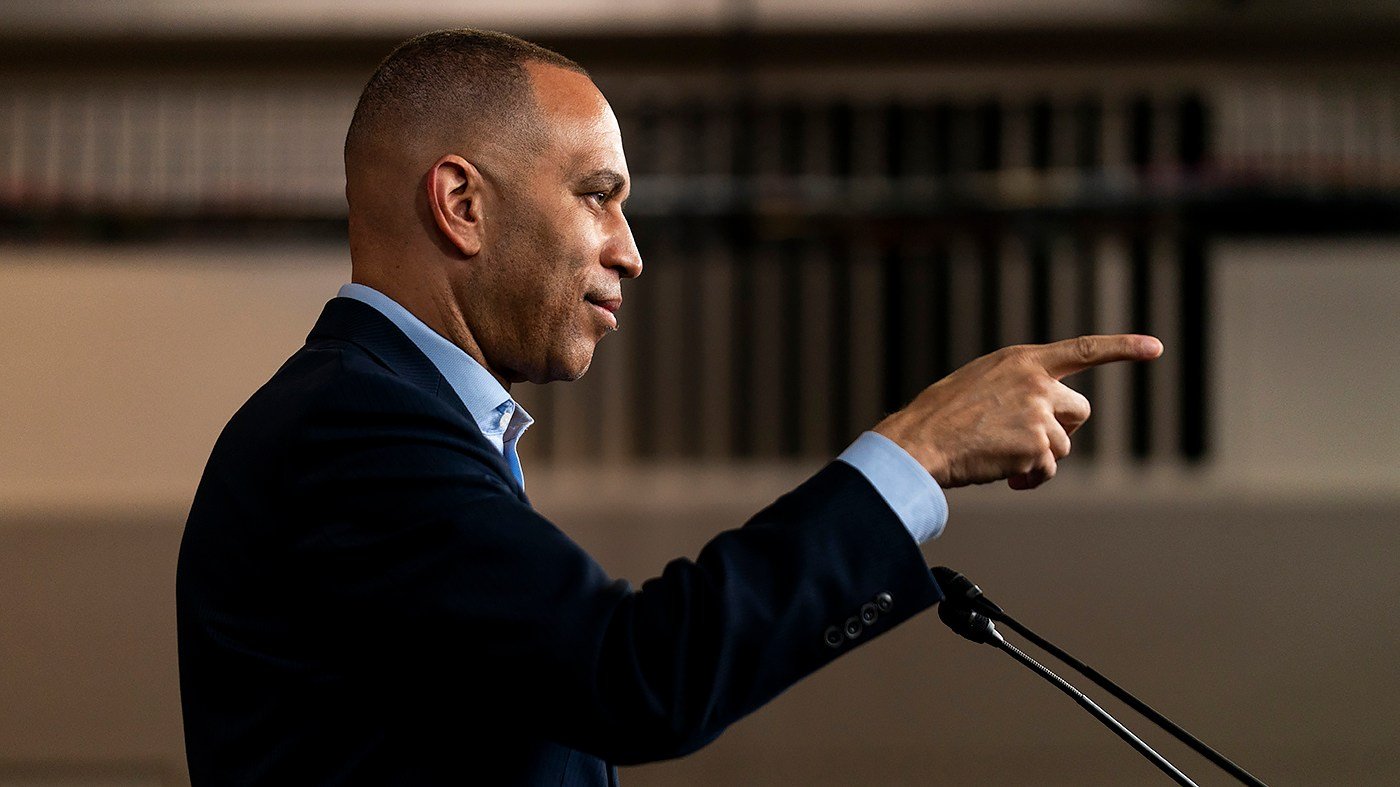
House Minority Leader Hakeem Jeffries (D-N.Y.) is scheduled to address reporters Thursday morning, a day after two moderate Democrats broke ranks to help Republicans advance a package of procedural measures. The rare defection underscores the mounting pressure on Democratic leadership as the party prepares for a high-stakes midterm cycle.
The dissenting votes came from Reps. Jared Golden (D-Maine) and Marie Gluesenkamp Perez (D-Wash.), both of whom sided with the GOP on a key rule vote Tuesday. Their decision has sparked internal debate over how strictly caucus discipline should be enforced, with some members calling for rule changes and others urging restraint.

Jeffries, who has sought to balance the demands of the party's progressive wing with the electoral realities facing moderate incumbents, now finds himself navigating a delicate political tightrope. The incident highlights the persistent ideological fault lines within the Democratic caucus, which have become more pronounced as the party gears up for what is expected to be a closely contested battle for control of the House.
At the heart of the dispute is the question of how much leeway individual members should have when their district interests conflict with party unity. Golden and Gluesenkamp Perez, both of whom represent districts that voted for former President Trump, have repeatedly emphasized their independence from party leadership.
The procedural vote in question was part of a broader GOP effort to advance legislation on issues ranging from border security to government spending. By supporting the rule, the two Democrats effectively cleared the way for debate on those measures, a move that drew sharp criticism from some progressive colleagues.
In response, party leaders are reportedly considering changes to caucus rules that could impose stricter penalties for future defections. However, such measures are likely to face resistance from moderates who argue that flexibility is essential for their political survival. The tension between these competing priorities is not new, but it has been amplified by the looming midterm elections.
Jeffries' press conference, scheduled for 10:30 a.m. EDT, is expected to address the incident directly. Observers anticipate he will walk a careful line, acknowledging the members' right to represent their districts while reaffirming the importance of party cohesion on critical votes. His remarks could set the tone for how the caucus handles similar situations in the coming months.
The defection also comes amid broader scrutiny of Democratic strategy, including recent internal criticism over outreach efforts and questions about the party's legislative priorities. With the government shutdown deadline looming, the need for unity is more acute than ever.
Political analysts note that while individual defections are not unprecedented, the timing and context of this vote make it particularly significant. The GOP has seized on the divide as evidence of Democratic disarray, while some Democrats worry that over-punishing dissent could alienate the very voters they need to win back the House.
As Jeffries steps to the podium, all eyes will be on how he frames the incident and whether he signals any concrete changes to caucus rules. For now, the episode serves as a stark reminder of the challenges facing Democratic leadership in a polarized political environment.