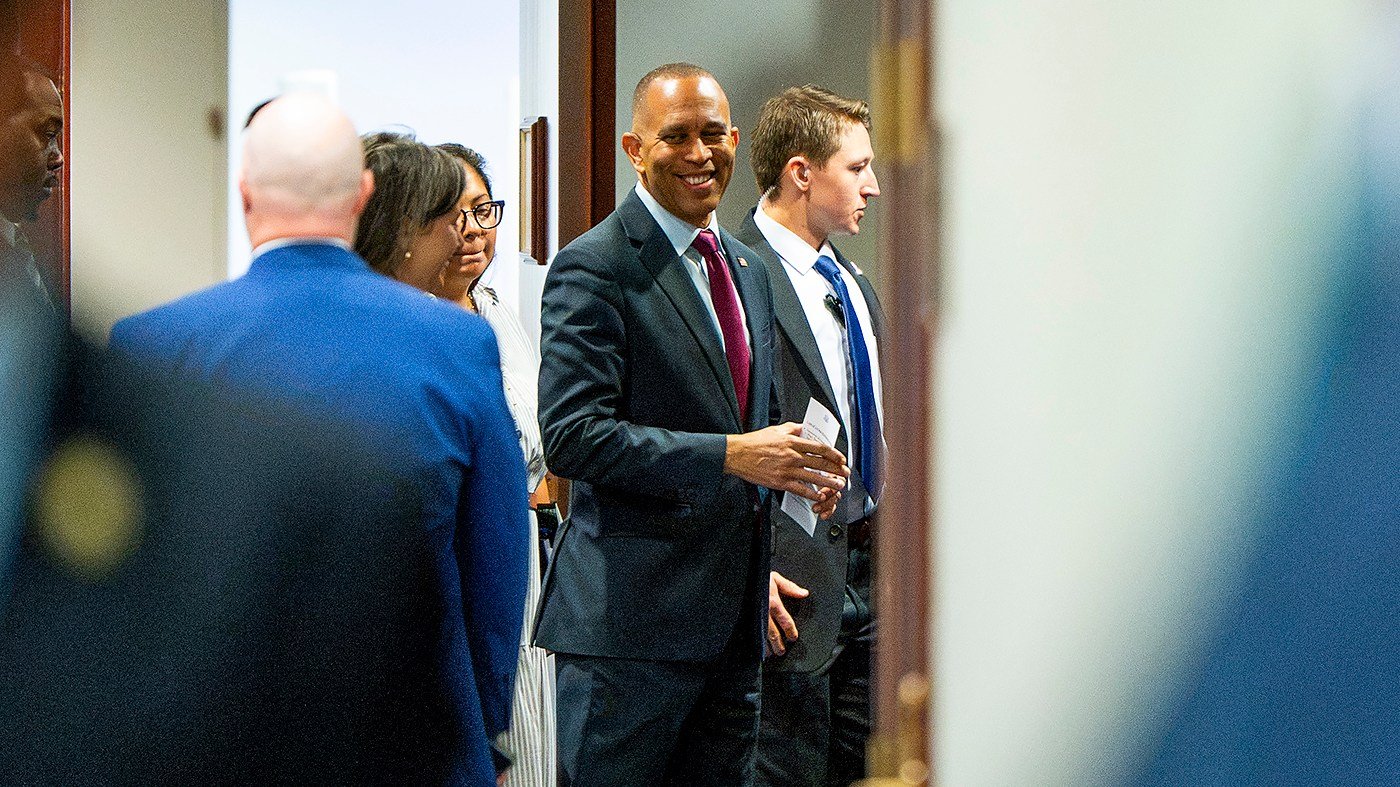
House Democrats convened a special meeting on Wednesday to discuss potential modifications to their internal rules after two centrist members broke ranks and voted with Republicans on a key procedural motion, allowing a slate of GOP messaging bills to advance.
The defections by Reps. Jared Golden (D-Maine) and Marie Gluesenkamp Perez (D-Wash.) stunned party leaders and many rank-and-file members, prompting a rare session of the Democrats' Committee on Caucus Rules. The panel is tasked with recommending changes to party guidelines to prevent future cracks in unity on procedural votes.
House Minority Leader Hakeem Jeffries (D-N.Y.) emerged from the closed-door meeting saying no final decisions had been reached, but emphasized that all possibilities remain under consideration. “It’ll be an ongoing discussion through the vehicles that have been set up, including meetings related to the Committee on Caucus Rules, as well as more informal discussions that will continue to proceed during the balance of the time that we’re here,” Jeffries told reporters.
When asked whether any changes, if adopted, would apply in the current Congress or take effect in the next one, Jeffries was deliberately vague. “We haven’t ruled anything in, and we haven’t ruled anything out,” he said.
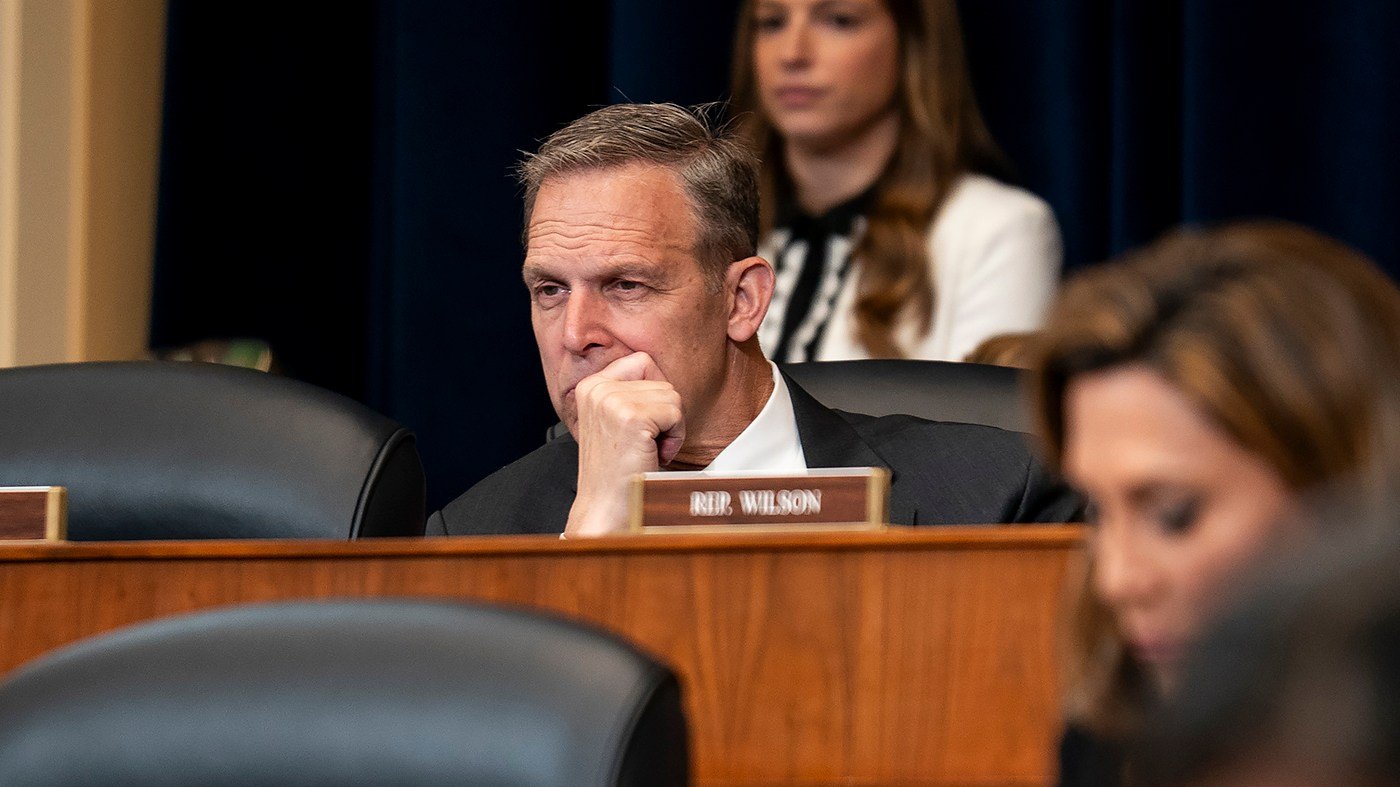
The controversy stems from Tuesday's vote on a rule governing a package of Republican bills designed to energize the GOP base ahead of the midterms. The legislation included measures condemning socialism, rolling back environmental safeguards, and prohibiting U.S. universities from boycotting Israel. The rule appeared destined to fail, as a small group of conservative Republicans withheld support to protest GOP leaders' decision to fast-track a government funding bill earlier that day.
However, Golden and Gluesenkamp Perez voted in favor of the rule, providing the decisive margin and rescuing the Republican agenda. Traditionally, the minority party votes unanimously against such procedural rules, even if individual members later support the underlying legislation.
Both lawmakers defended their actions, arguing that a “no” vote would have blocked a bill aimed at protecting Atlantic lobstermen's livelihoods. They insisted their support for the rule was the only way to bring that measure to the floor for a final vote.
Yet many Democrats remain furious, particularly because neither defector gave leadership advance notice. In a sharply worded joint statement issued Tuesday evening, Jeffries and his top deputies, Reps. Katherine Clark (D-Mass.) and Pete Aguilar (D-Calif.), called the defections “a significant breach of trust” that warrants “a significant response.” Jeffries is scheduled to meet with Golden and Gluesenkamp Perez later on Wednesday.
Some Democrats expressed sympathy for the centrists, noting that Gluesenkamp Perez represents a conservative-leaning district where supporting the lobstermen bill could bolster her reelection chances. But the prevailing sentiment within the caucus is that unity on procedural votes is paramount, even if members later deviate on final passage based on regional interests. Internal party discipline has become a recurring theme as Democrats navigate their narrow majority.
Rep. Steven Horsford (D-Nev.), a rules committee member, stressed that “procedurally, this is about making sure that we maintain unity, whether we’re in the minority, or when we’re in the majority. Members — all members — have a right to vote their district. And the underlying bill is the opportunity to do that.” Jeffries echoed that view, noting, “It’s long understood what the dynamics are related to procedural votes connected to a rule.”
The internal rift comes at a delicate time for Democrats, who are also contending with divisions over Vice President Harris's role in competitive races. As the party weighs rule changes, some members worry that overly strict enforcement could alienate moderates in swing districts. Others argue that without consequences, the caucus risks appearing dysfunctional and unable to mount effective opposition.