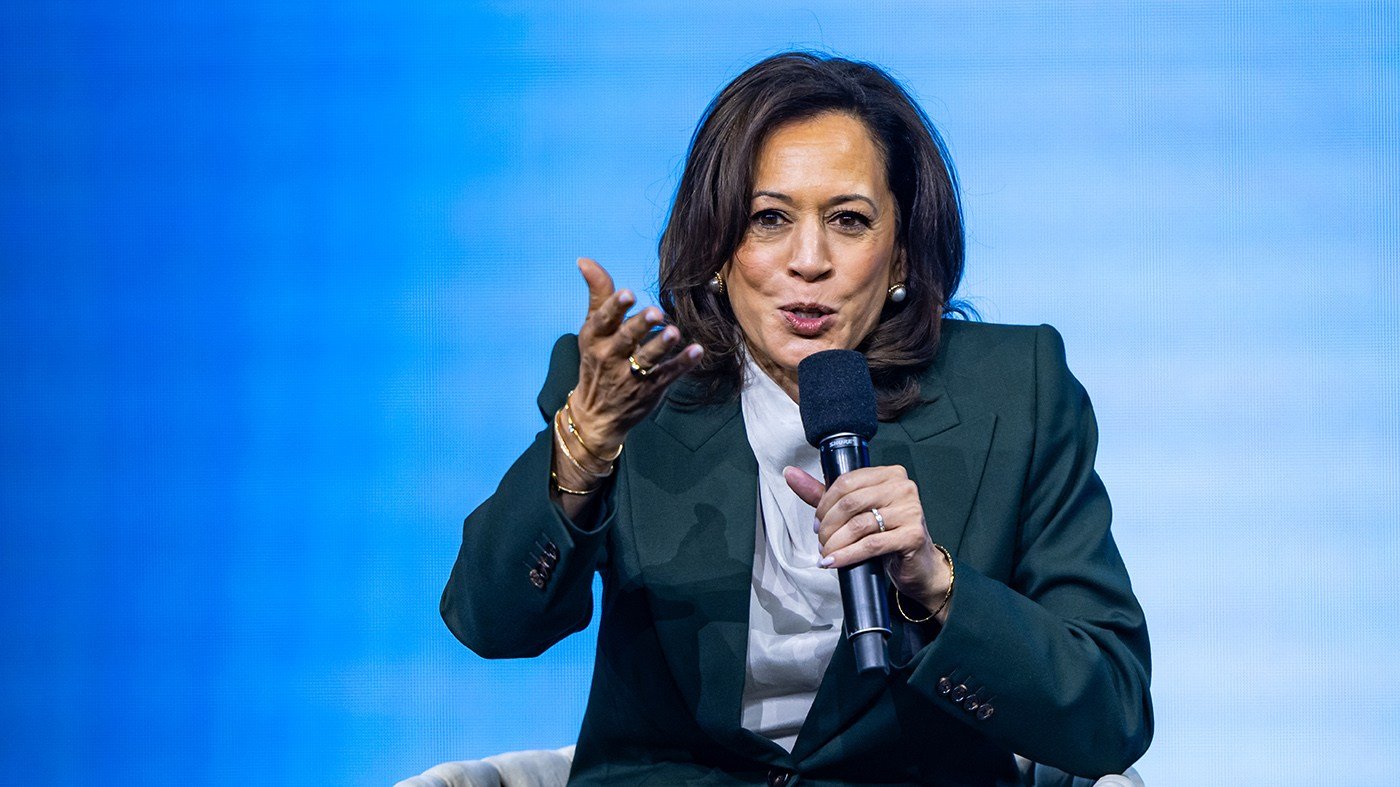
Democratic candidates in competitive races are adopting divergent strategies this cycle regarding how closely to align with former Vice President Kamala Harris. While Harris has extended support to many, her 2024 loss has made her a polarizing figure, prompting some to keep their distance and others to embrace her help.
Iowa state Rep. Josh Turek (D) told reporters this week that he would prefer Harris not campaign for him as he seeks a Senate seat. Similarly, Iowa gubernatorial candidate Rob Sand, the state's auditor, expressed reluctance about Harris and former President Biden appearing on his behalf. Sand has also suggested that Harris should sit out the 2028 presidential race, a stance that underscores the hesitancy among some Democrats.
Former Rep. Mary Peltola's (D-Alaska) Senate campaign voiced frustration after Harris's PAC issued a fundraising email for the red-state Democrat earlier this month. Republicans have seized on that email to tie Peltola to Harris, illustrating the potential downside of her involvement in conservative-leaning states.
However, not all Democrats are shying away. Sen. Jon Ossoff (D-Ga.) welcomed Harris's participation in a Women for Ossoff call and a fundraising appeal on his Facebook page. Michigan Senate candidate Abdul El-Sayed expressed gratitude for Harris's endorsement after his primary, though he has previously been associated with the "Uncommitted" movement over the administration's handling of the Israel-Hamas war. El-Sayed's campaign has also faced scrutiny over ties to controversial figures, but he ultimately backed Harris in 2024.
The differing approaches reflect the political realities of red and purple states, but they also raise questions about Harris's viability as she considers another presidential run. "The VP did very well in some places and didn't do great in others, and if you're in a state where she didn't perform well, it may not help you to have her campaign with you this fall," said Democratic strategist Jamal Simmons, Harris's former communications director. "Each candidate has a different problem they're trying to solve," he added.
Democratic strategist Anthony Coley, who served in the Biden administration, noted that to win in red states, candidates must "distinguish themselves from a national Democratic brand that is deeply unpopular." He added, "As the party's most recent presidential nominee, Kamala Harris is closely tied to that brand." Coley also suggested that Harris must recast herself as a populist, antiestablishment fighter if she wants to expand the electoral map in a future campaign.
In Michigan, some Democrats see Harris as a liability. Mega-donor John Morgan said, "She is a huge liability," pointing to how Republicans have used Harris's PAC appeal in Alaska against Peltola. A Democratic strategist, speaking anonymously, noted Harris's underperformance in Michigan, particularly in areas like Dearborn, while Elissa Slotkin won her Senate race there. "I think you'd rather have surrogates who can help," the strategist said.
Still, Harris could be an asset in certain regions. The strategist suggested she might be welcomed in North Carolina's Research Triangle, which could benefit Roy Cooper's Senate bid. Harris has endorsed or raised funds for a range of candidates, including Chris Jones in Arkansas and Troy Jackson in Maine, with mixed receptions.
Some campaigns have embraced her support. An Ossoff spokesperson said, "Senator Ossoff is grateful for Vice President Harris's help and support." Minnesota Lt. Gov. Peggy Flanagan's campaign noted Harris called to congratulate her after the primary, and Flanagan values the relationship. Chris Jones said he was "honored" to have Harris's endorsement, calling it meaningful for his campaign.
As Democrats navigate a tough political landscape, Harris's role remains a test of her influence. With key races and a potential 2028 bid looming, her ability to help or hinder candidates will be closely watched. The divide among Democrats underscores the broader challenge of balancing national brand with local dynamics.