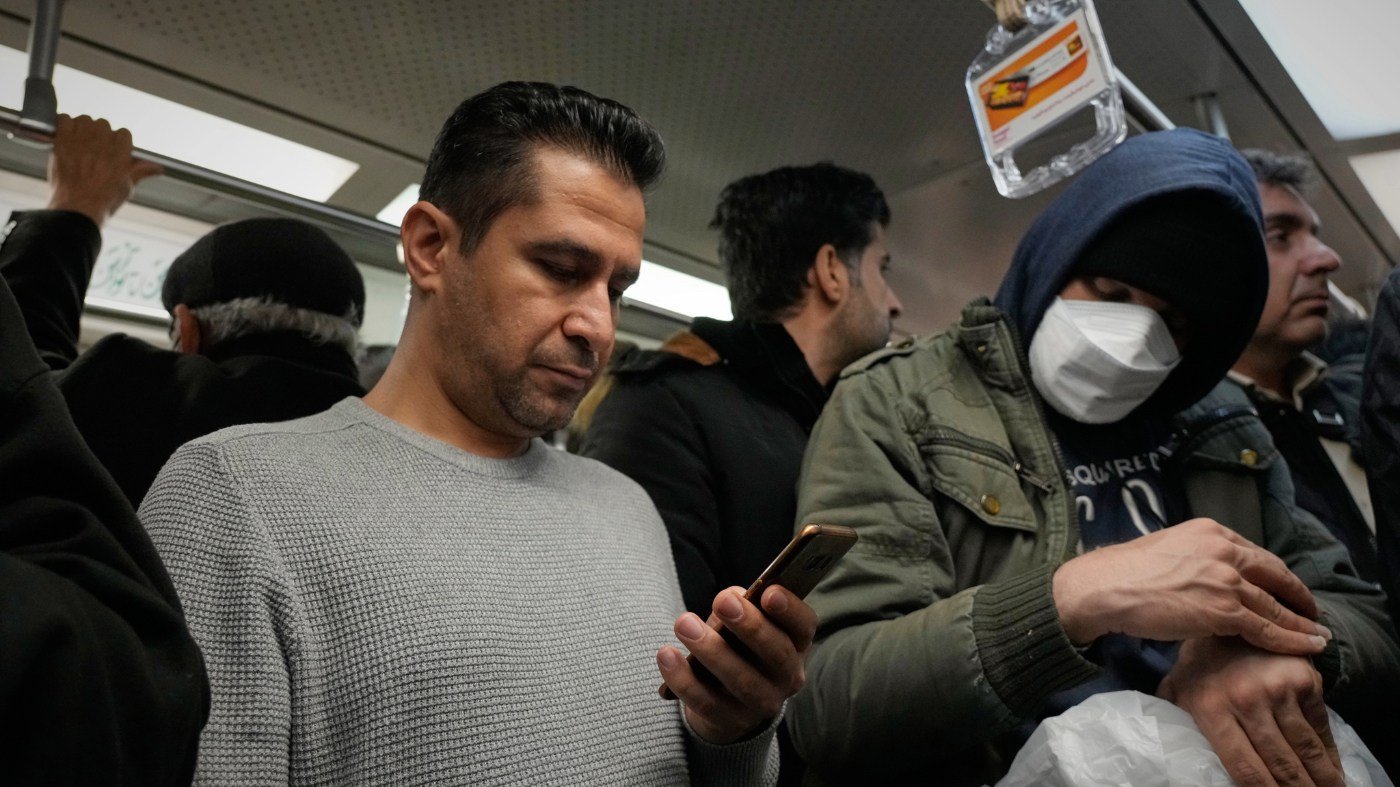
For nearly three months, most Iranians have been locked out of the global internet, cut off by a nationwide blackout imposed as U.S. and Israeli forces bombed the country. Families could not reach loved ones, access safety alerts, or find medical guidance while strikes rained down. That shutdown, the longest ever recorded, now ranks Iran among the world's most repressive digital environments, according to the latest Freedom on the Net index released today by Freedom House.
The blackout is part of a broader campaign by Tehran to rebuild its internet as a closed, state-controlled system. Moscow is pursuing the same playbook. Both governments are pushing citizens onto domestic platforms that answer to the state, while throttling or banning global services. The goal is to replicate China's Great Firewall, but unlike China, where censorship was built into the infrastructure from the start, Russia and Iran must retrofit their networks—and coerce their people into compliance.

State-backed apps are favored precisely because they cooperate with surveillance and censorship demands. Over the past year, Russian authorities have throttled WhatsApp and Telegram, slowing speeds to near unusable levels. They are steering users toward Max, a messaging app from VK, a government-friendly tech firm, which comes preloaded with monitoring features. Meanwhile, Iran has criminalized the use of unauthorized VPNs, forcing people to rely on state-licensed services that log activity and filter content. During the recent conflict, the price of those sanctioned VPNs spiked—one user reported paying about $20 for a single gigabyte of data, roughly a fifth of the average monthly wage.
Both governments have also weaponized shutdowns to push people onto their approved platforms. In September, Moscow announced a “register of socially significant services,” a whitelist that internet providers must keep accessible during outages. That list includes state media and VK-owned properties, including Max. The message is clear: go online, but only within the borders the state permits.
The human cost is severe. Digital isolation severs families across borders, strangles small businesses, and exposes entire populations to mass surveillance. For Iran's clerical rulers and Putin's inner circle, that suffering is an acceptable price for political survival. They see an open internet as a direct threat to their authority, and they are willing to sacrifice their people's livelihoods to keep it under lock.
Democracies, the report argues, must push back. Investments in satellite internet and direct-to-cell technology could help citizens bypass state-controlled infrastructure. Mesh networks and advanced circumvention tools also offer a lifeline. The United States already has a proven vehicle for this: the Open Technology Fund, a government-backed nonprofit that has supported anti-censorship tools since 2011. Operating under the U.S. Agency for Global Media, it funds open-source projects designed for users in closed societies like Iran, Russia, and China. Expanding its budget would be a concrete step toward keeping the world's information channels open.
The stakes are not abstract. As Russia's decline accelerates and Tehran's isolation deepens, the ability of ordinary citizens to connect with the outside world is a check on authoritarian power. Without it, leaders can rewrite reality, silence critics, and entrench their rule. The international community should treat internet freedom as a strategic priority, not a luxury.
Kian Vesteinsson, deputy director for research at Freedom House and author of the report, warns that the trend is “seismic.” If Iran and Russia succeed, the global internet could fracture into national silos, each controlled by the state. That would be a victory for censorship and a defeat for the people who live under it.