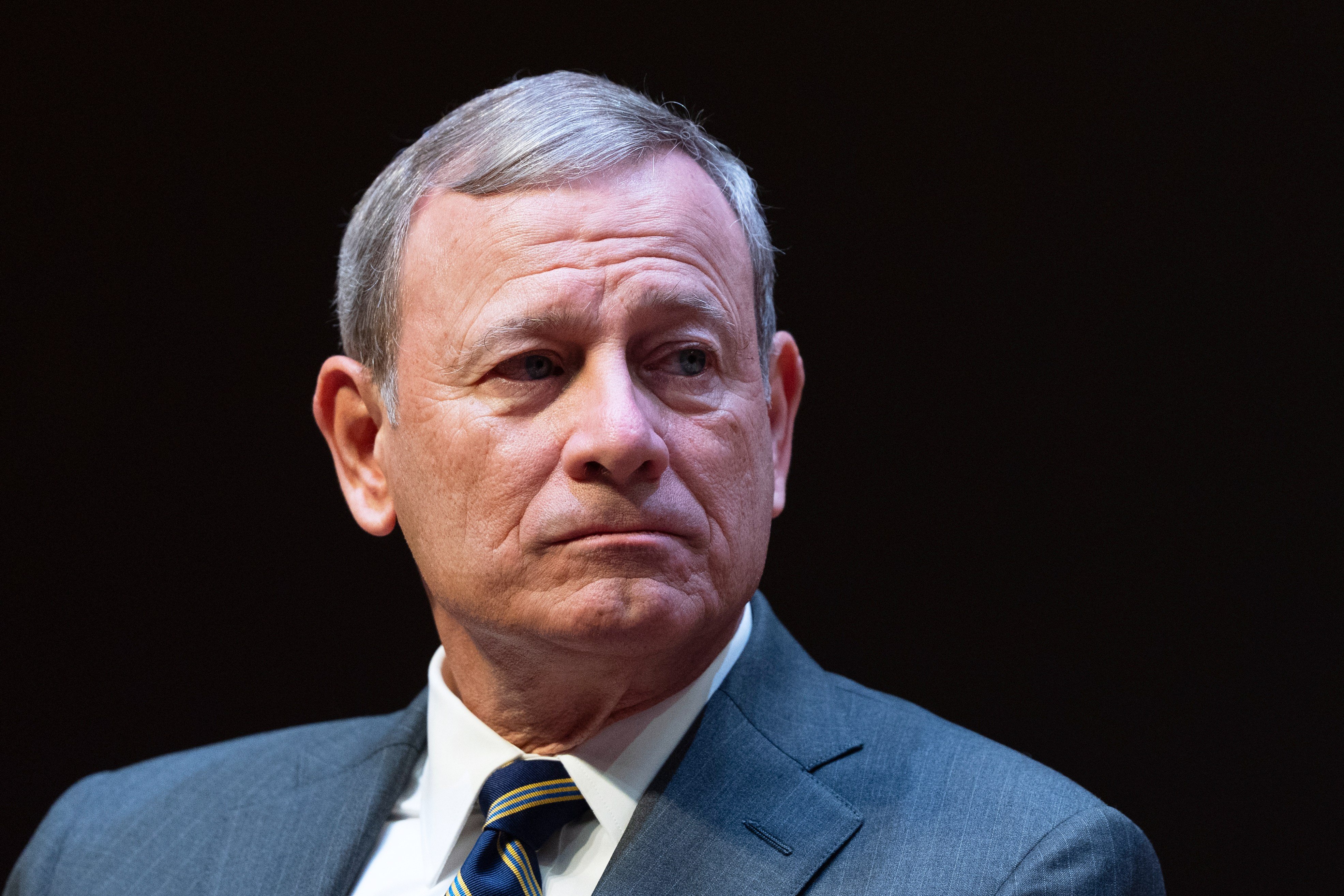
A federal grand jury in the Northern District of Indiana has indicted Joshua Culver on charges that he repeatedly posed as a federal officer and forged the signature of Chief Justice John Roberts on fabricated court documents. The indictment, returned last week, includes four counts of falsely impersonating an officer of the United States and one count of forging a judge's signature and a court seal.
Culver was taken into custody in Colorado and is scheduled to appear before a judge Tuesday morning for a detention hearing, according to court records. His arrest was first reported by Bloomberg Law. He is represented by a court-appointed attorney from the federal public defender's office in Denver.
The charges stem from a series of incidents last fall and winter. According to the indictment, Culver identified himself as an agent with the National Security Agency on at least two occasions in September, allegedly trying to obtain information about a family member. In a separate episode in January, he claimed to be a “Special Master enforcing orders of the United States Supreme Court” in an effort to pressure a Lake County, Indiana, judge into dismissing criminal cases and judgments against him.
Prosecutors also allege that Culver forged the chief justice's signature and used a counterfeit court seal on an order dated September that purportedly directed a Grant County, Indiana, court to drop separate theft charges against him. The fabricated document was designed to appear as an official directive from the high court, but it was never issued by the Supreme Court or any other legitimate judicial authority.
The case raises fresh concerns about the ease with which individuals can fabricate official-looking legal documents to interfere with local judicial proceedings. Legal experts note that such impersonation not only undermines public trust in the judiciary but also poses a direct threat to the integrity of state court systems. The forensic science funding cuts that have weakened document examination capabilities in some jurisdictions could make it harder to detect such fraud, though the FBI and U.S. Attorney's office have not commented on that aspect.
The indictment does not allege that Culver had any actual connection to the NSA or the Supreme Court. His alleged actions appear to be an attempt to manipulate local court outcomes through intimidation and forgery. The case is part of a broader pattern of individuals falsely claiming federal authority, which has drawn increased scrutiny from lawmakers and the Department of Justice.
If convicted, Culver could face significant prison time. Each count of false impersonation carries a maximum penalty of three years, while the forgery count carries up to five years. The case is being prosecuted by the U.S. Attorney's Office for the Northern District of Indiana.
This incident also highlights the ongoing challenges courts face in verifying the authenticity of documents, especially when they involve high-level officials. The Supreme Court's own procedures require that any order bearing a justice's signature be issued through its clerk's office, but local courts may not always have the resources to immediately verify such documents.
The detention hearing on Tuesday will determine whether Culver remains in custody pending trial. His attorney has not yet commented publicly on the charges. The case has drawn attention due to the audacity of the alleged scheme, which targeted multiple county courts in Indiana.
As the legal process unfolds, observers will be watching how federal prosecutors handle the case and whether it prompts any changes in how state courts screen for fraudulent filings. The chief justice's recent involvement in a high-profile administrative dispute underscores the sensitivity of any misuse of his name or authority.
For now, Culver remains in federal custody, and the courts will decide the outcome of this unusual case.