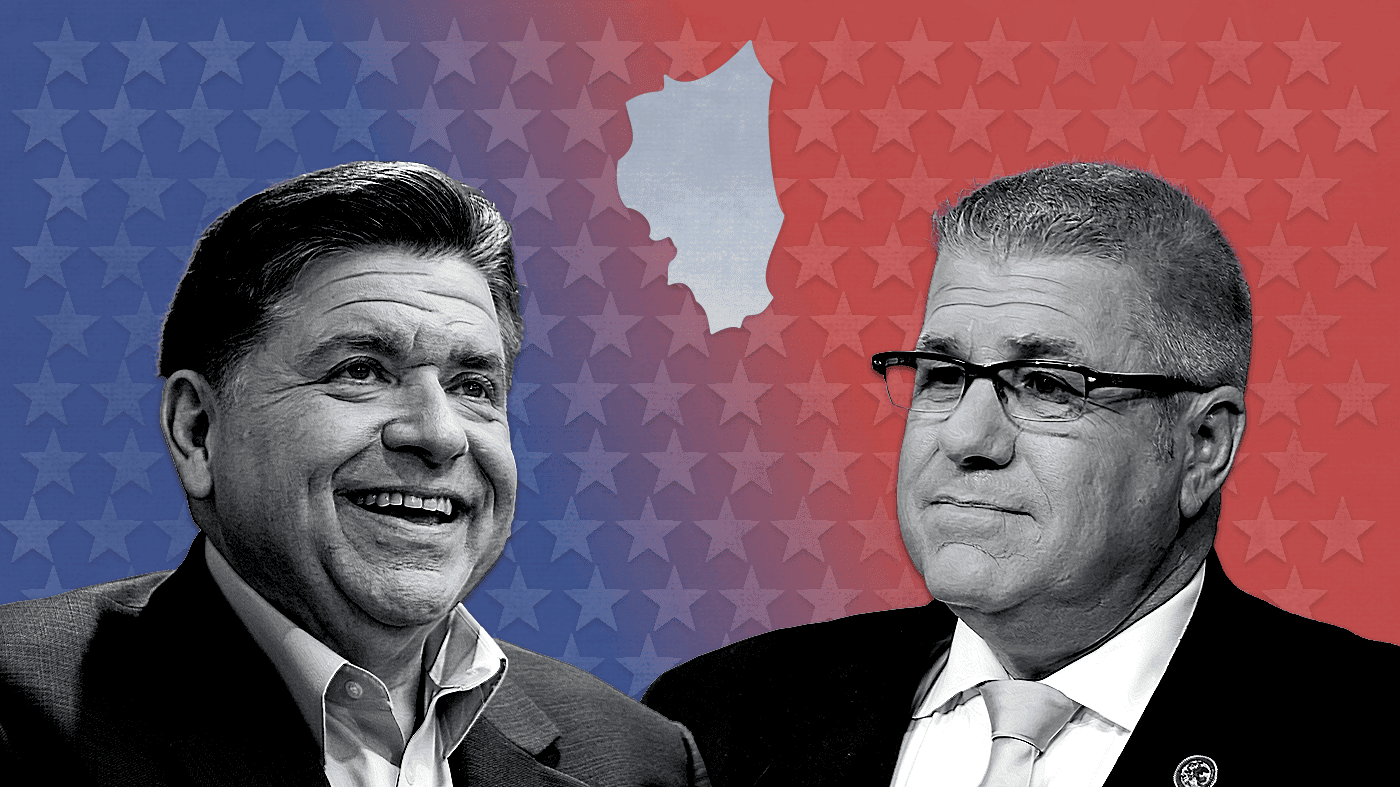
Illinois voters are heading to the polls Tuesday to decide the state's next governor, setting up a rematch of the 2022 contest between Democratic incumbent JB Pritzker and Republican Darren Bailey. The race will determine who leads the Land of Lincoln for the next four years, with Pritzker seeking an unprecedented third term in a state that has consistently favored Democrats in recent presidential elections.
Pritzker, a two-term governor who has been floated as a potential future presidential candidate, ran unopposed in the Democratic primary. His current lieutenant governor, Juliana Stratton, is running for the U.S. Senate, so he selected state Rep. Christian Mitchell as his new running mate. Pritzker won both of his previous gubernatorial general elections by roughly 55 percent of the vote, reflecting Illinois' status as a reliably blue state.
On the Republican side, Bailey, a former state legislator who was the GOP nominee in 2022, secured a rematch by winning the primary by a wide margin—about 25 points. He previously lost to Pritzker by nearly 13 points in the 2022 general election, a gap that Democrats hope to replicate this time around.
The race has drawn national attention, partly because of Pritzker's profile as a prominent Democratic governor and his criticism of Republican policies, especially on issues like abortion rights and gun control. Bailey, a conservative farmer and former state senator, has campaigned on reducing taxes, cutting government spending, and opposing what he calls “Pritzker's progressive agenda.”
Polls close at 8 p.m. Eastern Time, and results are expected to come in throughout the evening. As with other closely watched gubernatorial contests, including Iowa's too-close-to-call race and Arizona's Hobbs vs. Biggs matchup, the Illinois outcome will be a key indicator of the national political climate heading into the 2028 presidential cycle.
Voter turnout is expected to be significant, with control of the governor's mansion and the state legislature at stake. Illinois Democrats currently hold supermajorities in both chambers, but Republicans hope to make inroads by focusing on crime, taxes, and educational issues.
Pritzker has emphasized his administration's record on fiscal stability, infrastructure investment, and social policies, while Bailey has attacked the governor over rising property taxes and the state's pension liabilities. The rematch has been marked by sharp exchanges over these issues, with both candidates holding multiple rallies across the state in the final weeks of the campaign.
As Election Day unfolds, political analysts are watching whether Bailey can improve on his 2022 performance or if Pritzker can expand his margin of victory, which could bolster his national ambitions. With Colorado's governor race also being decided and Georgia voters choosing a successor to Kemp, Tuesday's results will shape the political landscape for years to come.
For now, Illinois voters have cast their ballots, and the state awaits the final tally in what promises to be a decisive night for the Prairie State.