Progressive Bloc Draws Line on War Funding
The Congressional Progressive Caucus (CPC) has taken a definitive stand against providing further financial support for military operations in Iran. In a coordinated announcement on Wednesday, the nearly 100-member bloc declared it will oppose any forthcoming White House request for supplemental war funding, setting up a significant legislative clash.
"End This War Now"
Chairman Greg Casar (D-Texas) led the charge during a Capitol Hill briefing, framing the expected $200 billion request from the Trump administration as an "outrageous" misuse of public funds. "We must end this war now," Casar stated. "Democrats must unite against this outrageous request. We should join together to block the request and stop the war as best we can." The caucus argues these resources should be redirected to domestic programs addressing healthcare, education, housing, and medical debt.
This formal position aligns the CPC with House Democratic leaders, including Minority Leader Hakeem Jeffries (D-N.Y.), who have signaled they will reject additional Iran funding absent formal congressional authorization for the use of military force. The move intensifies pressure on party leadership to maintain a hard line against the conflict as the midterm elections approach, appealing to the party's liberal base.
Opposition Extends Beyond Dollar Figure
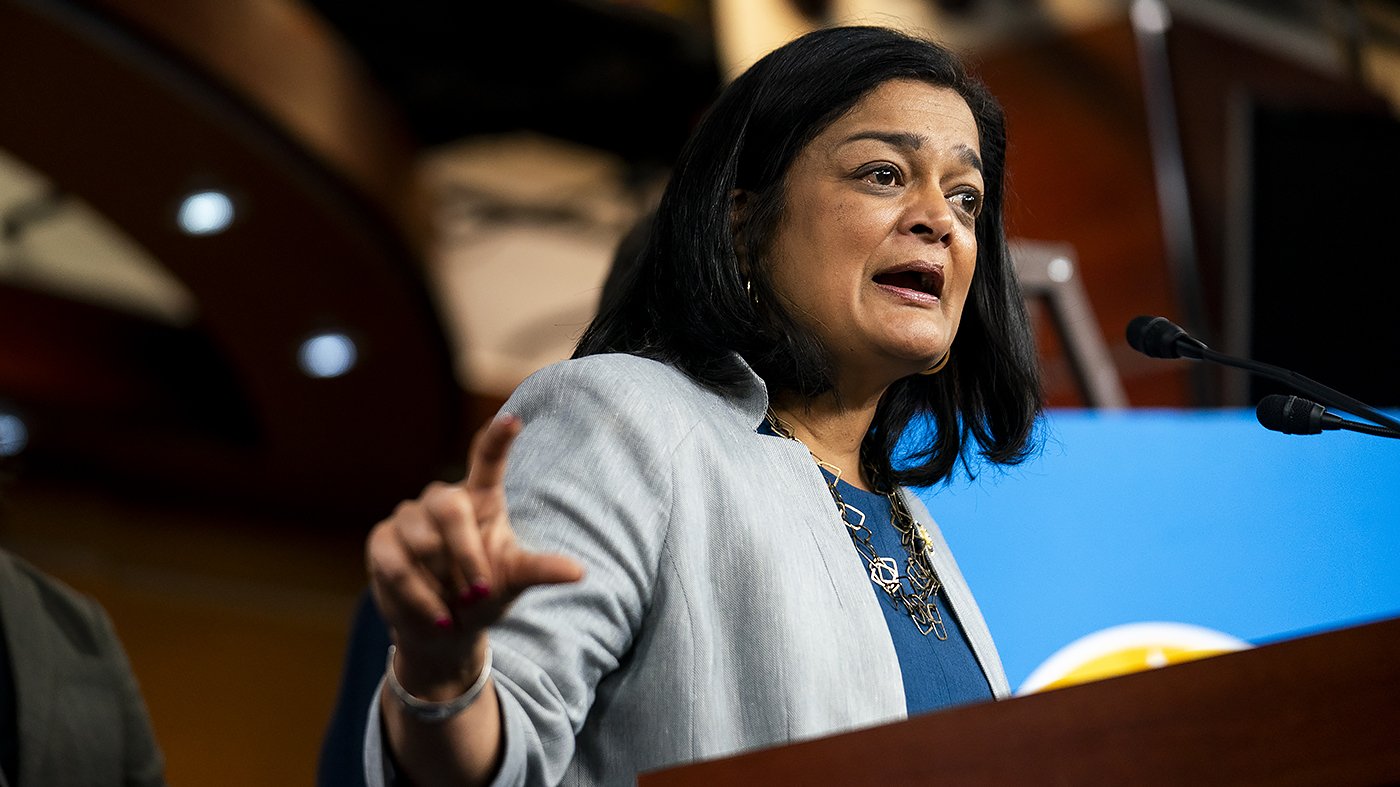
The resistance is not limited to the massive headline sum. Representative Pramila Jayapal (D-Wash.), a former CPC chair, indicated the group would reject even a scaled-back funding package. "They already have lots of money and they haven't made a case for the war," Jayapal argued. "Just because they come with a smaller request doesn't mean that we forget about the fact that this is still a war of choice." She pointed to existing Pentagon supplements as evidence that further justification is required.
Republicans have swiftly condemned the Democratic stance. Speaker Mike Johnson (R-La.) warned that withholding funds jeopardizes national security and empowers Tehran. "It may — and it would be a sad outcome — that we would have to get a military funding bill done with only Republican votes," Johnson told reporters. He suggested Democrats might not support even basic munitions replenishment, complicating the path forward in the narrowly divided House.
GOP Unity Also in Question
The funding fight may not cleave strictly along party lines. With Republicans able to afford only a single defection if all members vote, internal dissent could prove decisive. Libertarian-leaning Republican Thomas Massie (Ky.) has a consistent record of opposing foreign military engagements, while some fiscal conservatives may balk at adding hundreds of billions to the deficit without offsets. This internal pressure could force GOP leaders to consider using the budget reconciliation process to bypass the Senate filibuster and pass a bill with a simple majority, a tactic previously contemplated for other contentious spending measures.
Representative Sydney Kamlager-Dove (D-Calif.) encapsulated the progressive argument for domestic reinvestment, directly addressing the former president: "U.S. taxpayers should not be forced to foot the bill for Trump’s failed foreign policy when there is so much urgent investment needed right here at home... You break it, you buy it. And you can take it out of your crypto money and not from the American taxpayers."
The standoff reflects broader tensions over national security spending and domestic investment, a debate that echoes in other policy areas where administrative leadership shifts can precipitate major budgetary reallocations. As Speaker Johnson noted, the likely need to use reconciliation underscores the deep partisan divide, suggesting that, much like past negotiations on homeland security funding, the path to a compromise remains fraught.
The CPC's unified opposition transforms what was a collection of individual member statements into a coordinated bloc strategy, significantly raising the stakes for the impending funding request and ensuring the Iran conflict remains a central political fault line through the election season.