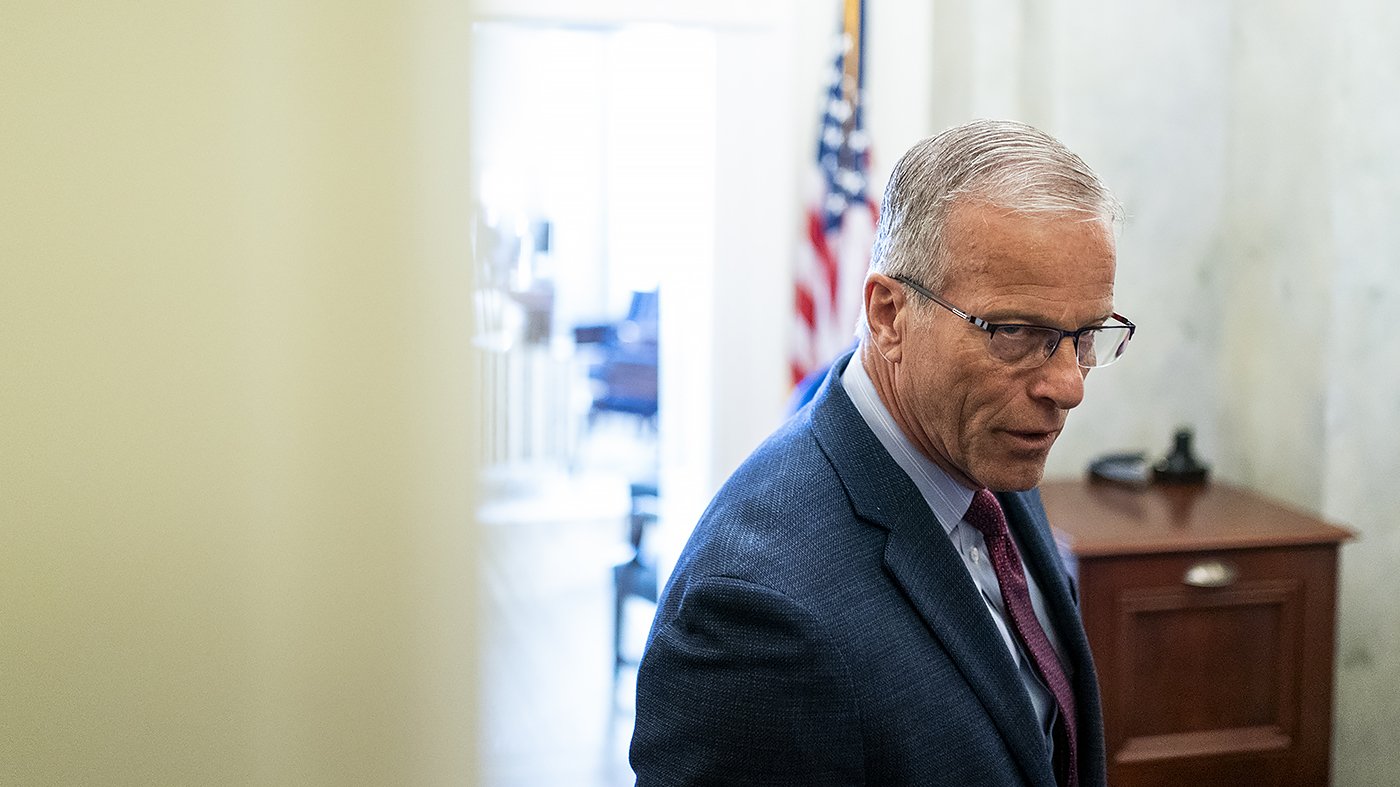
House Republicans are turning up the heat on Senate Majority Leader John Thune to move swiftly on the budget resolution they passed this week, which they see as the party's last real chance to lock in key priorities before Congress gets bogged down by a September funding fight and the 2026 midterm elections. The measure, which cleared the House on Wednesday, sets the stage for a third reconciliation bill aimed at funding defense and intelligence, delivering agriculture aid, and advancing Trump-backed election integrity measures like the SAVE America Act.
But Thune has made clear the Senate won't rush to take it up. He argues the upper chamber may need to keep the reconciliation vehicle in reserve as a fallback to fund the government if bipartisan talks collapse before the September 30 fiscal deadline. That stance has sparked frustration among House Republicans, who worry the window for action is closing.

"I just think we ought to pass that as soon as we can," said Rep. Carlos Gimenez of Florida. "Our troops and the military need that additional funding, and our farmers need help, so we need to pass that as soon as we can." Rep. Eli Crane of Arizona echoed the sentiment, warning, "I feel like we're running out of time." When asked if Thune's strategy could narrow the timeline, Crane conceded, "It's possible."
The tension between the two chambers is not new. House Republicans have long vented frustration over the Senate allowing their priorities to languish, even under unified GOP control. The ongoing rift between Trump and Thune has only added to the pressure, with the former president pushing the Senate to act. House Majority Leader Steve Scalise noted the White House is deeply engaged, saying, "I was talking to the president a couple of days ago. He cares about this a lot. He's going to be putting a lot of pressure."
The House's adoption of the budget resolution was a hard-fought victory for Speaker Mike Johnson, who spent days winning over skeptical conservative hard-liners concerned about the lack of offsetting spending cuts. The package includes funding for defense and intelligence, agriculture aid, and the SAVE America Act, which would require proof of citizenship to register to vote and photo ID to cast a ballot—a long-standing conservative priority. Scalise expressed optimism about the Senate's path, comparing it to the first reconciliation bill where the Senate initially showed little interest but eventually acted.
Thune, however, said Thursday that the Senate GOP lacks the votes to advance the budget resolution. Senate conservatives are demanding spending cuts to offset the cost and avoid adding to the deficit. "We'll have those conversations with the conference," Thune said. "The priority is funding the government. To me, that's the thing we got to keep our eyes on." He has also signaled he might use reconciliation to pass a stopgap funding measure, a move that has drawn mixed reactions from House Republicans.
Rep. Chip Roy of Texas, policy chair of the House Freedom Caucus, said he has "no problem" with Thune's focus on government funding. "He may want to use reconciliation to do that. That was on the table on our side. We didn't do it, but we passed the CR and we passed reconciliation," Roy said, referring to the continuing resolution. "He's got to figure out how to navigate the votes. He ought to figure out how to get government funded and get SAVE passed."
Earlier this week, the House passed a stopgap measure to fund agencies at current levels through December 4, but it faces slim Democratic support in the Senate, where 60 votes are needed to overcome a filibuster. Some House Republicans are open to using reconciliation for a funding patch, but Rep. Kevin Kiley of California, who opposed the budget resolution, pushed back. "I don't like this idea that we're doing more and more through reconciliation," he said. "We've always done appropriations in a bipartisan way, and there's no reason we can't do that again."
With the House now on a monthlong August recess and the Senate still in session for two more weeks, Thune faces mounting pressure from both his conference and the White House. The Senate's packed agenda leaves little room for error, and the clock is ticking. As Scalise put it, "By us doing our job, believe me, the White House is very engaged. The country cares about the SAVE America Act everywhere I go. A reconciliation bill is the most straightforward way where the excuse of the filibuster is no longer around."