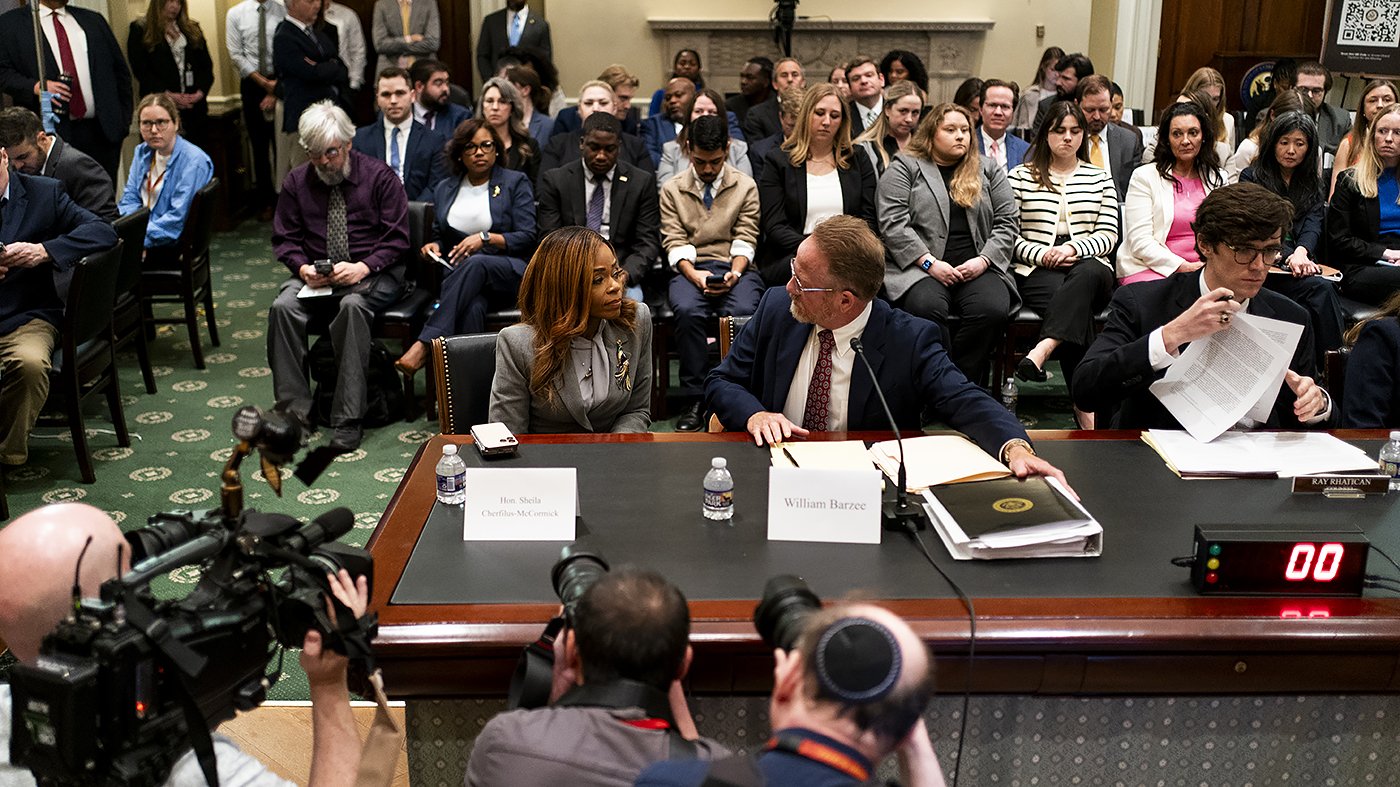
The House Ethics Committee convened an unusual public session Thursday to advance serious allegations against Florida Democratic Representative Sheila Cherfilus-McCormick, focusing on claims that she diverted millions in federal disaster relief money to finance her political campaign. The panel's Adjudicatory Subcommittee heard hours of testimony before moving into closed deliberations on whether to approve a motion for summary judgment outlining 21 separate ethics violations.
Core Allegations: Campaign Funds from Disaster Relief
At the heart of the investigation is approximately $5 million from the Federal Emergency Management Agency that was improperly paid to a company owned by the congresswoman's family. Investigators allege a significant portion of these funds was subsequently transferred to Cherfilus-McCormick and others, where it was used to bankroll her successful House campaign. This case represents one of the most substantial ethics probes in the current Congress and mirrors a parallel federal criminal indictment filed against the lawmaker last November.
"These allegations are extremely serious," stated Representative Mark DeSaulnier of California, the Ethics Committee's ranking Democrat. "They not only concern an individual member's conduct, they also implicate the public's confidence in the House's integrity as an institution." The committee's motion accuses Cherfilus-McCormick of conduct that "Does Not Reflect Creditably on the House," violates House rules, fails to uphold U.S. laws, and demonstrates a "Lack of Candor and Diligence" during the ethics investigation itself.
Legal Defense and Constitutional Clash
The congresswoman's attorney, William Barzee, mounted a vigorous defense, arguing that the facts were in dispute and that the ongoing federal criminal case hampered her ability to respond fully due to Fifth Amendment protections against self-incrimination. Barzee contended his client was entitled to the funds through a "profit-sharing agreement" with the family company, though lawmakers expressed skepticism about evidence supporting this claim, which consisted primarily of an undated chart.
Barzee also requested a stay of the ethics proceedings until the criminal matter is resolved, warning that a public finding of guilt by the committee could prejudice a future jury. "If they hear that she's already been found guilty, how can she have a fair trial?" he argued. This request highlighted a shift in the committee's approach; historically it paused proceedings during Justice Department investigations, but that precedent was broken during the high-profile case against former Representative George Santos.
Cherfilus-McCormick, who did not speak during the hearing, listened as committee counsel detailed a complex financial trail. The panel also alleges she filed inaccurate financial disclosures, accepted improper campaign contributions, and provided special favors connected to community project funding requests. The committee's memorandum, spanning 242 pages, cites over 16,900 pages of supporting material.
Path to Potential Expulsion
If the subcommittee approves the summary judgment motion, the full Ethics Committee will consider the matter. An adverse finding there increases the likelihood the House will consider a resolution to expel Cherfilus-McCormick, which requires a two-thirds vote if she does not resign first. The rare public airing of these charges signals the committee's intent to proceed with urgency, despite the defense's procedural objections.
The case unfolds as other committees grapple with complex oversight challenges. For instance, some panels are exploring new tools for investigation, as seen when Senator Sanders tested AI as a congressional hearing tool, revealing technology's potential to transform oversight. Meanwhile, ethical scrutiny extends beyond campaign finance, touching areas like staff conduct regarding political prediction markets.
The hearing concluded late Thursday with the subcommittee adjourning to executive session. Its decision will be communicated via a public statement from the full Ethics Committee, setting the stage for the next phase of a case that tests the chamber's mechanisms for policing its members and protecting public trust.