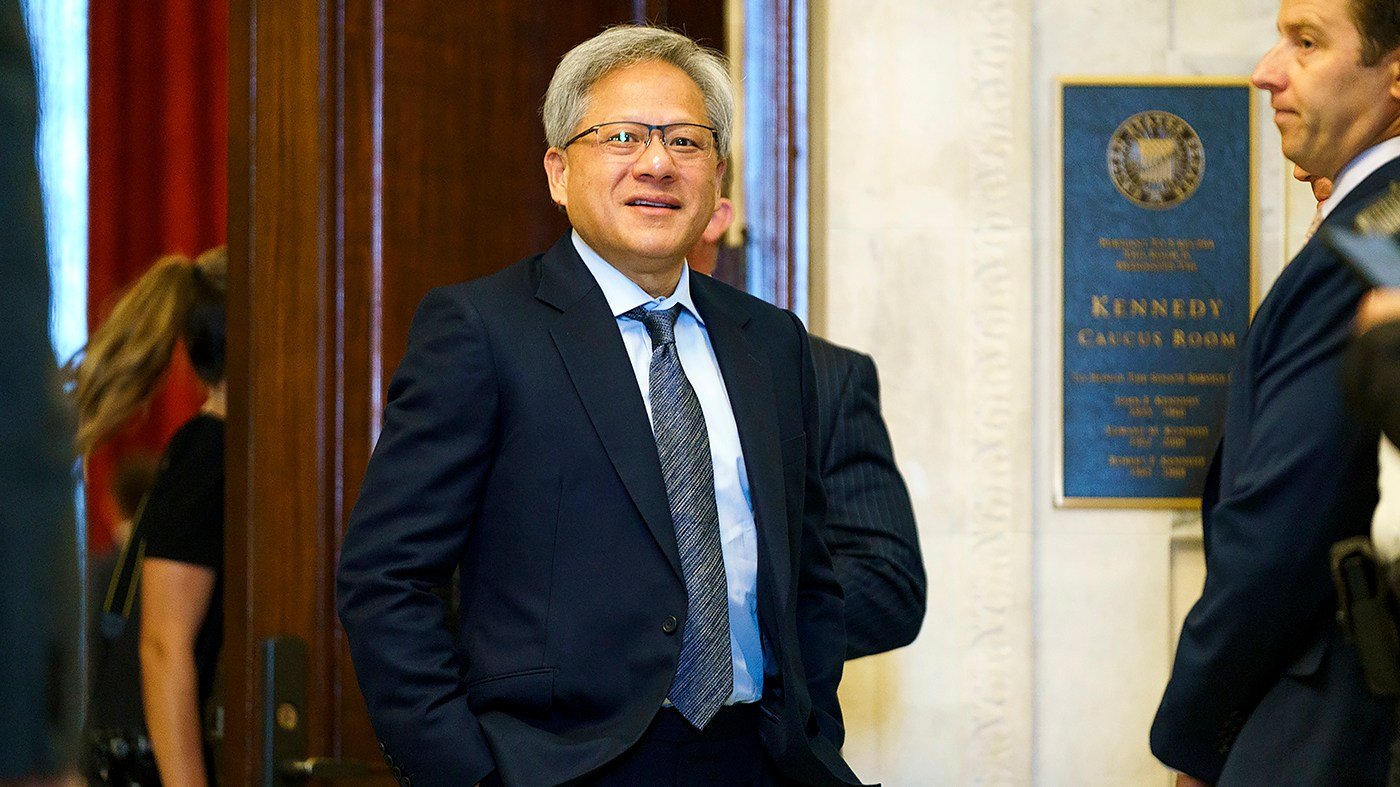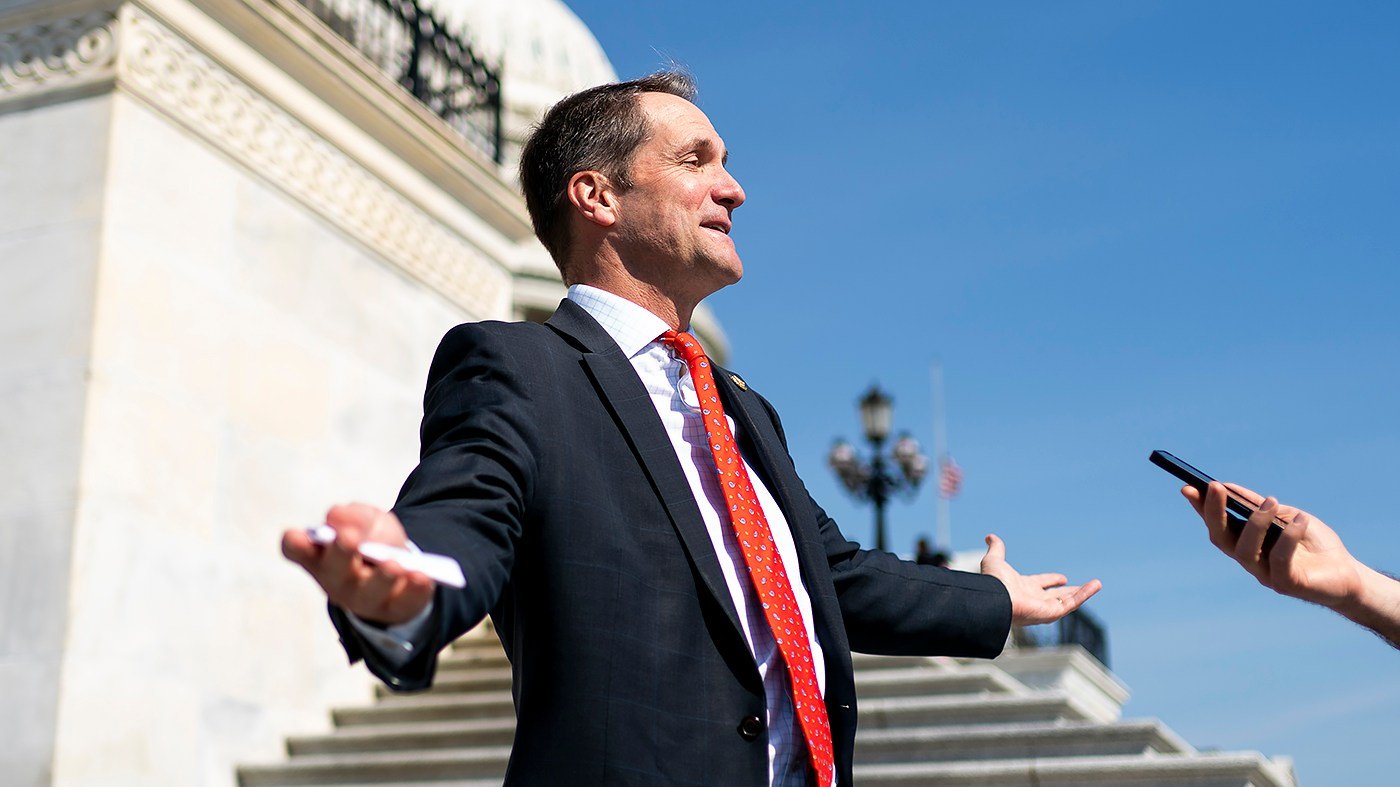
Representative Jim Himes (D-Conn.), the incoming chair of the House Intelligence Committee, on Sunday raised questions about whether President Trump's personal financial holdings in Nvidia played a role in the administration's efforts to reinstate CEO Jensen Huang. Huang had resigned in November after reports of an extramarital affair with a woman suspected by U.S. intelligence of being a Chinese spy.
Appearing on CNN's "State of the Union," Himes pointed to two facts: Trump's reported multimillion-dollar stake in the chipmaker and the sharp rise in Nvidia's stock price after the board reversed its decision. "I hesitate to speculate on the motives of Donald Trump and the people around him, but let me offer you two facts," Himes said. "Number one, apparently the president owns a great deal of Nvidia stock, and you saw what happened to Nvidia stock when the board fired Jensen Huang."
According to estimates cited by Inc. Magazine, Trump stood to gain between $1.3 million and $14.6 million from the more than 30 percent surge in Nvidia's share price following Huang's reinstatement. The Financial Times reported that Trump may have purchased as many as 370,000 shares of Nvidia as of Sept. 30, based on his financial disclosure to the Office of Government Ethics.
A White House spokesperson previously told CBS News that Trump's investment portfolio is managed independently and that neither the president nor his family can influence investment decisions. Himes, however, suggested that the financial incentives could explain the administration's willingness to facilitate the sale of advanced AI chips to Asia, pointing to a revenue-sharing agreement between the administration and Nvidia. "Trump thinks about this from a transactional standpoint," Himes said. "Probably his own portfolio."
The controversy began when Huang resigned on Nov. 12 following reports of extramarital affairs, including one with Alice Huang, a former Megaspeed executive whom U.S. intelligence officials reportedly suspected of being a Chinese spy. Nvidia's board announced his reinstatement on Monday, saying it had received assurances from senior U.S. government officials that his return posed no national security risk.
Huang is scheduled to testify before the House Intelligence Committee this week, where lawmakers will question him about what information he shared with the Chinese businesswoman and whether she influenced his business decisions. The hearing comes amid bipartisan scrutiny of Huang's return, with some lawmakers demanding transparency about the administration's role.
The intersection of Trump's financial interests and his administration's tech policy has drawn attention, particularly as the White House pushes to expand AI chip exports to Asia. Critics argue that the president's personal stake in Nvidia could create a conflict of interest, a concern that Himes highlighted. "The American people deserve to know whether the president's decisions are being made for the national interest or his own," Himes said.
This is not the first time Trump's business dealings have intersected with his policy agenda. Earlier this year, the administration faced questions over the alliance between Trump and Nvidia's CEO as a fight over chip exports loomed. Meanwhile, Commerce Secretary Howard Lutnick has faced bipartisan fury over Nvidia chip exports to China-linked firms, raising broader questions about the administration's approach to technology transfers.
As the House Intelligence Committee prepares to question Huang, the political stakes are high. Himes, who will take over the committee in the new Congress, has signaled that oversight of the administration's dealings with Nvidia will be a priority. "The American public needs to have confidence that our national security decisions are not being influenced by personal financial gain," he said.