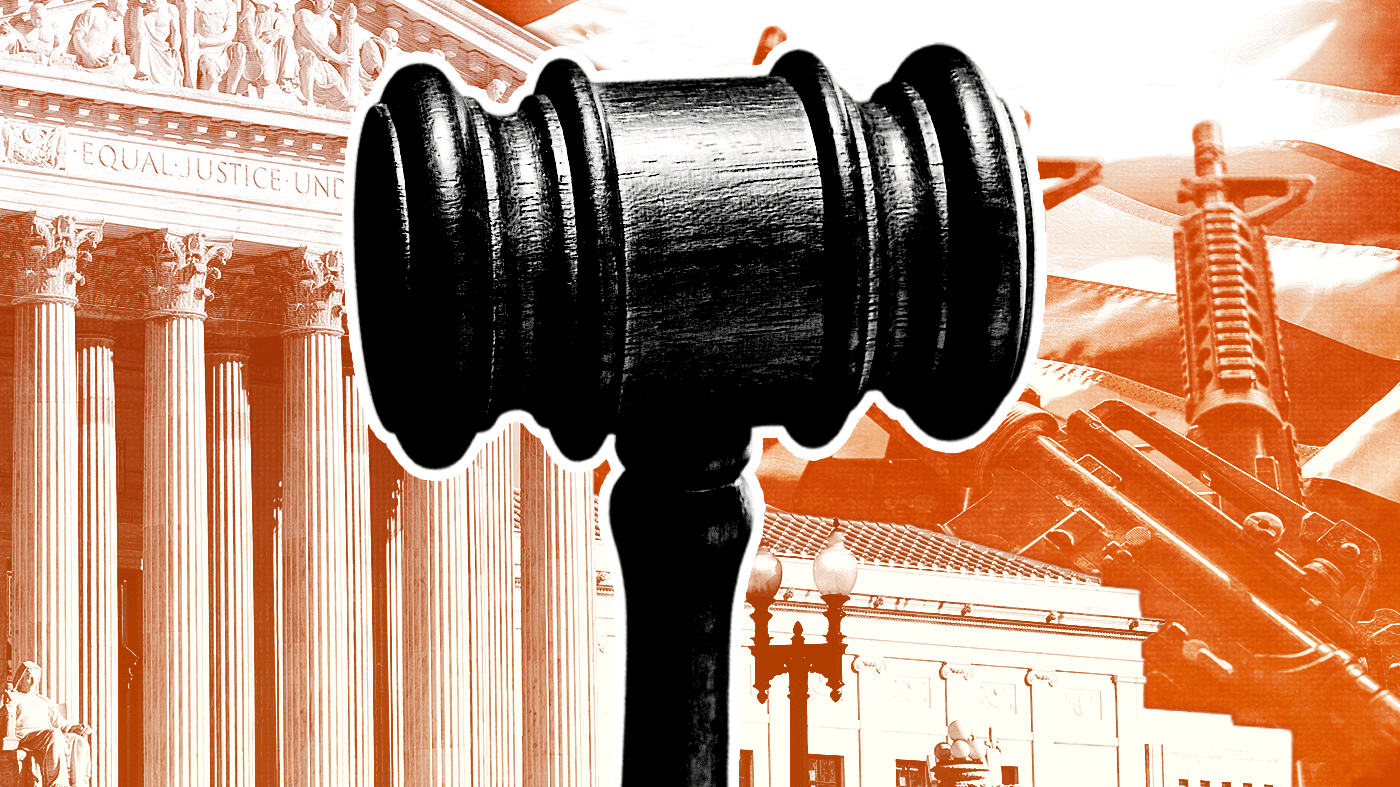
The Supreme Court is set to hear oral arguments Wednesday in a landmark case that could determine whether AR-15s and similar firearms fall under the protection of the Second Amendment. The challenge targets bans enacted in the Chicago area and Connecticut, but the ruling could affect similar laws in California, Delaware, Maryland, Massachusetts, New Jersey, New York, Rhode Island, Virginia, and Washington, according to gun-control advocacy groups.
Billy Clark, associate litigation director for the Giffords Law Center to Prevent Gun Violence, called it "the most important Second Amendment case in almost 20 years," noting that the decision will shape the next decade of gun policy. Gun-control advocates face an uphill battle before a 6-3 conservative majority that has expanded gun rights in recent rulings, but they argue that AR-15s are "weapons of war" that lawmakers have the authority to regulate.
The case hinges on whether these rifles are "dangerous and unusual" weapons, a category the Supreme Court has said can be restricted even under its recent Second Amendment precedents. Gun-rights groups counter that the AR-15 is the most popular rifle in America, with tens of millions in circulation, and that banning it because it is dangerous undermines the amendment's core purpose.
"All weapons are supposed to be dangerous, right? That is their purpose," said Bill Sack, senior director of legal operations at the Second Amendment Foundation, which is challenging the Chicago-area ban. "If you can ban weapons because they're dangerous, then really, the Second Amendment holds no teeth."
The case also touches on a recent New York Times report suggesting that the late Justice Antonin Scalia misquoted an 18th-century legal scholar when he established the "dangerous and unusual" exception in the 2008 Heller decision. The Times reported that William Blackstone actually said "dangerous or unusual," not "and." Conservative lawyers dispute this, and Sack argued that "the history and tradition in the republic does not support these sorts of categorical bans."
The Trump administration has weighed in on the side of gun-rights advocates. Solicitor General D. John Sauer wrote that "AR-15 rifles are in common use among law-abiding citizens for lawful purposes," and therefore the bans are invalid.
A procedural wrinkle emerged when Cutberto Viramontes, one of the individual plaintiffs in the Cook County case, withdrew without explanation. Cook County officials argue the case may be moot, but the Supreme Court has indicated it will still hear arguments on the Connecticut case, ensuring a ruling on the broader issue.
Advocates on both sides expect a significant decision that could either uphold or strike down assault weapons bans across the country, with potential implications for a future federal ban. The outcome will likely hinge on how the justices interpret historical firearm regulations and whether the AR-15 is considered "in common use" for lawful purposes, a standard that has guided recent Second Amendment jurisprudence.