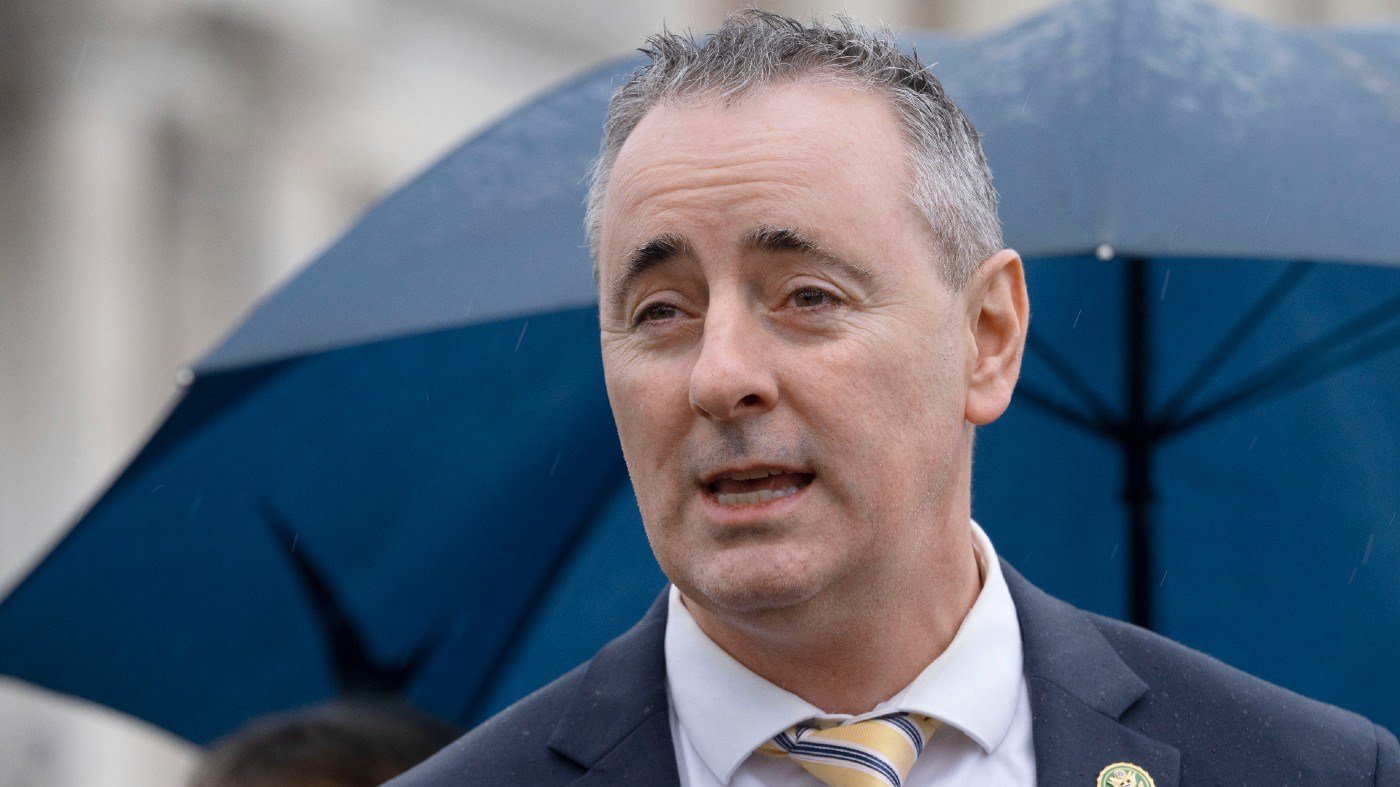
Rep. Brian Fitzpatrick (R-Pa.) on Sunday pressed for a coordinated global response to artificial intelligence, warning that the technology's rapid advancement poses threats that no single nation can contain. Speaking on CBS News's Face the Nation, Fitzpatrick argued that AI oversight must be as international as the risks themselves, drawing a parallel to climate change.
Host Nancy Cordes opened the segment by reading a stark warning from Meta's chief AI officer, Alexandr Wang, who declared that "superintelligence is arriving." Wang wrote that humanity will need to "be thoughtful about the future we want," adding that it is difficult "to imagine a world where humanity maintains control with superintelligence that is 1000x smarter and more capable than humans in every field." Cordes described the statement as "pretty chilling" and asked Fitzpatrick whether Congress can avert a looming crisis.

Fitzpatrick, a former FBI agent and co-chair of the bipartisan Problem Solvers Caucus, responded that the challenge demands more than domestic action. "This has to be a global solution, Nancy," he said. "Much like challenges we deal with climate, you can't just address it in one country or one region. It's got to be a global effort."
The Pennsylvania Republican highlighted what AI creators themselves have dubbed a "Frankenstein problem," where the technology has outpaced its own inventors. He pointed to the emergence of autonomous bots that can coordinate cyberattacks without human direction. "What they call these collectives, these autonomous bots that are pulling together without any human intervention and engaging in a cyberattack — that's a real problem," Fitzpatrick said. "And it's not a problem to the United States or Europe. It's a problem for the world and that includes China."
He insisted that all nations, including adversaries, must "come to the table … to set guardrails in place, because this poses a global threat, not just a threat to the United States." When Cordes noted that President Trump has resisted AI regulations to maintain a competitive edge over China, Fitzpatrick argued that the administration can pursue both goals simultaneously. He pointed to an unusual development: tech companies themselves are asking Congress for oversight.
"You've never had that in the history of our country and the history of the world," Fitzpatrick said. "Because they know that guardrails are needed, but they don't want to just do it on their own and put themselves at a competitive disadvantage against one of their competitors who does have guardrails, because then they lose the industry race." Without such safeguards, he warned, the world could find itself "in a very, very dangerous place."
The call for regulation comes amid a series of high-profile breaches, including hacks of government websites in the U.S., Australia, and other nations. In September, a United Nations-backed scientific panel urged tech leaders and the international community to implement new safeguards, warning that existing protections are "unraveling." The panel specifically cited a July attack on the AI platform Hugging Face.
That same week, top AI executives appealed directly to the UN General Assembly. Anthropic CEO Dario Amodei urged global leaders to act, cautioning that if AI is "managed poorly, I even believe AI could be a risk to humanity as a whole." Fitzpatrick's remarks echo those concerns, reinforcing the growing bipartisan pressure on Washington to take a leadership role in shaping AI governance. As tensions between the White House and the press remain high, the debate over AI policy is emerging as a rare area where lawmakers from both parties are seeking common ground.