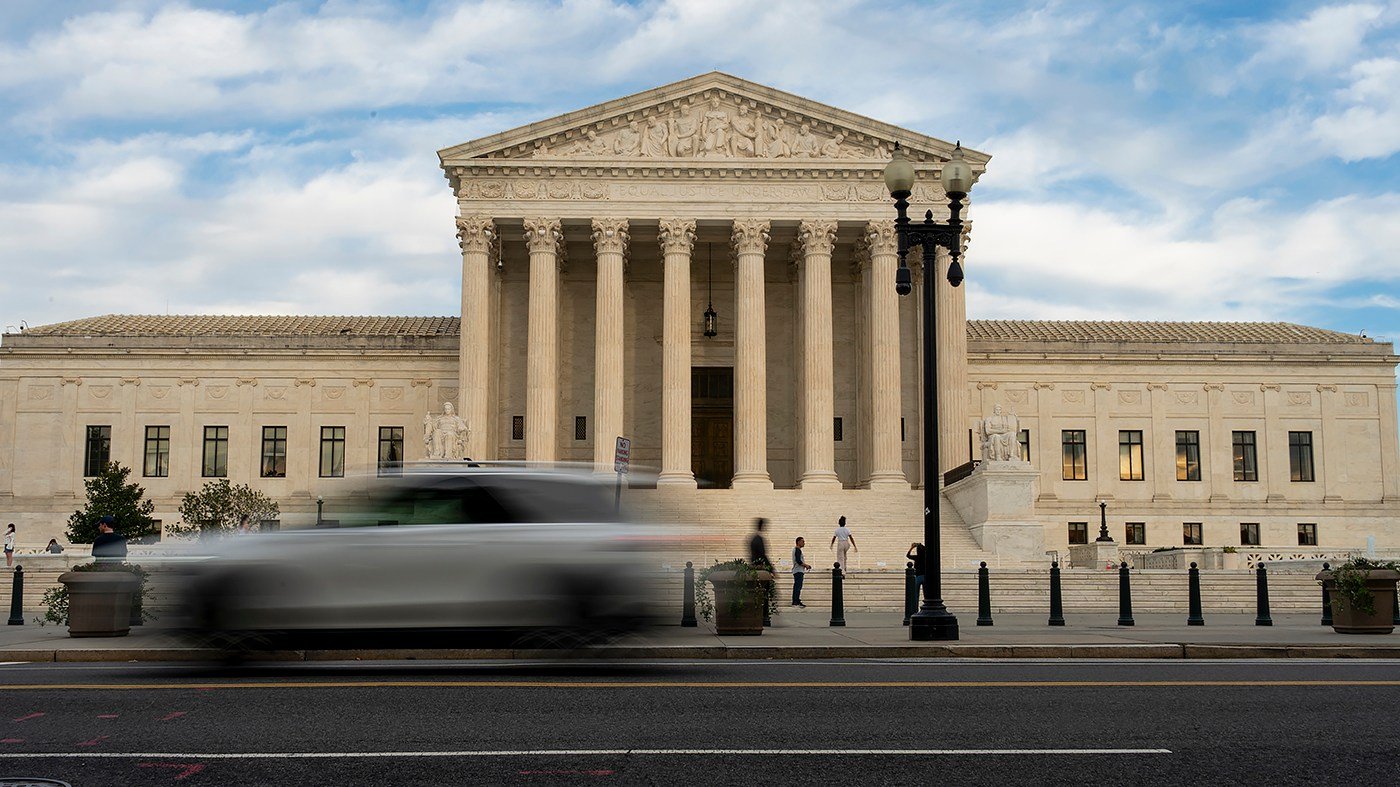
The U.S. Supreme Court on Monday declined to review the case of a former Pennsylvania judge who was suspended for posting partisan content on Facebook, a decision that underscores the limits of free speech for members of the judiciary.
The high court's refusal to hear Mark Cohen's appeal leaves in place a suspension imposed by Pennsylvania's Judicial Conduct Board in 2024. Cohen, who served more than four decades in the state legislature before becoming a judge, had posted dozens of items praising Democrats, including former President Biden and Governor Josh Shapiro, and advocating for policies like raising the minimum wage.
Cohen's attorneys argued that the posts were a continuation of his long-standing public advocacy and that lower courts applied too lenient a standard when evaluating his First Amendment claims. They warned that upholding the suspension would have a chilling effect on judicial speech and could invite political interference in the judiciary.
“This Court’s guidance is sorely needed,” his lawyers wrote in the petition. “If allowed to stand, the Cohen decision will have a chilling effect on judicial speech, invite political interference in the judicial branch, undermine the rule of law, and have the perverse effect of impugning the integrity of the judiciary.”
The Pennsylvania Supreme Court had used a balancing test typically applied to government employees who claim their employer violated their free speech rights. Cohen argued that judges are public officials speaking to constituents, not ordinary employees, and therefore should be held to a different standard.
Pennsylvania's Judicial Conduct Board, represented by Stanford Law School's Supreme Court Litigation Clinic, countered that Cohen's posts amounted to “partisan cheerleading” and that no precedent allows judges to engage in such activity under the First Amendment. They said the lower court's application of “familiar rules” was straightforward and did not warrant Supreme Court review.
The case touches on a broader debate about the appropriate boundaries of judicial speech, especially in an era of heightened political polarization. While judges are expected to be impartial, they also retain some rights to express personal views on matters of public concern. The Supreme Court's decision not to intervene suggests that, at least for now, state disciplinary bodies retain broad authority to police judges' partisan activities.
Cohen also lost his pension benefits as part of the disciplinary action, according to court filings. The suspension and loss of benefits are the result of a process that Cohen's legal team argued was overly punitive and inconsistent with judicial norms.
This case is part of a series of disputes the high court has recently declined to take up, including a challenge to a Michigan school's ban on “Let's Go Brandon” shirts and a bid by convicted murderer Dylann Roof to remove a judge from his post-conviction case. The court's decision not to hear Cohen's appeal leaves the precedent set by the Pennsylvania Supreme Court intact.