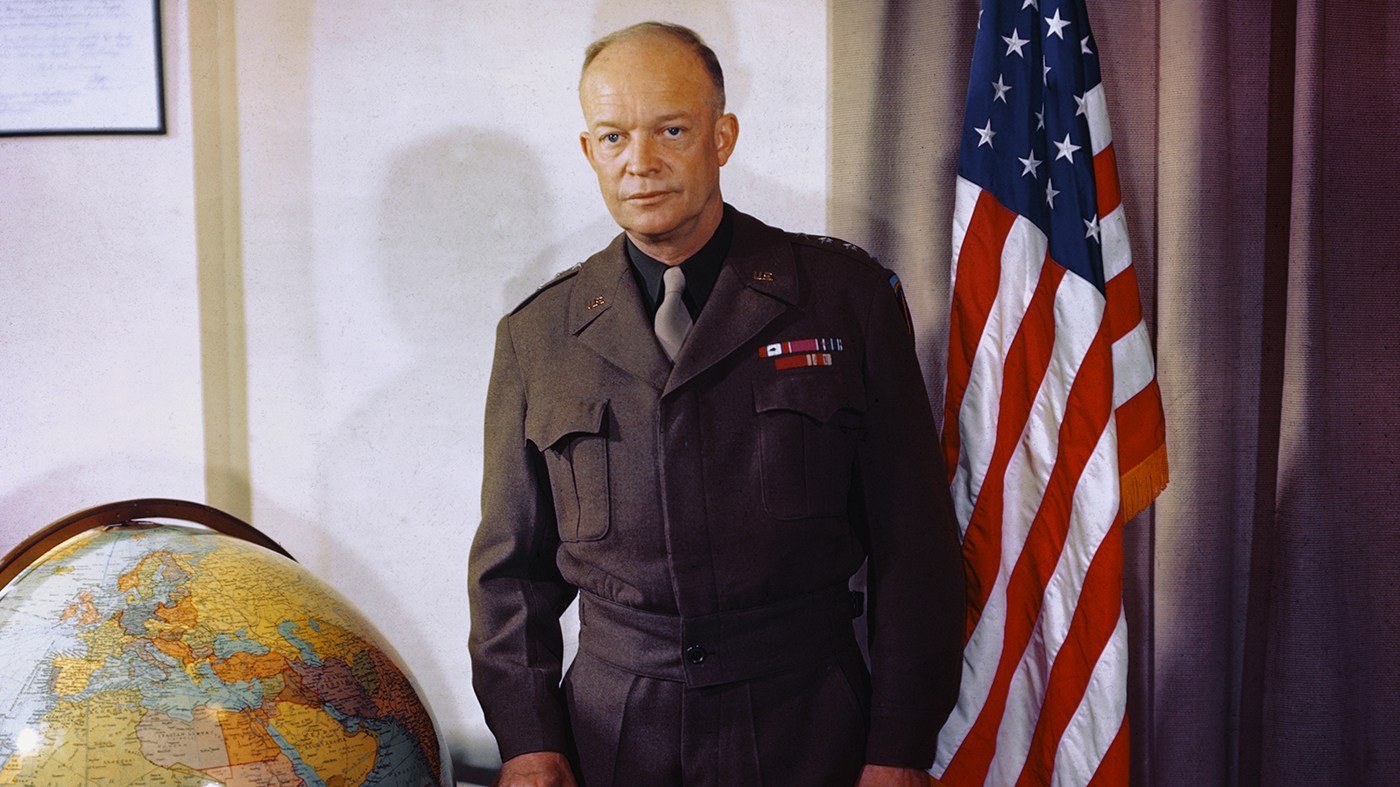
Defense Secretary Pete Hegseth's team accidentally damaged a historic World War II-era globe that once belonged to Gen. Dwight D. Eisenhower, according to a source familiar with the incident and confirmed by Pentagon officials.
The mishap occurred in early February as staff attempted to relocate the 30-inch floor globe into Hegseth's office. The globe slipped from their control, crashing onto its base and leaving a gash several inches wide near Antarctica, as first reported by The Washington Post. Photographs obtained by the Post showed the visible damage.

A Pentagon official acknowledged the accident on Thursday, stating: “Accidents happen, we are grateful no one was harmed, and the globe is being repaired.” The official dismissed the incident as “another inconsequential non-story,” a pointed rebuke of the media attention.
The globe was ultimately not moved to Hegseth's office. According to the source, one of the Eisenhower globes still carries pen lines and markings from the wartime period, adding to its historical significance.
Move went ahead without expert oversight
Initially, the Army office responsible for the artifact planned to consult with trained curators to ensure safe transport. However, those plans were disrupted when staff were furloughed during the partial government shutdown triggered by a congressional standoff over the Trump administration's immigration policies. Unable to reach the experts, Hegseth's staff proceeded on their own, a decision that proved costly.
The Army press office referred questions to the Pentagon, which declined to specify whether Hegseth personally requested the globe be moved. The incident has drawn criticism from those who argue that handling such a priceless artifact without professional guidance was reckless.
This is not the first time Eisenhower-related globes have been moved with care. In 2022, a larger globe connected to Eisenhower—about 40 inches in diameter and standing roughly four feet tall—was relocated from the Army Center of Military History in Anniston, Alabama, to an Army base. The moving company involved, Craters & Freighters, noted at the time: “When packing an asset of this size, we had to consider the context of its worth on many levels. Since the globe is considered priceless, we knew its value was much greater than financial.”
The damaged globe holds particular resonance given Eisenhower's role as Supreme Commander of Allied Forces during World War II, where he orchestrated the D-Day landings and the liberation of Europe. He later served as the 34th U.S. President from 1953 to 1961.
The incident adds to a series of controversies surrounding Hegseth's tenure, including recent tensions with GOP senators over Russia policy and criticism of his handling of Ukraine aid. As midterms approach, such episodes may fuel scrutiny of the administration's management of military heritage.