Fresh polling from the nonpartisan Cook Political Report, released Wednesday, indicates that Democrats are ahead in three pivotal Senate contests that could determine control of the upper chamber in November. The surveys, conducted jointly with Democratic firm New River Strategies and Republican firm GS Strategy Group, found Democratic candidates leading in Texas, Iowa, and Ohio—all states that voted for President Trump in recent cycles.
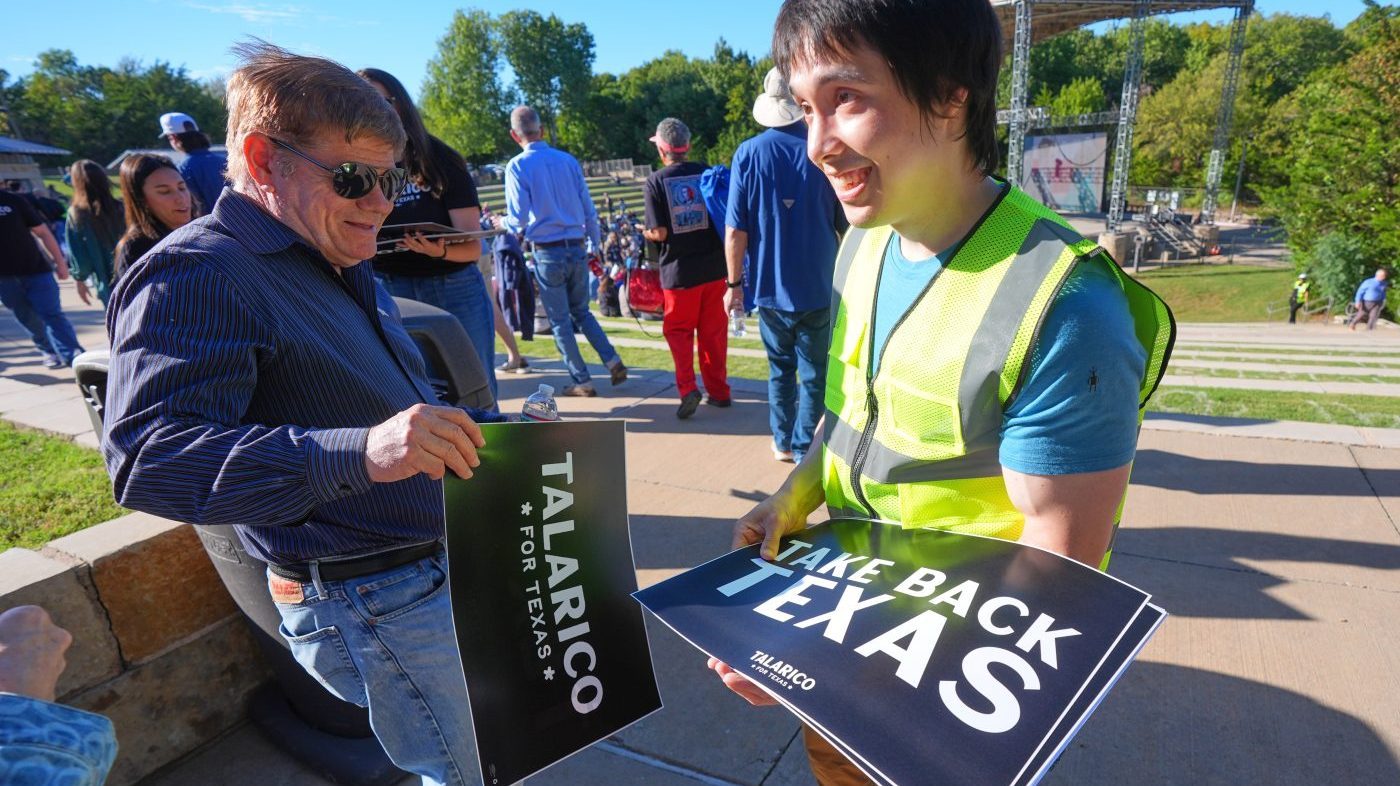
In Texas, state Representative James Talarico (D) holds a 49 percent to 44 percent edge over state Attorney General Ken Paxton (R), a lead that falls within the poll's margin of error. The race has become a national focus, as Democrats see a rare opportunity to flip a Senate seat in the Lone Star State—something they haven't done in over three decades. Talarico has maintained a narrow advantage since the GOP primary, where Trump backed Paxton over incumbent Senator John Cornyn. Cook's editor-in-chief, Amy Walter, noted that Paxton is "almost twice as unpopular" as the president among Texas voters, a factor that may be fueling the Democrat's chances.
While Paxton trails in the Senate race, the same polling shows Texas Governor Greg Abbott leading Democratic challenger Gina Hinojosa by a slim 2 points, also within the margin of error. Abbott, who has been in office for over a decade, finds himself in a tighter-than-expected contest. Decision Desk HQ (DDHQ), a partner of The Hill, gives Talarico a 55 percent chance of winning the Senate seat, while Abbott retains a 70 percent likelihood of securing a fourth term.
In Iowa, state Representative Josh Turek (D) leads Representative Ashley Hinson (R) 46 percent to 44 percent. Walter's analysis highlights that Turek is viewed 28 points more favorably than other national Democrats, which could explain his strength in a state Trump carried by double digits. Interestingly, the poll shows Libertarian candidate Thomas Laehn taking 8 percent of the vote, a share that could prove decisive in a tight race. The gubernatorial contest in Iowa appears less competitive, with state Auditor Rob Sand (D) leading Zach Lahn (R) by 11 points. A Sand victory would flip the governor's mansion, currently held by Republican Kim Reynolds. DDHQ gives Hinson a 55 percent chance to hold the Senate seat, while Sand has a 72 percent chance to win the governorship.
Ohio presents another promising front for Democrats. Former Senator Sherrod Brown (D) leads Senator Jon Husted (R) 49 percent to 43 percent in his comeback bid. The gubernatorial race also leans Democratic, with Amy Acton (D) ahead of Vivek Ramaswamy (R) 49 percent to 44 percent. The governor's race has been marred by controversy after Ramaswamy's campaign ran an attack ad featuring Acton's estranged mother. Vice President Vance, a former Ohio senator, has been rallying for Ramaswamy and Husted in the state. DDHQ gives Brown a 53 percent chance to reclaim the Senate seat and Acton a 60 percent chance to win the governorship.
Despite these leads, the polls reveal a broader discontent with the national Democratic Party. In Texas, Iowa, and Ohio, Democrats' favorability ratings remain below Trump's. Greg Strimple, a pollster with GS Strategies, explained that voters are so frustrated with the president's handling of cost-of-living issues that they are willing to consider Democratic candidates despite their party's unpopularity. "Voters are so upset with the lack of leadership on reducing their cost of living, they appear willing to propel Democrats to upset victories in reliably Republican states despite the fact that Democrats are less popular than either President Trump or Republicans," Strimple said. "The level of voter discontent is truly unprecedented."
Walter cautioned that while Democrats lead in all three Senate races, none have captured a majority of the vote, leaving room for shifts in the final weeks. "It's worth noting that while all three Democrats are leading their Republican opponents in the Senate contests, none have captured a majority of the vote, suggesting that these races are not a done deal," she wrote. "The closing two weeks—and the movement of undecided and third-party voters—will ultimately determine the contest for Senate control."
These developments come as Democrats widen midterm lead in national polling, but the tight margins in these states underscore the uncertainty. In related news, Trump heads to Ohio for third rally as GOP races tighten, and Senate Democrats demand Musk testify over Starlink slowdowns. The outcome in these states could hinge on turnout and undecided voters, making the closing weeks crucial for both parties.