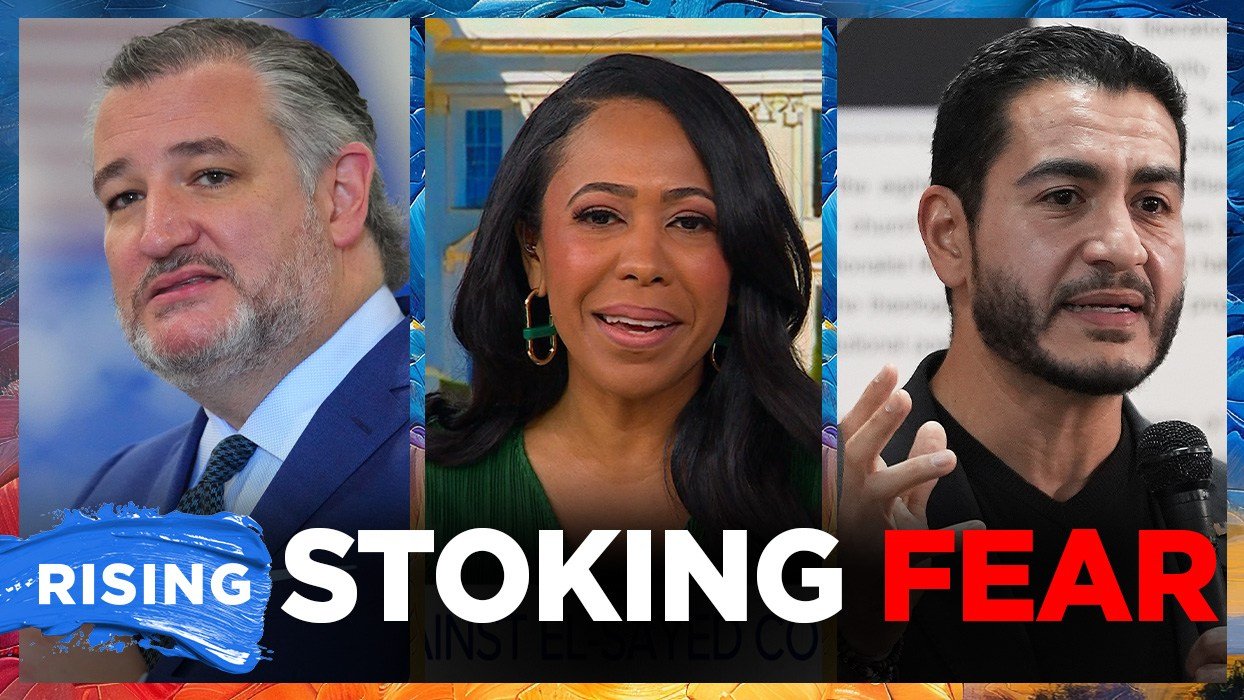
Senator Ted Cruz of Texas has ignited a fresh controversy by suggesting that Dr. Abdul El-Sayed, the Democratic Senate candidate in Michigan, could pose a national security threat if elected. During a Fox News appearance, Cruz claimed that El-Sayed might share classified intelligence with Muslim Brotherhood terrorists, an accusation for which he provided no supporting evidence.
"Chuck Schumer could place Abdul El-Sayed on the Senate Intelligence Committee. He would have access to the very highest level of classified materials. And I believe, if that were to happen, there would be an unacceptably high risk that American servicemen and women, their lives would be endangered, and that our covert intelligence assets, their lives would be in danger," Cruz said, adding that there is "every reason to believe" El-Sayed would leak information to the Muslim Brotherhood.
El-Sayed has categorically denied any affiliation with the Muslim Brotherhood, and no public evidence supports Cruz's claim. The accusation appears to stem from a 2012 letter El-Sayed signed that voiced support for Egyptian President Mohamed Morsi. However, that letter was part of a broader pro-democracy movement that welcomed Morsi's election as a departure from decades of military dictatorship, not an endorsement of the Brotherhood's ideology.
At a recent town hall, El-Sayed addressed the implication directly: "You're asking the question because, implicitly, you assume that I'll have dual loyalties, right? You assume that I wouldn't disavow, or that I'll have some higher order allegiance than to the Constitution, correct?" His response underscores the frustration many Muslim candidates face when their patriotism is questioned solely because of their faith.
This is not an isolated incident. Republican Mike Rogers, El-Sayed's opponent in the Michigan Senate race, has previously tried to link El-Sayed's mother to al Qaeda, and former President Donald Trump has mocked El-Sayed's name, referring to him by his middle name, Mohamed. The pattern extends beyond Michigan: GOP lawmakers have posted anti-Muslim rhetoric on social media this year, including Tennessee Congressman Andy Ogles, who wrote that Muslims "don't belong in American society," and Florida Congressman Randy Fine, who declared "We need more Islamophobia, not less." Alabama Senator Tommy Tuberville also shared images of 9/11 alongside New York City Mayor Zohran Mamdani, warning that "The enemy is inside the gates."
Critics argue that such rhetoric weaponizes religion for political gain, framing Muslim identity as inherently suspicious. As Lindsey Granger, a NewsNation contributor, noted, "I don't hear Republicans saying the same thing to Catholic candidates, or Christian candidates — there are extremist organizations within both religions." The double standard, she says, is glaring.
If elected, El-Sayed would be the first Muslim senator in U.S. history. His campaign has already faced significant Islamophobic attacks, including allegations about the Muslim Brotherhood that have been repeatedly debunked. The broader trend of using religion as a wedge in the Michigan race reflects a troubling shift in political discourse.
Republicans have made Islamophobia a strategy, casting Muslims as outsiders or potential enemies. But this approach may backfire. As Granger put it, "In America, religious freedom cannot mean freedom for everyone except Muslims." The question is whether voters will reject such tactics or reward them at the ballot box.