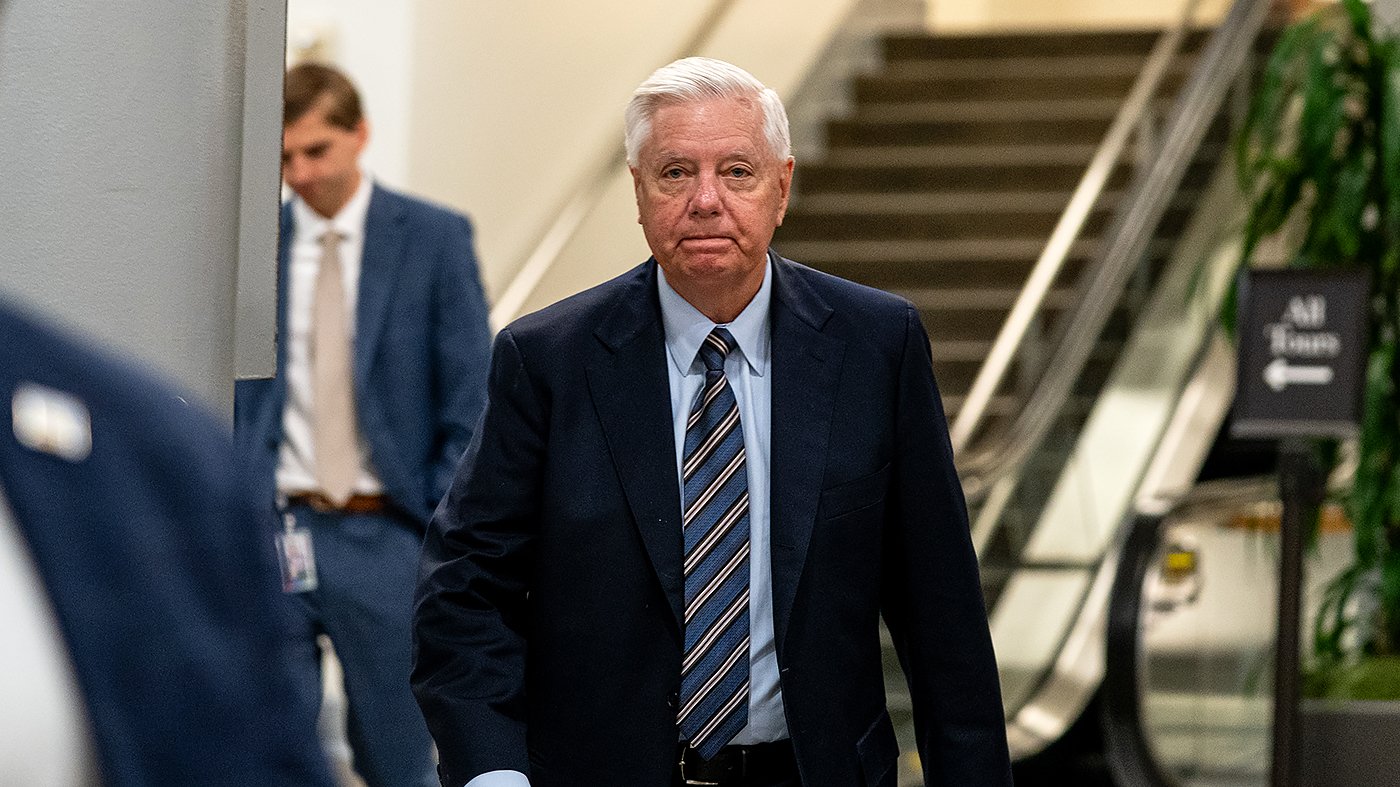
Sen. Lindsey Graham (R-S.C.) on Friday forcefully rejected the notion that Iran emerged stronger from the recent conflict, labeling such thinking as “delusional” and an affront to the American military. The senator, who has shifted his stance on the Trump administration’s memorandum of understanding with Tehran, argued that Iran’s capacity to serve as the world’s leading state sponsor of terrorism has been severely undermined by U.S. and Israeli strikes.
“To those who say Iran is stronger now than before, that is an insult to the American military and it is delusional thinking because the Iranian economy is in shambles,” Graham wrote on X. He questioned whether Iran could still orchestrate an attack on the scale of Hamas’s brutal Oct. 7, 2023, assault on Israel, noting that the Iran-backed militant group has itself been battered by Israeli operations.
Graham’s comments come as the Trump administration and Iran finalized a memorandum of understanding this week, ending hostilities and reopening the Strait of Hormuz—a vital chokepoint for 20 percent of the world’s oil supply. The deal aims to launch negotiations on Iran’s nuclear program, though initial talks have already been postponed. Critics from both parties and Israeli officials argue the agreement concedes too much, particularly a $300 billion reconstruction fund for Iran and permission to retain its missile arsenal.
Trump has defended the missile provision, arguing that rivals like Saudi Arabia also possess such systems, but Israel views the missiles as a direct threat. The MOU also calls for a ceasefire in Lebanon, where Israel has been battling Hezbollah, another Iranian proxy. Israel, not a party to the deal, insists it must retain the right to self-defense. Trump has previously criticized Israel for excessive force in responding to Hezbollah attacks.
Graham reaffirmed his support for Israel, writing: “In the meantime, as we pursue diplomacy, make it crystal clear that Israel will not have to tolerate being attacked by Iranian proxies who cause parts of Israel to be uninhabitable.” This nod to Hezbollah underscores the delicate balance Trump faces between securing a diplomatic win and maintaining regional alliances.
The South Carolina Republican’s position has evolved over the week. Earlier, he voiced concerns about discrepancies between U.S. and Iranian descriptions of the MOU. “I am somewhat concerned that Iran’s view of the agreement seems different than what the American negotiating team is claiming,” he said. But after a lengthy discussion with special envoy Steve Witkoff, Graham swung to support the deal.
In a Wednesday social media post, Graham wrote: “After this discussion, it is my opinion that signing the MOU will be beneficial to the United States, in as much as the Strait of Hormuz will begin to open, and the hostilities with Iran will stop.” He added, “Whether or not the United States can reach an acceptable, verifiable deal with Iran regarding its nuclear program and other issues is yet to be determined, but I see little downside to trying. The economic stability that comes from opening up the Strait and the cessation of hostilities could create a pathway to peace well beyond the Iranian conflict.”
Graham’s shift mirrors a broader debate within the GOP. Some Republicans, like Sen. Chris Coons, have warned that Iran is “stronger” after the conflict, a point Graham directly rebutted. The MOU also opens a contentious chapter on Iran’s missile program, with Israel raising alarms. Trump has publicly dismissed concerns, saying he cannot deny Iran missiles when its neighbors have them. For now, Graham is betting on diplomacy, but he insists Iran’s weakened state makes the gamble worthwhile.