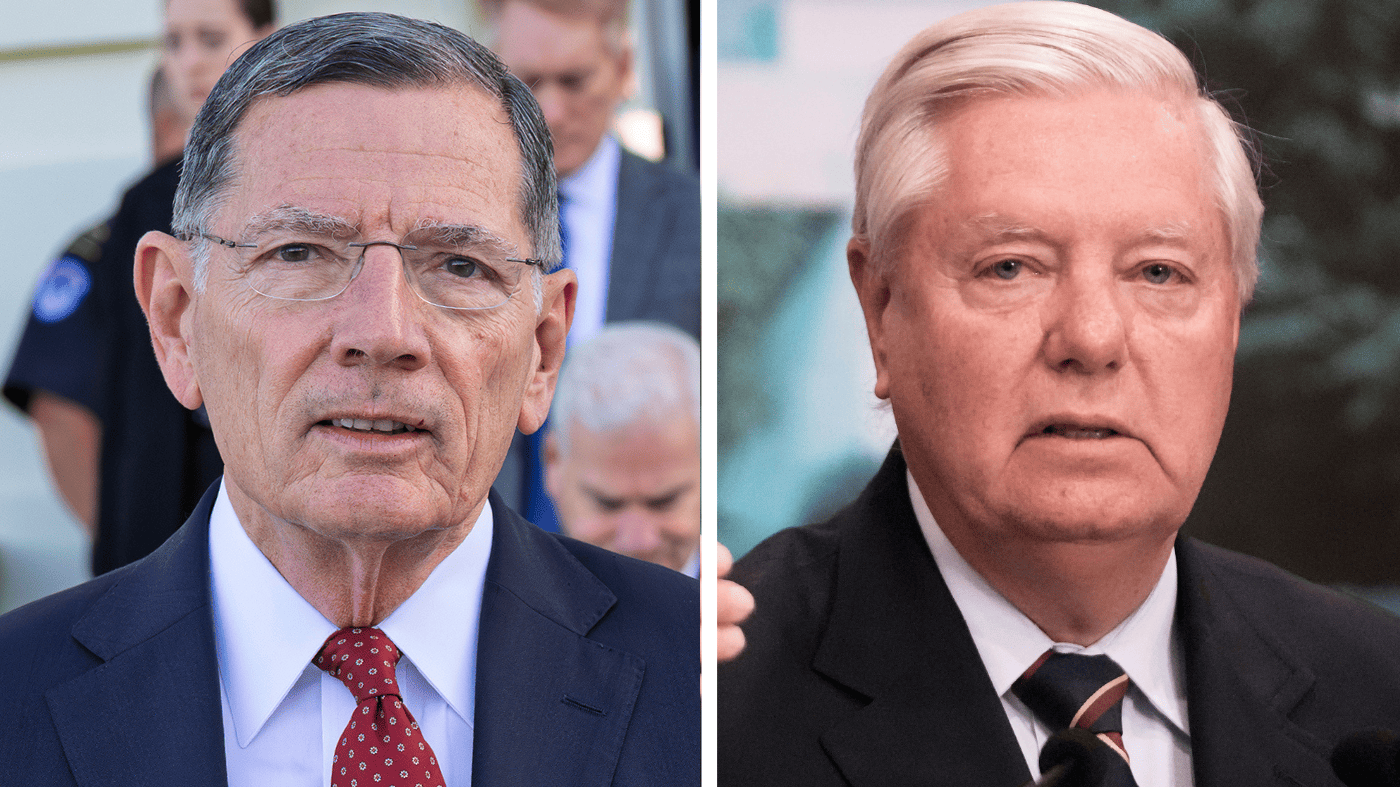
Senior Senate Republicans are preparing to meet with former President Donald Trump to chart a legislative path for funding key immigration enforcement agencies without Democratic support. Senate Republican Whip John Barrasso of Wyoming and Senate Budget Committee Chairman Lindsey Graham of South Carolina are scheduled to convene with Trump at the White House on Friday.
A Partisan Path on Immigration Funding
The meeting's central focus is a developing GOP plan to use the budget reconciliation process to appropriate money for Immigration and Customs Enforcement (ICE) and Border Patrol. This procedural tool allows certain fiscal legislation to pass the Senate with a simple majority, sidestepping the 60-vote threshold typically needed to overcome a filibuster. The move is a direct response to a bipartisan Senate bill that funded the Department of Homeland Security but excluded specific allocations for these two enforcement arms.
"We're going to have to go it alone, because the Democrats aren't interested in funding national security at a time of increased concerns around the world," Barrasso told reporters on Thursday, framing the effort as a matter of urgent security. He emphasized the targeted nature of the plan, stating, "The goal is to do it in a targeted way, the hope is to get it done fast."
Overcoming Internal and External Hurdles
The strategy is not without its critics, even within the Republican conference. Many House Republicans have voiced opposition to the piecemeal approach, advocating instead for a comprehensive DHS funding package. Barrasso acknowledged this internal dissent, noting that Senate GOP leadership intends to coordinate closely with the House and that the matter will be part of the discussion with Trump.
The proposed funding bill is conceived as one component of a two-step process to end the ongoing DHS shutdown. The first step, the bipartisan bill, would reopen the department broadly. The second, partisan step would then direct funds specifically to immigration enforcement, allowing Republicans to claim they did not capitulate to Democratic demands for policy changes. This comes amid broader tensions over executive authority, similar to when House Republicans blocked a Democratic attempt to limit presidential war powers related to Iran.
When questioned about the potential inclusion of a defense spending increase tied to the conflict in Iran, Barrasso was noncommittal, suggesting only that the White House meeting would involve a "broad discussion on a number of topics." The geopolitical landscape adds a layer of complexity, as international leaders like Dutch Prime Minister Mark Rutte have warned that the Iran standoff risks creating a 'North Korea scenario'.
Graham's role as Budget Committee chairman will be pivotal in drafting the reconciliation legislation. The South Carolina senator's involvement underscores the procedural seriousness of the attempt. "Specifically, what we're telling you today is we're moving ahead in spite of incredible obstruction by the Democrats with focusing immigration and funding immigration, custom enforcement and Border Patrol with Republican votes alone, using reconciliation," Barrasso asserted.
The meeting highlights Trump's continued influence over GOP legislative strategy, even out of office. This dynamic is occasionally challenged from within the party, as seen when figures like Rep. Marjorie Taylor Greene recently broke with the former president. However, on core issues like immigration enforcement, Republican leadership continues to align closely with his priorities. The outcome of this funding push could also have implications for other Trump-era policies facing legal challenges, such as the recent court block on terminating Temporary Protected Status for Ethiopians.
If successful, the maneuver would represent a significant political victory for the GOP, achieving a key policy goal through a party-line vote. If it fails, it could prolong the DHS shutdown and deepen the political stalemate over immigration, an issue that remains a central fault line in American politics.