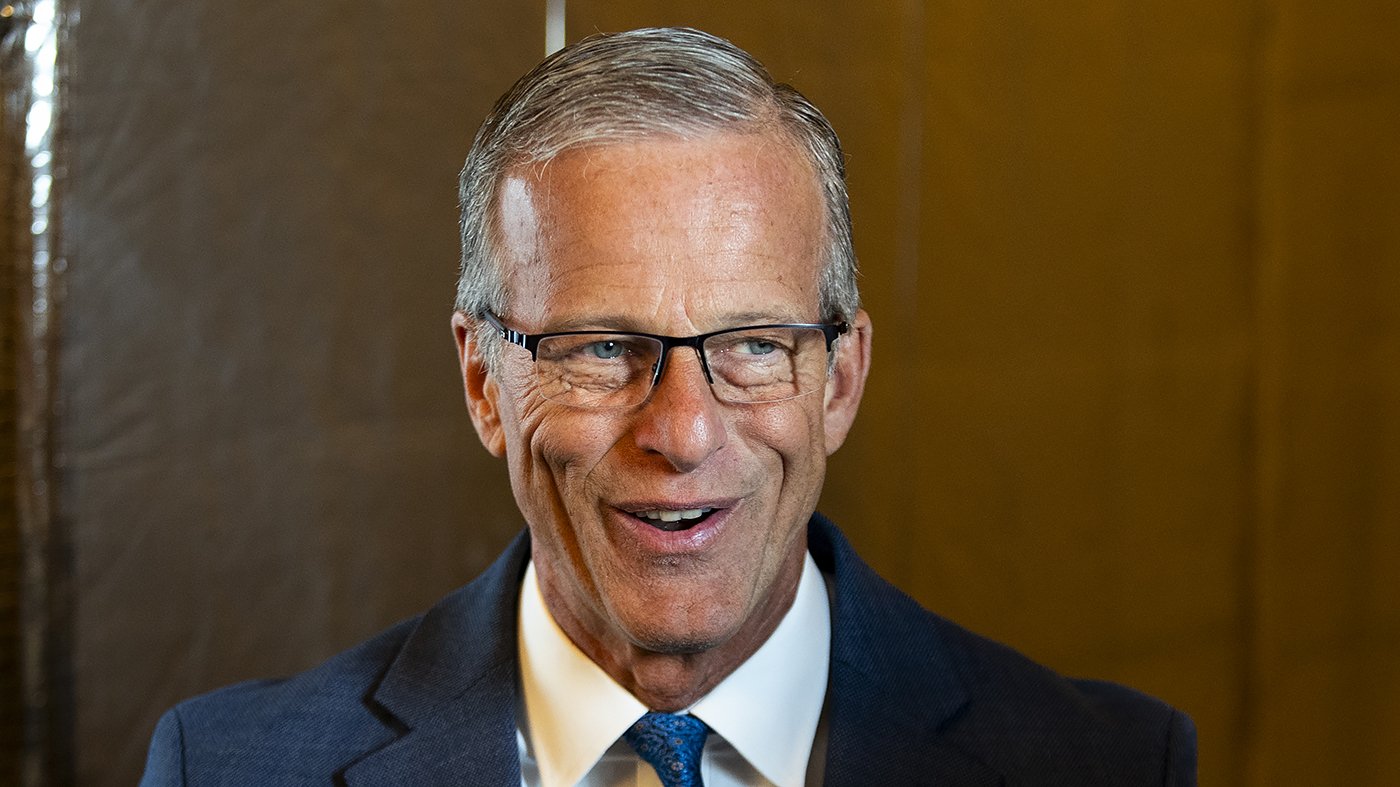
Senate Majority Leader John Thune (R-S.D.) and fellow Republicans now see a clear route to passing the stalled budget reconciliation package, after the Trump administration on Monday abandoned a contentious proposal to create a $1.8 billion “anti-weaponization” fund that critics had labeled a slush fund for MAGA allies.
The fund, which would have compensated individuals claiming political persecution, had become a major obstacle for the $72 billion package primarily aimed at funding Immigration and Customs Enforcement (ICE) and Border Patrol through 2029. Thune called on the White House to scrap the proposal, and the Justice Department quickly announced it would comply with a federal court order temporarily blocking the fund until June 12.
“The best way to get the reconciliation bill moving and across the finish line is to confine it to the issues that we were addressing in the initial bill,” Thune said, emphasizing a narrow focus on Customs and Border Protection (CBP) and ICE funding. He expressed confidence that a clean, targeted bill could also pass the House, where Republicans can afford only two defections.
The fund had sparked intense backlash within the GOP conference, with lawmakers fearing it could pay claims to individuals convicted of assaulting police officers during the January 6, 2021, Capitol attack. During a heated May 21 meeting, Acting Attorney General Todd Blanche faced what one senator described as a “screaming fest,” failing to reassure nearly half the Senate GOP conference that the fund would exclude such claimants.
Speaker Mike Johnson (R-La.) met with President Trump Monday morning to discuss the fund, which had become entangled in the reconciliation bill before the Memorial Day recess. The White House later referred reporters to a Justice Department statement vowing to abide by the court’s ruling, a sharp reversal from Friday’s declaration that it would not allow “the policy preferences of judges to interfere.”
Sen. John Cornyn (R-Texas), who recently lost his primary race, called the issue “moot,” while Sen. Jerry Moran (R-Kan.) said the administration’s shift improves prospects for both reconciliation and regular appropriations bills. However, some Republicans remain wary. Sen. Shelley Moore Capito (R-W.Va.) said more investigation is needed, and Sen. Chuck Grassley (R-Iowa) demanded a clear statement from Trump that the fund is dead.
The package will also exclude funding for security upgrades to Trump’s proposed 90,000-square-foot White House ballroom, which had drawn strong opposition from several Senate Republicans. Thune had previously pushed back against Trump’s call to fire the Senate parliamentarian over that issue.
With the anti-weaponization fund sidelined—at least for now—Republican leaders are optimistic about advancing the reconciliation bill this week, though the fund’s future remains uncertain pending further court action.