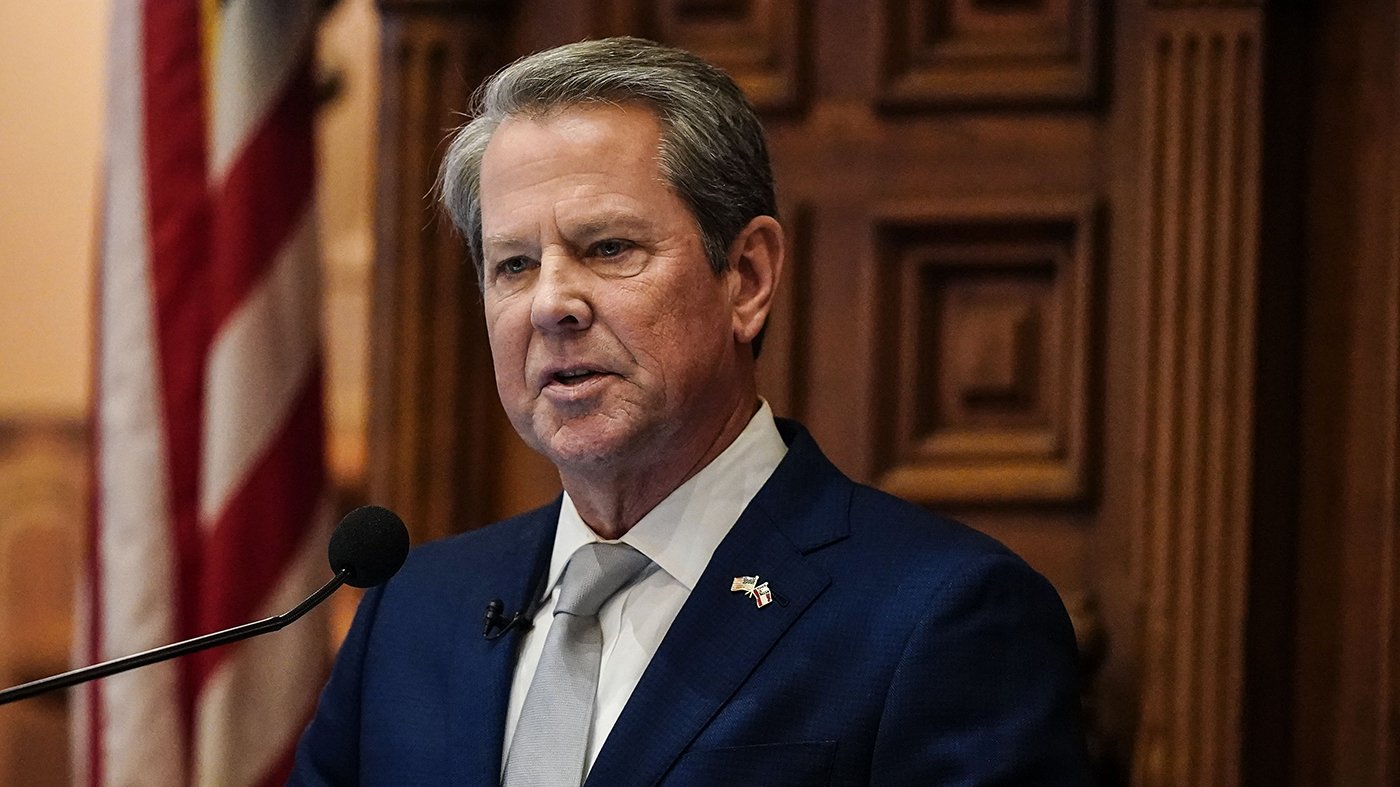
Georgia Governor Brian Kemp (R) has triggered a high-stakes redistricting battle by calling a special legislative session to redraw the state’s congressional maps ahead of the 2028 elections. The move, announced Wednesday, comes on the heels of a U.S. Supreme Court decision last month that upheld a challenge to Louisiana’s congressional map as an unconstitutional racial gerrymander but also significantly rolled back federal Voting Rights Act protections.
Kemp’s proclamation mandates that lawmakers convene on June 17 to “consider enacting, revising, repealing, or amending general law for the division of the State into appropriate districts.” The governor framed the session as a necessary response to the high court’s ruling, which he argued “restores fairness to our redistricting process and allows states to pass electoral maps that reflect the will of the voters, not the will of federal judges.” He told the Atlanta Journal-Constitution that the timing was too tight to redraw boundaries before the May 19 primary, but that the state must adopt new maps for the 2028 cycle.

The new maps are widely expected to target the 2nd Congressional District, currently held by 17-term Democrat Sanford Bishop. Republicans see the district as a prime pickup opportunity, and Kemp’s initiative aligns with broader GOP efforts across the South to reshape electoral maps in their favor. Similar maneuvers are underway in Texas, Missouri, and North Carolina, while South Carolina Governor Henry McMaster has also called a special session for redistricting. Mississippi Governor Tate Reeves, however, canceled his state’s scheduled session after the Supreme Court ruling, saying it eliminated the need for judicial redistricting—though he acknowledged the party must eventually find a way to unseat Representative Bennie Thompson, the state’s lone Democrat in Congress.
Kemp’s push comes with a political twist: he will leave office in January, meaning any new map must be designed to win approval under a Republican successor. The GOP-controlled legislature will need to craft districts that can pass muster with both chambers and the next governor.
Democrats are already sounding alarms. Congressional Black Caucus Chair Yvette Clarke (D-N.Y.) warned that GOP-led redistricting efforts nationwide could push out 19 of 62 Black senators and House members, calling the potential impact “devastating.” Georgia Senator Raphael Warnock (D-Ga.) compared the Supreme Court’s ruling to “Jim Crow in new clothes,” while Representative Thompson told CNN that Democrats “have a fight ahead” and that “white Republican elected officials would wipe out every opportunity for Black people to be elected” if left unchecked.
The Supreme Court’s decision, while striking down Louisiana’s map as a racial gerrymander, weakened Section 2 of the Voting Rights Act, which prohibits voting practices that discriminate on the basis of race, color, or minority-group membership. That shift has emboldened Republican state officials to pursue aggressive redistricting that critics say will dilute minority voting power.
Kemp’s special session is set to become a key battleground in the ongoing national fight over representation, with Georgia’s rapidly diversifying electorate at the center of the storm.