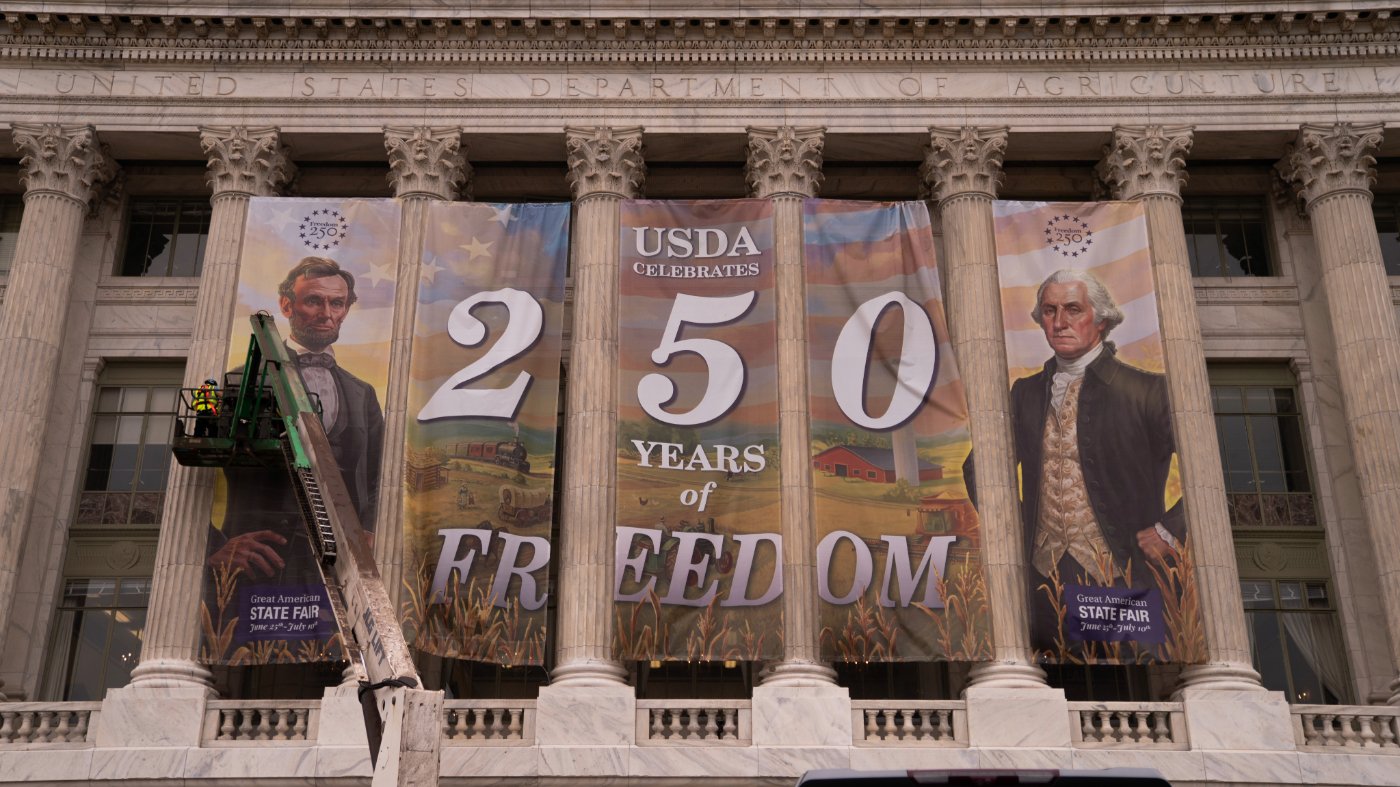
President Trump has promised “monumental” and “spectacular” events for the 250th anniversary of American independence, including an Ultimate Fighting Championship match at the White House on June 14 — his 80th birthday. For a president who revels in combat, there's no better tribute to America than young fighters brawling in the Rose Garden.
But beneath the bombast, the nation's deep political divisions are casting a long shadow over the milestone. This should be a moment to reaffirm the founding principles of liberty, equality, and self-rule. Instead, Americans are locked in a bitter debate over the most fundamental question: What does it mean to be an American?

During the 1976 bicentennial, both parties embraced the ideals of the American Revolution, differing only on interpretation. Today, Trump and Vice President JD Vance reject that “creedal” vision, favoring a blood-and-soil nationalism rooted in ethnicity and place rather than abstract principles. This marks a sharp break from the Reagan-era Republican definition of American exceptionalism.
Yet a late-2024 poll found that 78% of Americans still see the country as a nation built on equal rights and freedoms for all, while only 19% define it by shared heritage. The long-term trends, however, are troubling. A cultural civil war between red and blue America is compounded by a widening chasm between generations.
An Ipsos poll reveals that only 39% of Millennials and Gen Zers say being American is an important part of their identity, versus 65% of baby boomers. A 2023 Gallup survey found just 18% of 18- to 34-year-olds are “extremely proud to be American,” compared to 50% of those over 55. Young people are also more critical of the nation's founders: 40% of Gen Zers call them villains, versus 10% of boomers. And faith in democracy is eroding among the young, with nearly a third agreeing that “democracy is no longer a viable system” — a view held by only 5% of those over 65.
One factor behind this generational shift is the teaching of U.S. history in many colleges. A Progressive Policy Institute study of articles in American Quarterly found an overwhelmingly negative portrayal of America, emphasizing crimes and injustices while giving short shrift to achievements. This slanted narrative may be driving disaffection.
The Ipsos survey also paints a picture of a post-Tocquevillian America, where the “spirit of association” and civic volunteerism that once defined the nation has withered. Only 24% of Americans now feel a strong sense of belonging in their community. Yet the same poll reveals a deep yearning for leaders who can foster cooperation and offer an honest reckoning with history, both good and bad.
That creates an opening for center-left leaders to champion a reinvigorated liberal patriotism — one that rejects Trump's America First jingoism and progressives' reflexive anti-Americanism. Such an approach would include robust civic education and a scaled-up national service program to rebuild civic muscle.
Trump and Vance are wrong to dismiss America's founding ideals. Those principles still define the nation's character and bind its diverse population. They also compel Americans to confront past wrongs and strive toward a more perfect union. As the 250th anniversary approaches, the real challenge is not about grand celebrations but about restoring a shared sense of purpose.