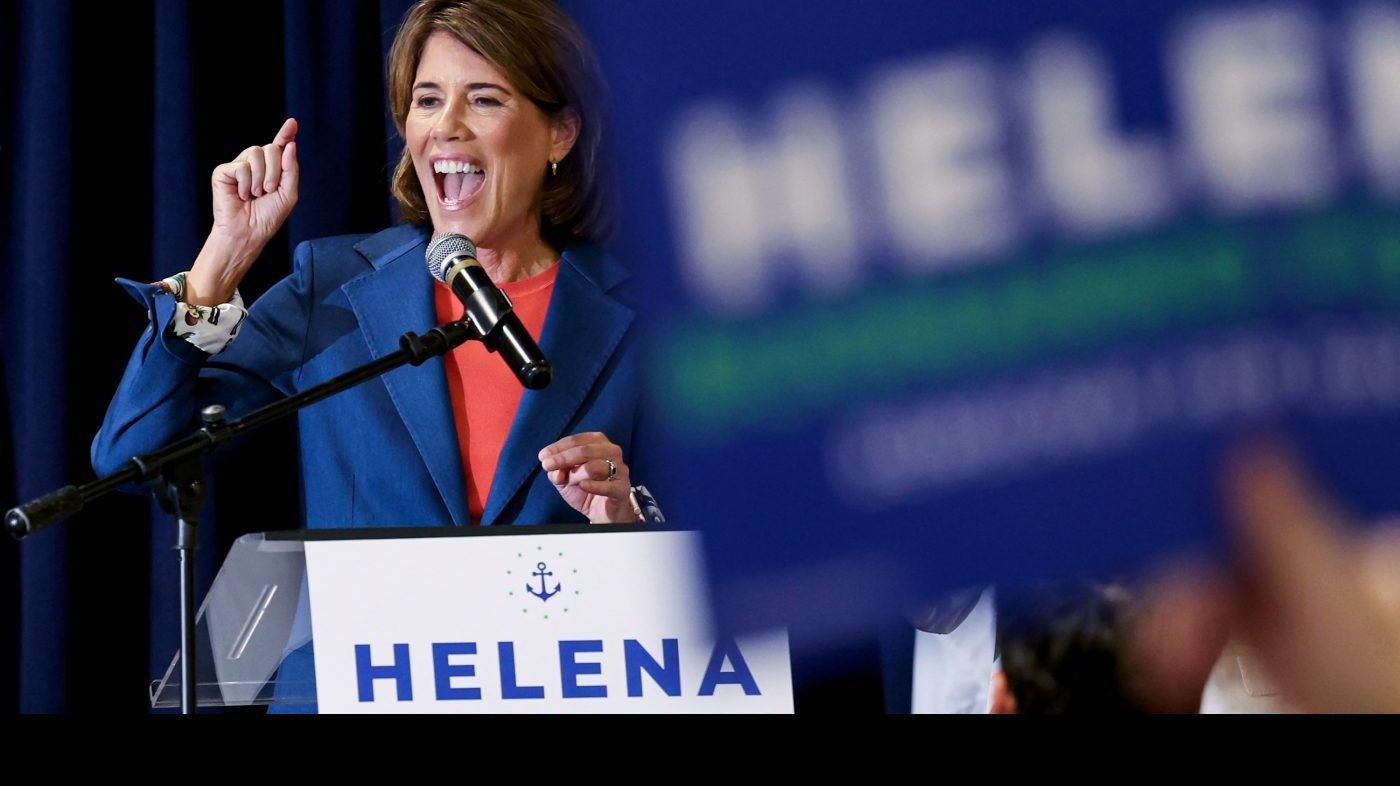
Democrat Helena Foulkes is projected to win Rhode Island's governorship, according to Decision Desk HQ (DDHQ), defeating independent candidate Ken Block in a race that was called early Tuesday night. With about half of the votes counted as of 8:42 p.m. EST, Foulkes held a commanding lead of 56 percent to Block's 28 percent, a margin of 28 points.
Foulkes, a former CVS Pharmacy executive, also bested Republican Aaron Guckian in the deep-blue state. Her victory comes after she unseated incumbent Governor Dan McKee in September's Democratic primary, making him the only sitting governor this cycle to lose his party's nomination. That primary win was widely seen as a rebuke of McKee, who has been one of the nation's most unpopular governors, according to the Cook Political Report.
The general election was never in serious doubt: no Republican has captured the governor's office in Rhode Island since 2006, and Foulkes entered Tuesday as the clear favorite. She also received a high-profile endorsement from former House Speaker Nancy Pelosi (D-Calif.), bolstering her campaign's establishment credentials.
Foulkes first challenged McKee in the 2022 Democratic primary, losing by a narrow single-digit margin. This time, she harnessed voter anger over the administration's handling of the Washington Bridge, a major thoroughfare connecting Providence and East Providence that has been closed since 2023. McKee's team has defended its approach, promising the bridge will reopen in 2028, but the prolonged closure became a central issue in the primary and general election campaigns.
McKee's political trajectory has been unusual. He assumed the governorship in 2021 after Gina Raimondo stepped down to join the Biden administration as Commerce secretary. He then won a full term in 2022, but his popularity eroded quickly amid the bridge crisis and other controversies.
Foulkes's projected victory adds to a strong night for Democrats, who also appear poised to make gains in Congress. Early results suggest the party is on track for a sweep of both chambers, a development that would reshape the legislative landscape in Washington. In Rhode Island, Foulkes's win is part of a broader pattern of Democratic resilience in New England, even as national headwinds have made some races competitive.
Political analysts had long viewed Rhode Island as safely Democratic, and Foulkes's campaign leaned into national themes of protecting abortion rights and expanding healthcare access, while also emphasizing local infrastructure repair. Her business background as a former CVS executive was used by opponents to paint her as out of touch, but it also gave her credibility on economic and healthcare issues.
Block, a software entrepreneur who ran as an independent, positioned himself as a reformer outside the two-party system, but he struggled to overcome the state's strong Democratic tilt. Guckian, the Republican nominee, remained a long-shot throughout the race.
With Foulkes's victory, Democrats will continue to hold the governor's mansion in Rhode Island, and the party's focus now shifts to implementing its agenda in a state where voters have shown consistent support for progressive policies. The projected win also underscores the political fallout from McKee's unpopularity, as voters opted for a challenger who promised a fresh start.