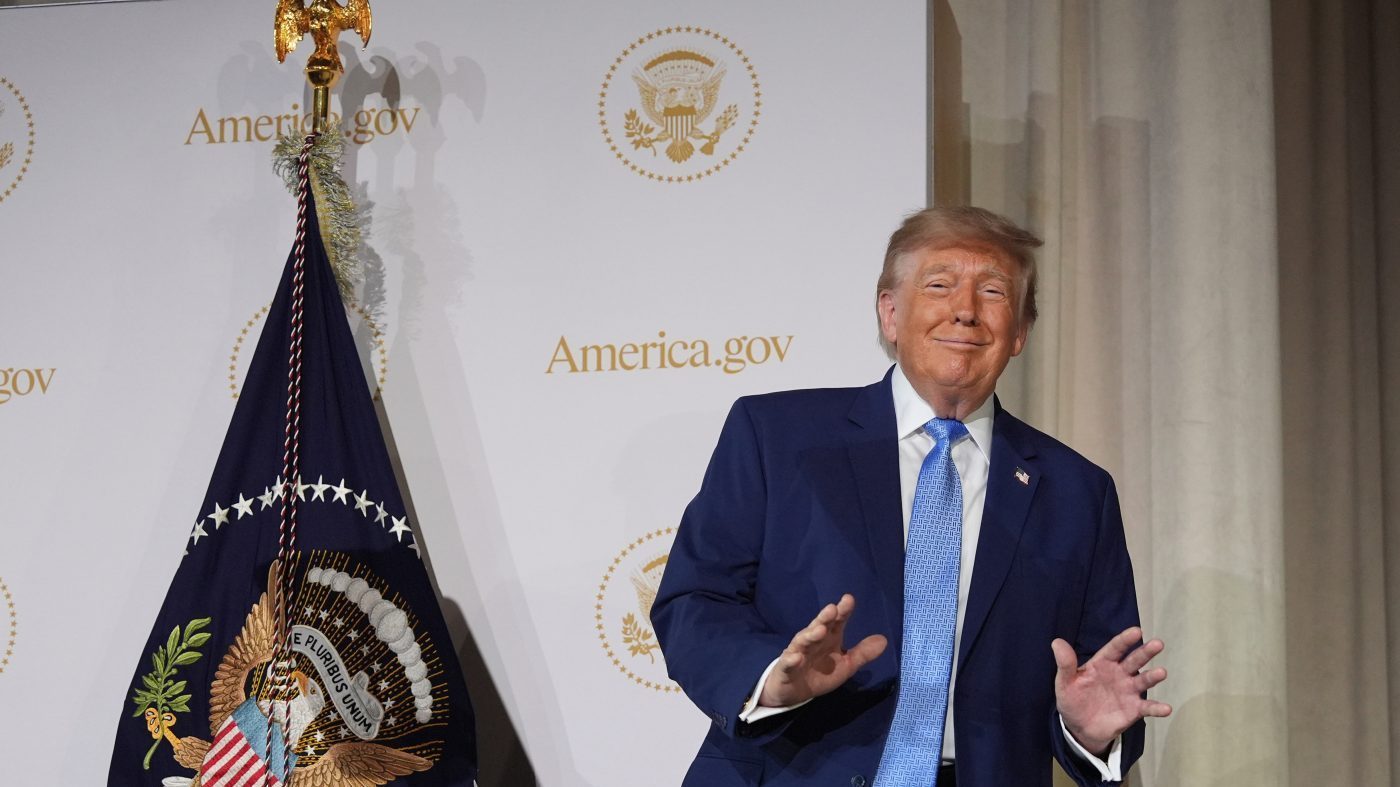
With fewer than 130 days until the midterm elections, the battle for control of the Senate is intensifying. Democrats need to flip four seats to reclaim the majority, a challenging goal. However, Republican lawmakers are growing uneasy as voters vent frustration over high gas prices and the ongoing war in Iran, pressures reflected in President Trump's sagging approval ratings.
This wariness among Senate Republicans is visible in their occasional breaks with party leadership on key votes and in their irritation over White House moves that complicate their legislative messaging ahead of the campaign trail. Democrats, by contrast, see rising costs and an unpopular foreign conflict as potential tailwinds, even in traditionally red states.
Primary outcomes have also reshaped the map. Results in Texas and Iowa have prompted election analysts to nudge both states toward Democrats, though they remain in the "lean Republican" column. Here are the five Senate seats most likely to change hands in November.
North Carolina
The Tar Heel State has trended redder in recent years, but in 2026 it stands as Democrats' best pickup opportunity. Retiring Sen. Thom Tillis (R) has used his final months to warn colleagues that Democratic gains are possible if the Trump administration's unpopular moves alienate voters.
The race to replace him pits former Democratic Gov. Roy Cooper against Michael Whatley, who chaired the Republican National Committee during the 2024 election. A Catawba College-YouGov Survey poll shows Cooper leading Whatley by 14 points. A North Carolina-based Republican strategist attributes the gap to Cooper's high name recognition from his long tenure as governor, while Whatley is still building statewide familiarity.
Nonpartisan elections analyst Nathan Gonzales of Inside Elections notes that Whatley's weakness is low name ID. "If the election were held today, I think Cooper would win," Gonzales says. "Most people are not familiar with who the former RNC chairman is, but I believe there's a low ceiling for Democrats in North Carolina. They've had some statewide success, but it's not going to be a blowout." Cooper also holds a fundraising edge, though the Senate Leadership Fund (SLF), a super PAC tied to GOP leadership, has pledged $71 million for Whatley, which could level the playing field.
Strategically, North Carolina is critical for Democrats. "If Democrats don't win North Carolina, it's a good night for Republicans, because each of the remaining states that Democrats need to win are more difficult," Gonzales says.
Ohio
Democrats are increasingly optimistic about the Buckeye State, where former Sen. Sherrod Brown (D) is staging a comeback after losing his seat in 2024. Brown is challenging Sen. Jon Husted (R), who is serving out Vice President Vance's unexpired term. Brown's three-term tenure gives him strong name recognition; a Fox News poll earlier this month showed him 8 points ahead of Husted, though other surveys show them tied.
In a sign of the race's competitiveness, Husted—typically aligned with Trump—voted against the president's "anti-weaponization" fund. National Republicans are pouring resources into Ohio, with SLF pledging $79 million, more than for any other race. Ohio-based Republican strategist Mark Weaver notes that Brown's past success relied on union support in counties like Mahoning and Lorain, which shifted to Trump in 2024. "Nearly every one of those union counties is now red with giant Trump majorities," Weaver says. Yet Mahoning swung for Republican Bernie Moreno over Brown by only 200 votes in 2024, and Lorain voted for both Trump and Brown that year.
The 2026 outcome may hinge on what Weaver calls "the head wind" of Trump's popularity and economic factors like gas prices. Husted, a former lieutenant governor, also has a different profile than Moreno, a political novice with low name ID when he ran.
Maine
Sen. Susan Collins (R) faces perhaps the most hotly contested reelection battle. Maine has voted Democratic in federal races since the early 1990s, but Collins has survived. This year, Democratic primary voters had limited choices after Gov. Janet Mills, the party's preferred candidate, suspended her campaign a month before the primary. That left Graham Platner, an oyster farmer and political newcomer, as the Democratic nominee.
The race underscores the challenge Democrats face in recruiting top-tier candidates against entrenched incumbents. Collins's cross-party appeal and moderate brand have historically insulated her from the state's Democratic lean, but dissatisfaction with the GOP's national agenda could erode her support. The outcome in Maine will test whether Democrats can capitalize on voter discontent in a state where they have strong federal-level backing.