Over the past two decades, the Supreme Court has made it harder for elections to reflect the popular will. Yet when President Trump attempted to influence the 2026 midterms, federal judges—appointed by both parties—stood in his way, reinforcing the constitutional division of election authority.
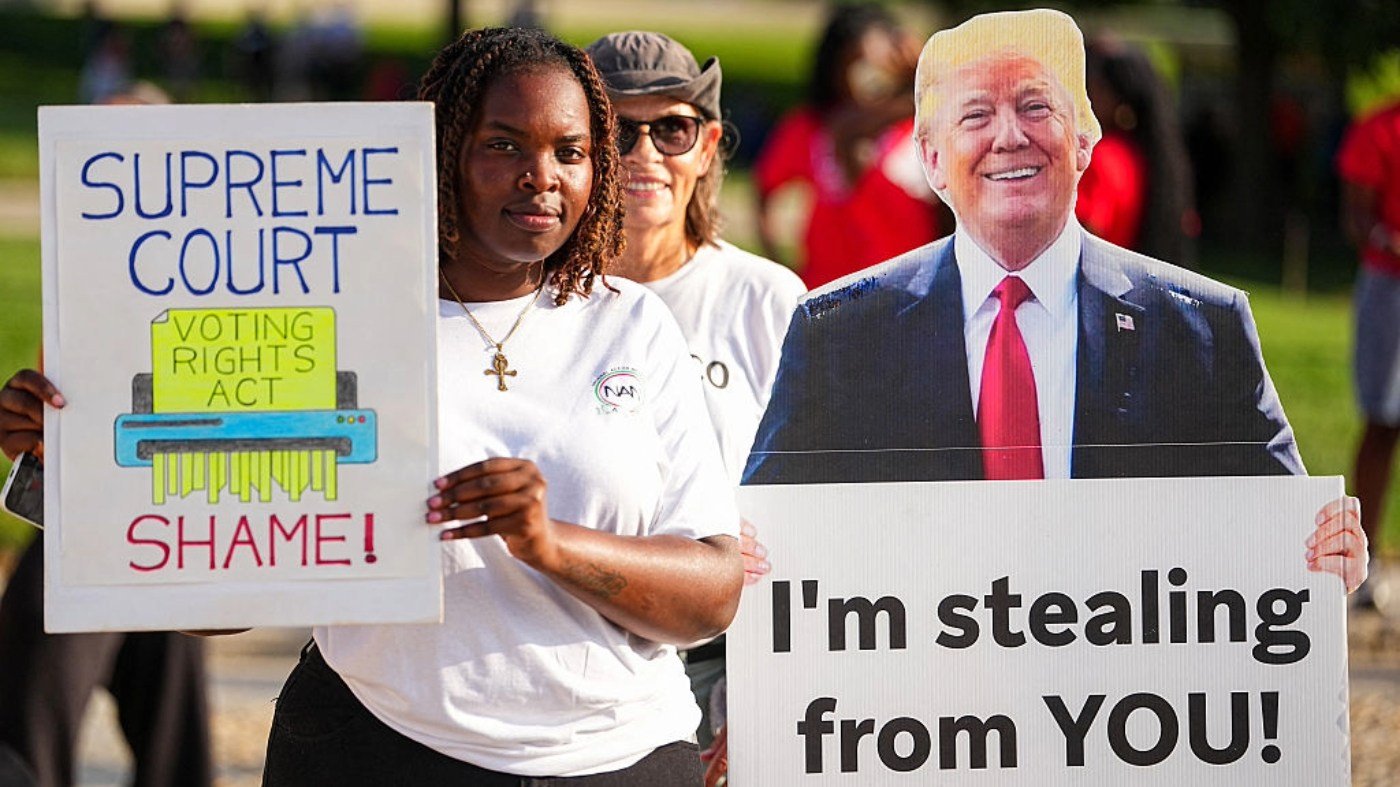
The legal landscape shifted with landmark rulings: Citizens United (2010) allowed unlimited corporate and union spending, while Rucho v. Common Cause (2019) barred federal courts from addressing partisan gerrymandering. This year's Louisiana v. Callais weakened a key Voting Rights Act provision against racially discriminatory maps.
Emboldened by these decisions, Trump attempted to assert federal control over voter registration, ballot distribution, and vote counting—powers the Constitution reserves for states and Congress. His efforts were thwarted at least 34 times by federal judges, including his own appointees. The Justice Department lost 28 lawsuits demanding complete voter rolls, which critics saw as a precursor to a federal eligibility list.
In League of Women Voters of Massachusetts v. Trump, a federal court blocked a U.S. Postal Service order to refuse ballots to individuals not on new federal rolls, calling it an unconstitutional intrusion. The Ninth Circuit upheld a ruling that prevented California from setting aside 20,000 ballots over citizenship doubts, warning of “potentially catastrophic effects.” The Supreme Court declined to intervene on Nov. 2.
Not all rulings favored election integrity. A divided Ninth Circuit allowed the administration to threaten prosecution of election workers, despite dissenters warning of an “impossible dilemma” between state and federal law. However, most courts held firm.
On Nov. 1, a federal judge dismissed a DOJ lawsuit challenging Alaska's Senate race, noting that segregating ballots would violate Alaskans' right to a secret ballot. Judges have been blunt about the stakes: as one warned, “the taking of democracy does not occur in one fell swoop; it is chipped away piece-by-piece.”
The Constitution is clear: only states and Congress regulate elections. The executive branch can enforce laws but cannot override them. Federal judges enforced this distinction when it mattered, and they deserve gratitude.
But democracy should not depend on individual judges resisting presidential pressure. Democrats must use their new majority to tackle partisan gerrymandering, strengthen the Voting Rights Act, and curb dark money—even if some reforms await a new president or Supreme Court. For now, institutions have held, if barely.
Related: Democrats' 2026 win: a warning, not a mandate. The new Congress will face pressure to act, as leadership fights intensify over priorities.