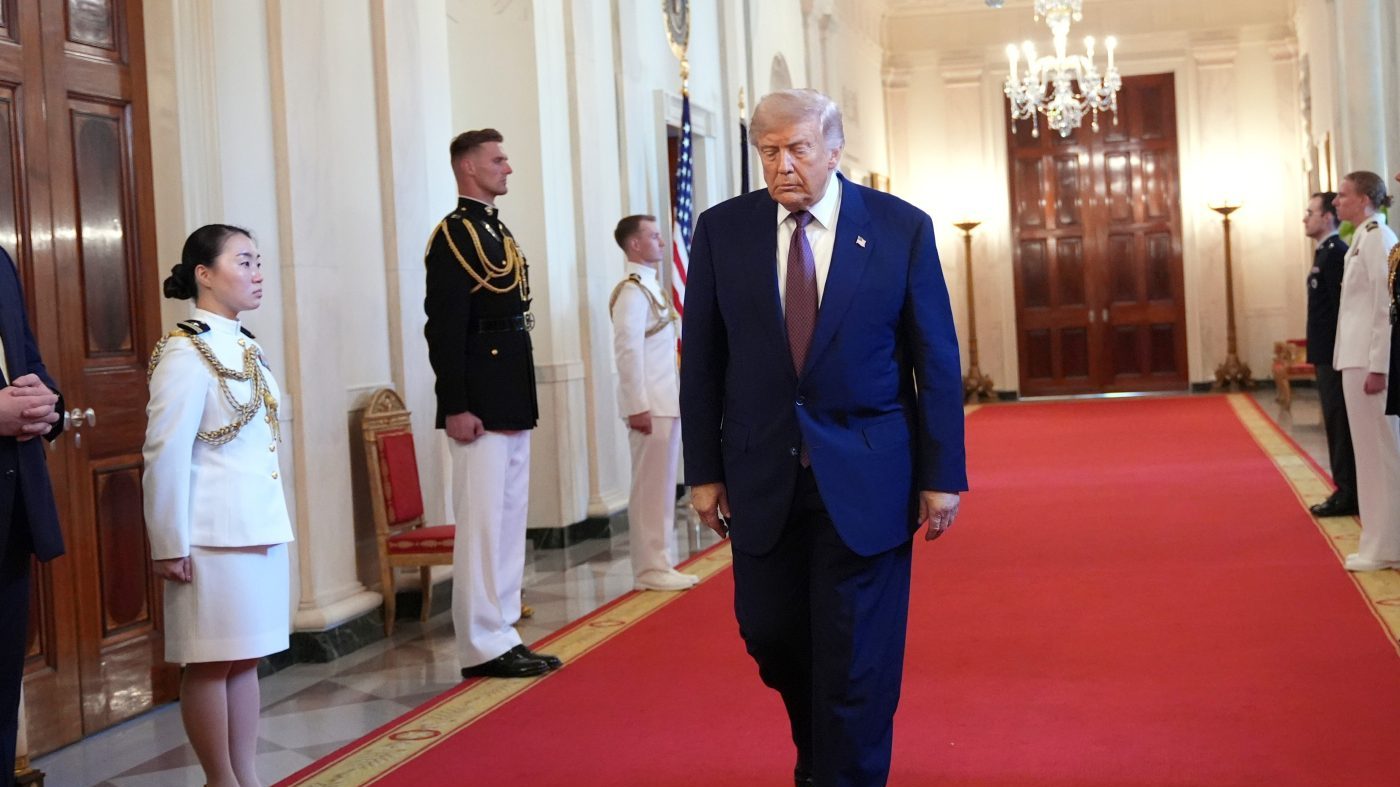
A federal judge on Wednesday permanently struck down President Trump's executive order that would have required proof of citizenship to vote, delivering a major legal defeat to the administration's efforts to tighten election rules. The ruling, issued by U.S. District Judge Denise Casper in Boston, sided with a coalition of 19 states that had challenged the order as an unconstitutional power grab.
Judge Casper, an Obama appointee, concluded that Trump had overstepped his constitutional bounds by attempting to dictate how states administer federal elections. In her decision, she wrote that "while the Constitution vests the President with 'executive Power' and commands him to 'take Care that the Laws be faithfully executed,' it does not grant the President any specific powers over elections." She further noted that the president "plays no direct role in the process of appointing electors, nor does he have authority to control the state officials who do."
The ruling is the third judicial rebuke of Trump's March executive order, which also aimed to withhold federal funding from states that count properly postmarked mail-in ballots received after Election Day. Additionally, it would have mandated proof of citizenship for all mail-in voter registrations, a provision that voting rights advocates argued would disenfranchise millions of eligible voters.
California Attorney General Rob Bonta, a Democrat who led the multistate lawsuit filed last April, hailed the decision. "Today, a federal district court ruled that every provision we challenged in the Executive Order is unlawful and reaffirmed that the power to regulate elections is reserved to the States and Congress," Bonta said in a statement. He added, "While we are proud of this result, we are clear-eyed that President Trump's attacks on voting rights and our elections show no signs of slowing down. So let me be clear: we will keep fighting back every step of the way."
The lawsuit was brought by attorneys general from California, Nevada, Massachusetts, Arizona, Colorado, Connecticut, Delaware, Hawaii, Illinois, Maine, Maryland, Michigan, Minnesota, New Jersey, New Mexico, New York, Rhode Island, Vermont, and Wisconsin. The coalition argued that the executive order violated the Constitution's Elections Clause, which grants states primary authority over election administration, subject to congressional oversight.
This latest ruling follows a Monday decision by a separate federal judge who struck down a related Trump directive to create a centralized database containing voters' Social Security numbers, citizenship status, and other sensitive personal data. That earlier order further underscored the judiciary's skepticism of the administration's expansive use of executive power in the election arena.
The Trump administration has not yet indicated whether it will appeal Casper's ruling. However, the legal battles over voting rules are far from over, as the president continues to push for stricter measures. Meanwhile, public opinion on related issues remains divided; a recent poll found that 69% of Americans want the Supreme Court to uphold birthright citizenship, a principle that Trump has also targeted.
As the 2026 midterm elections approach, the fight over voting access and federal versus state authority is likely to intensify. The ruling serves as a significant check on presidential overreach, reaffirming the constitutional limits on executive power in election administration.