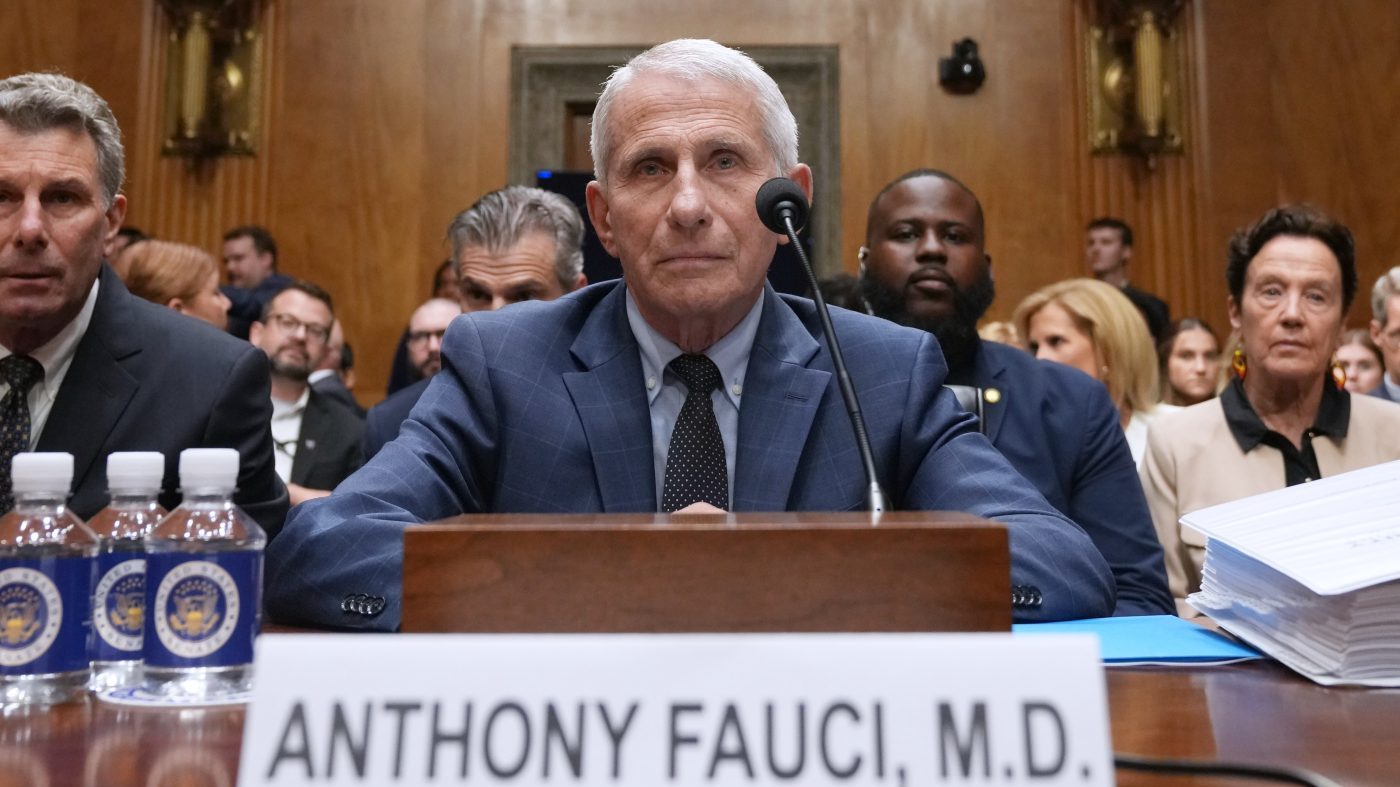
Anthony Fauci, the former chief White House medical adviser, declined to answer questions from lawmakers Wednesday, invoking his Fifth Amendment right during a Senate Homeland Security and Governmental Affairs Committee hearing led by Sen. Rand Paul (R-Ky.). The move marked a dramatic escalation in the long-running feud between the two men, who have clashed repeatedly over Fauci's handling of the COVID-19 pandemic.
In his opening statement, Fauci directly accused Paul of mounting a personal vendetta against him. He said Paul's repeated calls for his prosecution left him no choice but to assert his constitutional right against self-incrimination. "The only conclusion I can reach is that the sole reason he is calling me before this committee is to get me to say something, anything that could vindicate his repeated public pledges that I end up in his words 'behind bars,'" Fauci declared.
Fauci described Paul's focus on him as "unhinged" and said any reasonable observer would see the hearing as an attempt to trap him. "Any reasonable person who has followed his unhinged obsession with me would readily come to the same conclusion," he added. "Therefore, although it pains me to do so because of the respect I have for the legislative branch of government and my decades-long record of cooperating with Congress under the advice of my attorneys, I will invoke my right under the Fifth Amendment to the Constitution to refrain from answering your questions."
As Paul began his questioning, Fauci repeatedly declined to respond, citing his Fifth Amendment protections for each query. The hearing quickly became a procedural standoff, with Paul pressing for answers and Fauci stonewalling.
The confrontation is the latest chapter in a bitter dispute that has intensified in recent months. Fauci's previous testimony has been overshadowed by leaked diary entries and ongoing investigations into the origins of the coronavirus. Paul has released thousands of pages from Fauci's diaries, alleging they reveal contradictions in Fauci's public statements about the pandemic and the role of the Wuhan Institute of Virology.
Fauci's decision to plead the Fifth is a sharp departure from his history of cooperating with congressional inquiries. It comes amid broader political pressure, including warnings from House Oversight Committee Chair James Comer (R-Ky.) that a preemptive pardon from President Biden would not protect Fauci from perjury charges if he lied under oath. Biden has not issued such a pardon, but the threat has hung over the proceedings.
The hearing also highlighted the deep partisan divisions over pandemic response. Paul, a physician and longtime critic of Fauci, has accused him of misleading the public about mask efficacy, social distancing, and the origins of COVID-19. Fauci has defended his record, insisting he acted on the best available science at the time.
Democrats on the committee condemned Paul's tactics, arguing the hearing was designed to harass rather than to gather information. They noted that Fauci has testified dozens of times and provided extensive documents to Congress. "This is not oversight; this is a political circus," one Democratic aide said.
Outside the hearing room, Fauci's supporters and detractors clashed in dueling press conferences. Public health experts warned that the spectacle could further erode trust in scientific institutions. "When you turn a public health figure into a partisan target, you undermine the credibility of the entire scientific community," said Dr. Tom Inglesby, director of the Johns Hopkins Center for Health Security.
The hearing ended without any substantive testimony from Fauci. Paul vowed to continue his investigation, while Fauci's legal team signaled they would fight any attempt to compel his testimony through a subpoena. The standoff sets the stage for a potential legal battle over the limits of congressional power and the rights of witnesses under the Fifth Amendment.
As the day concluded, Fauci left the Capitol without answering questions from reporters. Paul, in a statement, called Fauci's invocation of the Fifth Amendment "an admission of guilt." Fauci's attorneys dismissed that characterization as politically motivated. The episode underscores the enduring fallout from the pandemic and the deep mistrust that continues to shape American politics.