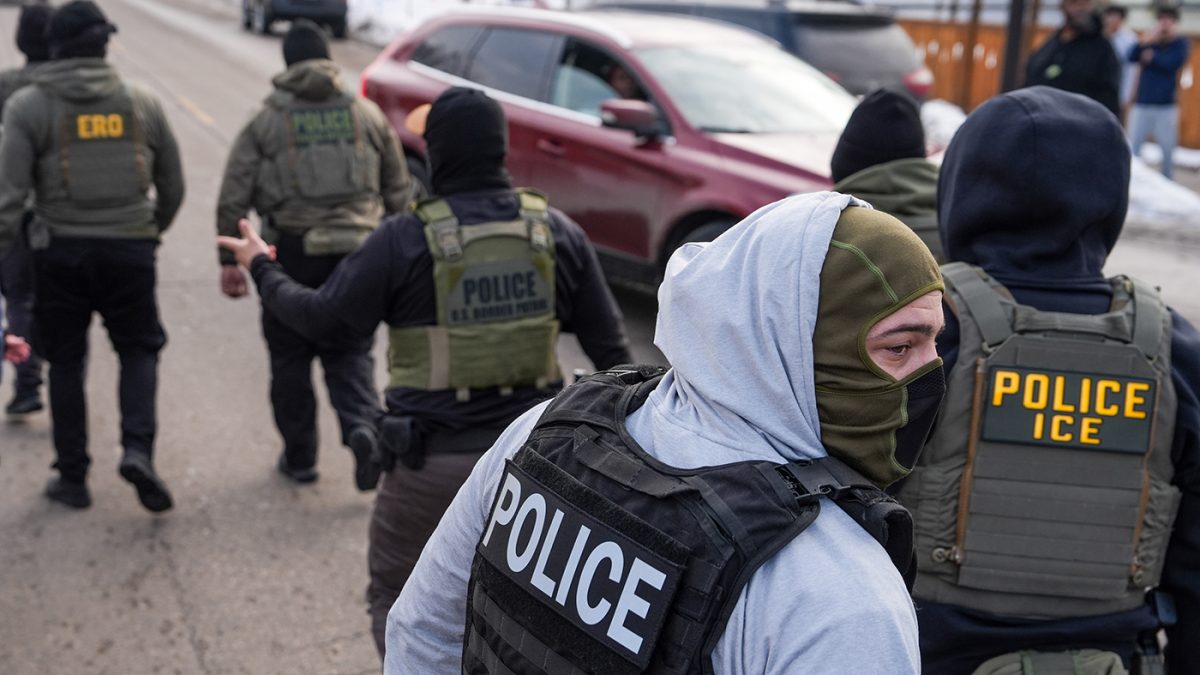
The Department of Homeland Security (DHS) has unveiled a procurement plan to supply Immigration and Customs Enforcement (ICE) officers with gloves capable of delivering painful electric shocks, a move that is drawing sharp reactions from civil rights advocates and law enforcement experts alike.
According to a notice published Wednesday, the agency intends to allocate up to $20 million for the devices, officially designated as Generated Low Output Voltage Emitters (G.L.O.V.E.). The gloves are designed for use during immigration enforcement operations, potentially giving officers a new tool to subdue individuals without resorting to traditional weapons.

The technology operates on a principle similar to a taser but with lower voltage output. Compliant Technology, the manufacturer, says the gloves generate up to 380 volts upon skin contact, triggering a painful sensory response. The company emphasizes that the device does not interfere with pacemakers or defibrillators and cannot penetrate clothing, limiting its effect to direct contact.
While the gloves have already been adopted in some correctional facilities as a means to “de-escalate” volatile situations, their deployment in the field by ICE raises significant concerns. A report from the previous year documented 412 instances of what was characterized as misuse of force by ICE officers during immigration-related protests, fueling fears that the new equipment could exacerbate existing problems.
Jenn Rolnick Borchetta, deputy project director on policing at the American Civil Liberties Union, voiced strong opposition. “ICE spent the last year showing this country they are too quick to use force. Now they will be able to deploy electric shocks with the slight push of a button that maybe nobody else can see them do,” she told the Associated Press. She added, “Introducing gloves that can so easily be used to deliver terrible pain in encounters is a recipe for harm to the public.”
Conversely, some experts argue the gloves offer a tactical advantage for officers, particularly those who may be physically at a disadvantage. John Peters, president of the Institute for the Prevention of In-Custody Deaths, described the sensation as “immediate and sharp, and it will distract you. I call it like a bee sting.” He noted that for “smaller officers or weaker officers or older officers, I think it has a great advantage,” citing the ability to quickly gain compliance.
The DHS contract indicates that the gloves could be distributed as early as March 2027. This timeline provides a window for public debate and potential legal challenges. Critics worry that the devices could be used covertly, as the activation is discreet and leaves no visible marks, making oversight difficult.
The introduction of such technology comes amid broader scrutiny of immigration enforcement tactics. Recent actions, such as the revocation of 175,000 visas in an expanded crackdown, signal an aggressive posture that civil liberties groups argue is creating a climate of fear. The gloves, they say, are another step toward militarizing immigration control.
As the debate unfolds, the DHS has not issued further comments on the procurement. The agency maintains that the gloves are intended to enhance officer safety and reduce the need for more lethal force. However, the lack of public transparency regarding training protocols and usage guidelines has amplified concerns among oversight groups.
With the 2027 distribution date still years away, the proposal is likely to face intense scrutiny in the coming months. Lawmakers may seek to attach conditions to funding, and advocacy groups are already mobilizing to press for a reconsideration of the plan.