President Trump's aggressive deportation policies are emerging as a political liability in two pivotal House races, as fresh polling indicates Latino voters are drifting away from the president and his party just weeks before the midterm elections.
The dynamic is most pronounced in Florida's 27th Congressional District and Texas's 15th, where Republican incumbents Maria Elvira Salazar and Monica De La Cruz are fighting for their political lives. Both represent districts that Trump carried by double digits in 2024, but their recent public maneuvers suggest they are trying to carve out distance from the White House on immigration.

Salazar made headlines last month by releasing a video outside the White House, cautioning Trump that Hispanic voters who backed him in 2024 feel betrayed by his immigration crackdown. On the same day, De La Cruz launched an ad highlighting her role in freeing a DACA recipient from ICE custody.
Republican strategist Mike Madrid, a frequent Trump critic who studies Latino voting patterns, said these moves are deliberate attempts to "unanchor" themselves from a president whose immigration stance has become toxic. "The best symbolic way to do that is on the immigration issue," Madrid said. "You can't really distance yourself from him on the economy because nobody knows what his economic policy is day to day. So what are you standing against? The immigration issue is very clear."
Madrid noted that both districts should be safely Republican on paper, given Trump's and the incumbents' margins in 2024. But Democrats are pouring resources into flipping them. The Democratic Congressional Campaign Committee has added Salazar's opponent, Eliott Rodriguez, to its "Red to Blue" program and launched a $13 million ad buy across 35 races, including De La Cruz's district.
DCCC spokesperson Bridget Gonzalez accused both Republicans of "trying to rewrite their immigration record," adding, "They've cheered on Trump's extremist agenda and out-of-control ICE operations at every turn, and voters can see right through them."
One Republican operative, speaking anonymously, downplayed the drama, saying Salazar's and De La Cruz's positions are consistent with their records. "The Maria Salazar ad, I think, was mostly a surprise to people who have never heard of Maria Salazar," the operative said. "It was definitely not a shock to us."
Supporters point to Salazar's Dignity Act, which would create a legal status for long-term undocumented immigrants without criminal records, and De La Cruz's involvement in securing the release of a family with two teenage mariachi students in March. But the broader trend is troubling for Republicans: An NBC News/Telemundo poll showed Democrats leading the generic congressional ballot among Latino voters by 59 to 35 percent, and a CBS News poll found 60 percent of Hispanic voters planning to vote Democratic in November.
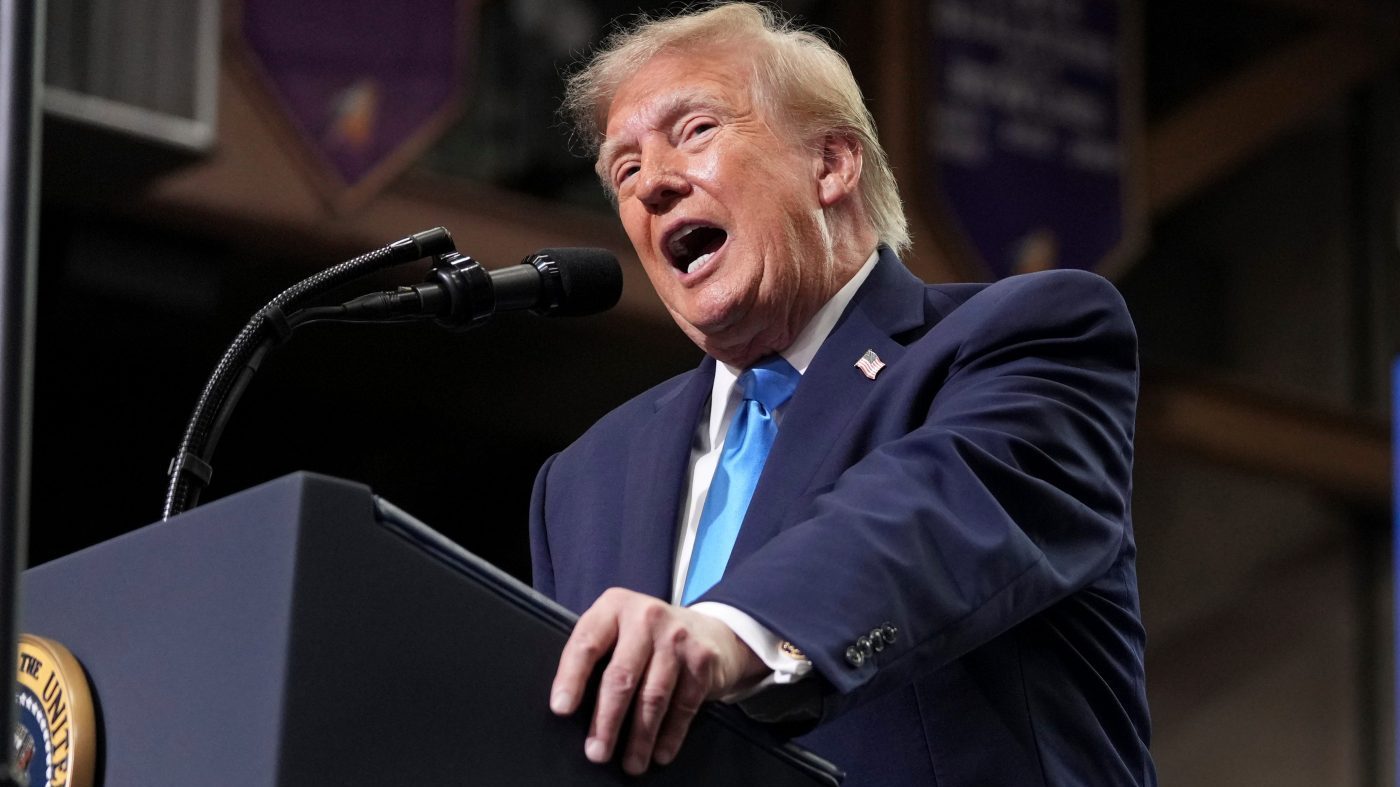
A Cook Political Report survey of Texas Hispanic voters found nearly 66 percent would be less likely to support a candidate who backed Trump's immigration policies. Even Trump acknowledged the messaging challenge at a Hispanic Heritage Month event this week, calling immigration "the hardest job that I've had."
Democratic strategists stress the importance of tying Republican incumbents to Trump's actions, not just his rhetoric. "I see a lot of people softening the way they're talking about this stuff," one Latino Democratic strategist said. "He's such a wildcard and I don't know how much of what he says trickles down. We need to show him his decisions, his actions, and that's what matters."
Both parties, however, agree that immigration is not the top issue for Latino voters; the economy remains paramount. "If the economy were doing really well, we probably would not be having this conversation, certainly to the extent that we are," Madrid said. "Immigration has become a compounding issue on top of the economy, but it is a secondary consideration."