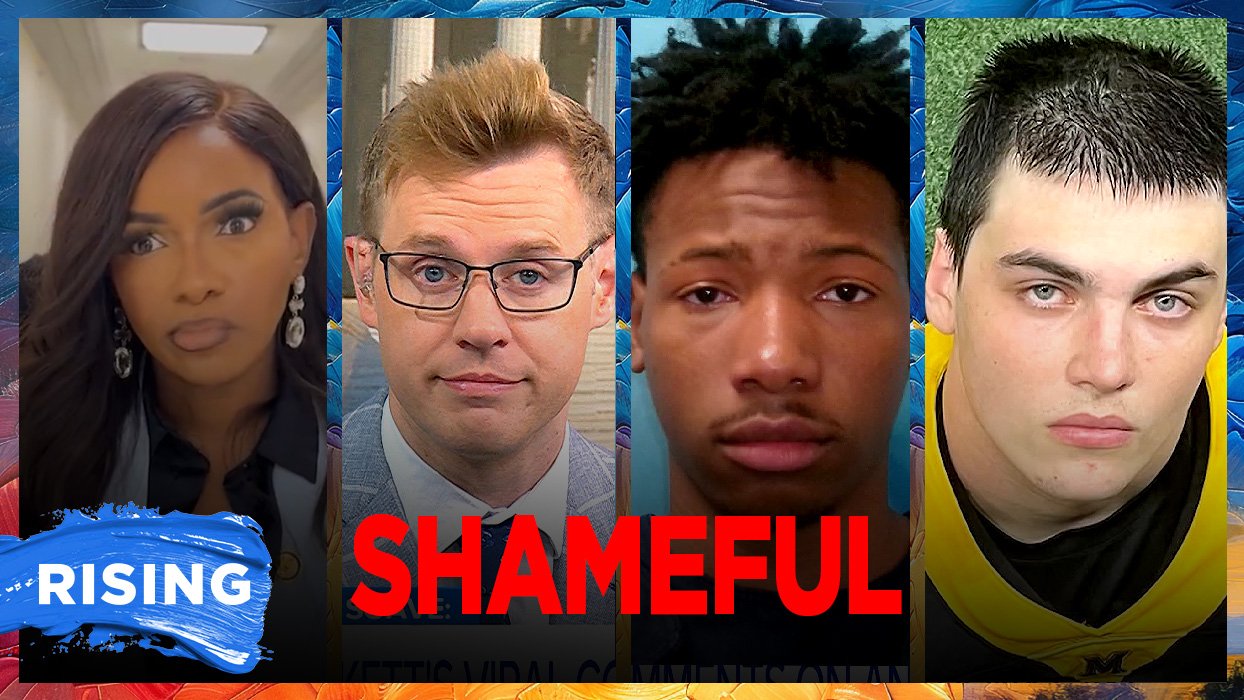
Representative Jasmine Crockett has ignited a fresh firestorm with her defense of Karmelo Anthony, the Texas teenager convicted of murdering Austin Metcalf at a high school track meet. In an interview with TMZ, Crockett argued that Anthony's 35-year prison sentence was unjust, claiming the system failed to show humanity toward the killer. Critics say her remarks reveal a troubling pattern of race-based sectarianism, prioritizing solidarity with a Black defendant over the life of a white victim.
Anthony, who was 17 at the time, stabbed Metcalf multiple times during an argument at a Frisco, Texas track event in 2023. The altercation began when Metcalf asked Anthony to leave the area. Prosecutors said Anthony escalated the situation by pulling a knife and attacking an unarmed teenager. A jury convicted him of murder, rejecting claims of self-defense. The case drew national attention, with some activists framing it as a racial injustice, though the evidence pointed to an unprovoked killing.
Crockett's comments, which she amplified on social media, focused on Anthony's background and the alleged biases in the justice system. She said she was “heartbroken” over his sentence, but offered no sympathy for the Metcalf family. This has drawn sharp rebukes from commentators and legal experts who note that Anthony had every opportunity to walk away but chose violence instead. The victim's family has described the killing as senseless and devastating.
The congresswoman's defense aligns with a broader trend among some progressive figures who emphasize racial disparities in sentencing while downplaying the culpability of Black defendants in violent crimes. However, critics argue that this approach undermines the principle of equal justice and ignores the facts of the case. Similar dynamics have emerged in other high-profile cases, where race becomes the central lens for evaluating guilt and punishment.
Robby Soave, a senior editor at Reason Magazine and co-host of The Hill's “Rising,” condemned Crockett's stance in a commentary, calling it “crude race-based sectarianism.” He noted that while race is often relevant in discussions of policing and bias, Crockett used it to excuse a deliberate act of violence. “She feels more for the killer because he is Black like her than for the victim because he is white,” Soave said. “That is racism, plain and simple.”
The case has also reignited debates about juvenile justice and the appropriate penalties for teen offenders. Anthony was tried as an adult, which is common in Texas for serious violent crimes. Some advocates argue that his age should have been a mitigating factor, but the jury found the brutality of the stabbing warranted a lengthy sentence. The broader political implications of such cases continue to shape public discourse on crime and punishment.
Crockett, who is not seeking re-election, has faced previous criticism for inflammatory remarks on race and policing. Her latest comments may further erode her standing among moderate voters, though she retains support from progressive activists who see her as a voice for marginalized communities. Meanwhile, the Metcalf family is left to mourn a son whose life was cut short by a preventable act of violence.
This incident underscores the deep divisions in how Americans view crime, race, and justice. While Crockett's defenders argue she is highlighting systemic inequities, her detractors say she is exploiting tragedy for political gain. The facts of the case—an unarmed teen killed by a peer over a minor dispute—remain unchanged, regardless of the political spin. Such controversies are likely to persist as the nation grapples with these fraught issues.