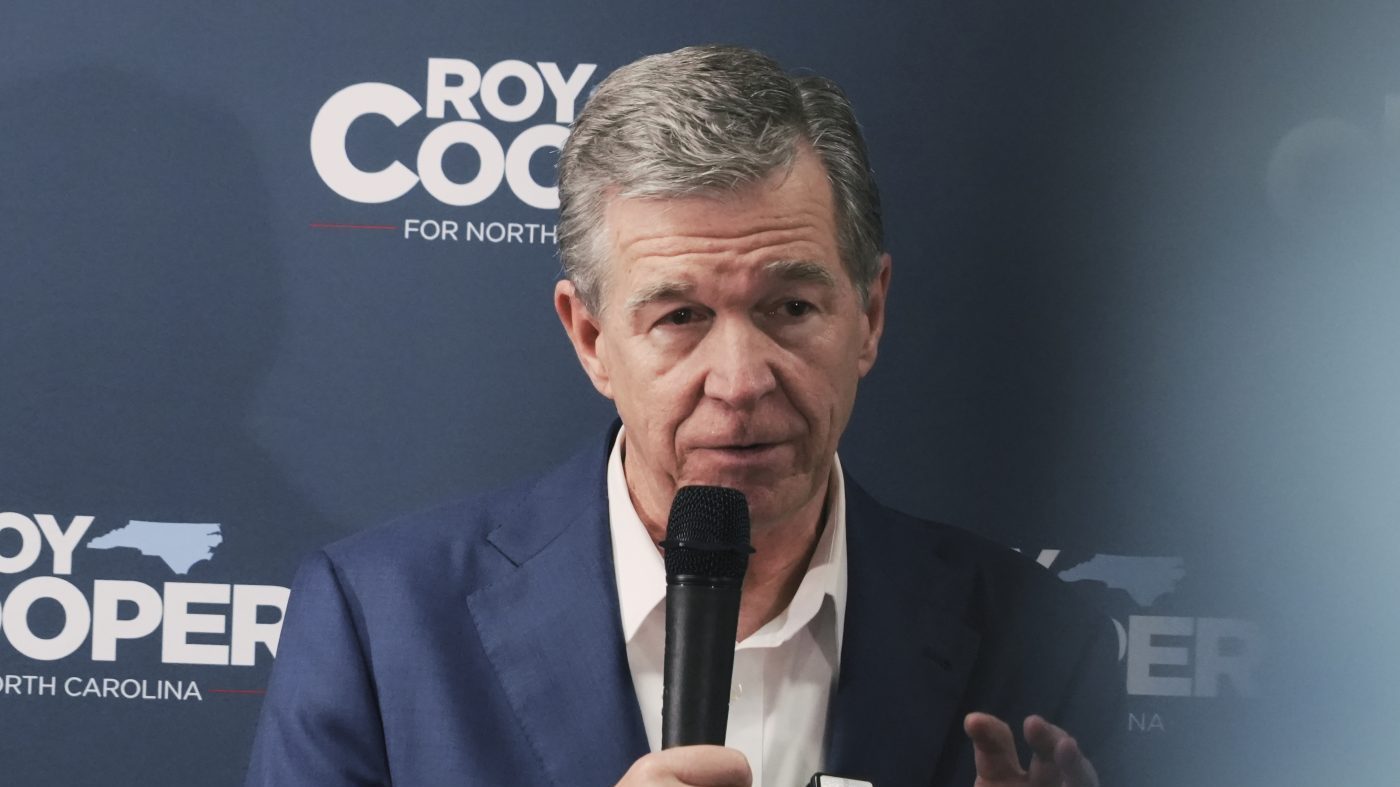
Former North Carolina Gov. Roy Cooper (D) has secured a victory in the state's Senate race, flipping the seat from Republican to Democratic, according to Decision Desk HQ (DDHQ). Cooper defeated Michael Whatley, the former Republican National Committee chair, by a wide margin with 51 percent of precincts reporting.
Cooper's win comes as a major boost for Democrats, who have been eyeing the Tar Heel State as a key pickup opportunity. The seat was left open by retiring Sen. Thom Tillis (R), who announced in June 2025 that he would not seek reelection, a day after joining Democrats in opposing the GOP's One Big Beautiful Bill Act over Medicaid cuts.

From the outset, Cooper was seen as the favorite, given his long political career and high name recognition in the state. He served as governor from 2017 to 2025, and before that, he spent 16 years as the state's attorney general. He also served in the state legislature, rising to majority leader in the state Senate in the late 1990s. Notably, he has never lost an election.
Whatley, who was endorsed by former President Trump, struggled to gain traction. National Republicans shifted their attention and resources away from his campaign in the final months, leaving him at a significant disadvantage. Tillis, despite backing Whatley, had publicly warned that unpopular Trump policies, such as the war in Iran, could hurt the GOP's chances in the state—a prediction that proved accurate.
As governor, Cooper championed an expansion of Medicaid and signed legislation to protect victims of domestic violence. He also pushed for raises for teachers and state workers and increased funding for infrastructure projects. His record as a pragmatic Democrat likely resonated with moderate voters in the swing state.
DDHQ gave Cooper an 85 percent chance of flipping the seat ahead of Election Day, and the result underscores the shifting political dynamics in North Carolina. The state, which has been reliably Republican in recent presidential elections, has shown signs of becoming more competitive, especially as Democrats capitalize on suburban dissatisfaction with the GOP.
Cooper's victory is part of a broader Democratic surge in down-ballot races across the country. In other contests, Democrats have flipped seats in states like Maine, where Troy Jackson unseated Susan Collins after 30 years, and in Pennsylvania, where Harvie defeated Fitzpatrick. These wins suggest that the political environment remains favorable to Democrats, even as Republicans hold on in other areas.
The outcome in North Carolina is a significant blow to the GOP, which had hoped to hold onto the seat. With Cooper heading to Washington, Democrats gain a seasoned legislator who could play a key role in shaping policy on healthcare and other issues. His win also sets the stage for a potential rematch in 2026, as Republicans will likely target the seat again.
For now, Cooper's victory is a clear signal that North Carolina is a battleground state in every sense of the word. As the dust settles, both parties will be analyzing what this means for future elections, particularly in the South, where demographic shifts and changing voter priorities are reshaping the political landscape.