The nonpartisan Cook Political Report on Wednesday adjusted its ratings for Senate contests in Kansas and South Carolina, nudging both toward the Democratic column with just over a month until the November midterms.
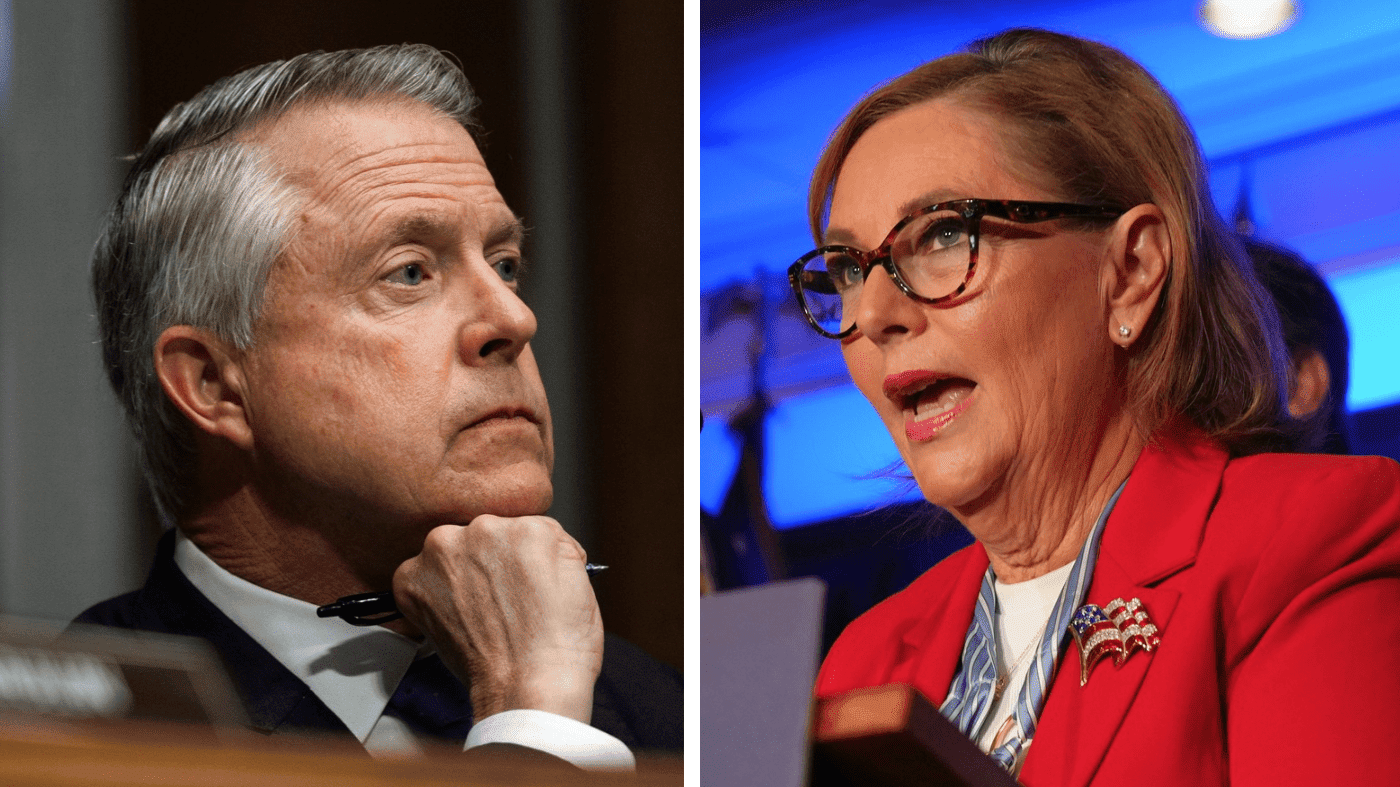
In Kansas, the race between Republican Sen. Roger Marshall and Democratic challenger Adam Hamilton shifted from “likely Republican” to “lean Republican.” The change reflects mounting economic anxieties in the state, particularly over soaring fuel and fertilizer prices that have hit farmers hard, as well as ongoing trade disputes affecting beef exports. Those cost pressures have made the contest more competitive than initially expected.

Another factor is President Trump’s recent announcement that he would halt purchases of planes from Canadian manufacturer Bombardier, which operates a major plant in Wichita and employs thousands of Kansans. That decision has injected fresh uncertainty into the local economy and given Democrats an opening to press the incumbent on job security.
Cook’s editor, Jessica Taylor, noted that private GOP polling shows Marshall with a healthier lead than public surveys, some of which suggest a dead heat. “There are weak spots” for Marshall, Taylor wrote, that “will require shoring up” in what she described as an “increasingly worrisome contest for the GOP that should be competitive at this juncture, though one where Republicans still have the edge.”
Decision Desk HQ, The Hill’s election forecaster, currently gives Marshall a 79 percent chance of victory, while a recent Hill/Emerson College poll showed Hamilton with a narrow 2-point lead, 45 to 43 percent. The race has drawn national attention, with Democrats hoping to capitalize on a favorable national environment.
In South Carolina, the shift was more dramatic, moving from “solid Republican” to “likely Republican.” The contest features Republican Sen. Darline Graham, who was appointed to replace her late brother, Sen. Lindsey Graham, after his sudden death in July. Her opponent is Democrat Annie Andrews. Taylor pointed to Graham’s uneven debate performances and noted that she could “face backlash for being elevated to the job purely because of her family name.”
Graham’s primary rival, Rep. Ralph Norman, has not offered a full-throated endorsement, and a conservative grassroots effort is urging voters to write in Norman’s name in November. Sources close to Graham dismiss the write-in campaign as having minimal impact, but the lack of unified GOP support is a concern.
Andrews has been stuck in the mid-40s in polling, but a $2.5 million ad blitz from the Democratic group Fresh Start South Carolina could give her a boost. Taylor wrote that Andrews is “running a real race” and that the infusion of cash could make it “a truly competitive contest.” Still, she noted that some in-state Republicans are anxious about Graham’s soft numbers and the potential for low turnout, prompting the rating change.
Decision Desk HQ gives Graham a 74 percent chance of holding the seat, compared to Andrews’s 26 percent. The Cook Political Report’s overall Senate outlook sees Democrats gaining one to five seats, with Taylor observing that a “very blue environment is forming,” though whether that translates into a Senate majority remains uncertain. As the campaign enters its final stretch, both races will be closely watched for signs of a broader Democratic wave.